

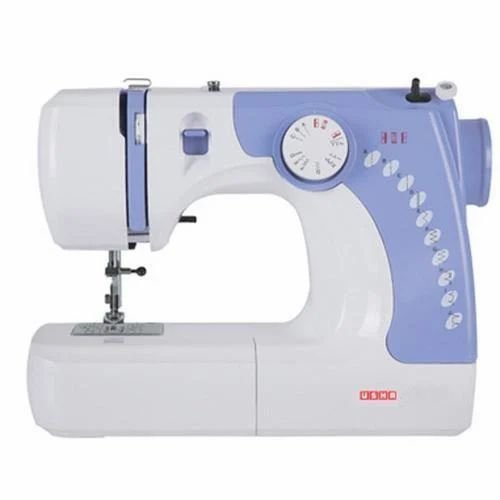
Maa is past 75, and she still loves her silai. Sewing isn’t something she’s winding down; it’s something she genuinely enjoys every single week. That made a new sewing machine feel like the right kind of Dasara gift: useful, personal, and something she would actually put to work.
I thought buying one would take an afternoon. Pick a good brand, pay the price, done.
That was three to four weeks ago. I am not a sewing person. I couldn’t have told you the difference between a zigzag and a straight stitch, and the first spec sheet I opened was full of words like “free arm,” “drop feed,” and “spm,” with no explanation anywhere. I kept going, and that afternoon turned into a proper rabbit hole: reading manufacturer pages, comparing retailer listings that contradicted each other, building a scoring sheet, and then arguing with my own scoring sheet.
This article is what came out of it. It’s written for the person I was a month ago: not a specialist, buying a machine for the first time for someone they love, and wanting a sensible decision without having to become an expert.
How I Went About It
When I started, I had no method, only a gift idea. Over the weeks, a structured path emerged:
-
Start with the person, not the product: Maa is past 75. That implies specific needs: easy threading, good light, simple controls, light enough to move, and no digital menus to get lost in.
-
Learn the vocabulary: Decoding terms like spm (stitches per minute), free arm, drop feed, and buttonhole types so spec sheets actually made sense.
-
Map the market: Discovering the two broad families—mechanical machines operated with dials versus computerised machines with LCDs and push buttons—and realizing that list prices (MRP) and street prices on Amazon or Flipkart are often very different.
-
Shortlist eight machines: Ranging from about ₹15,000 to ₹60,000 across Usha, Singer, and Brother to see what each extra rupee actually buys.
-
Build yardsticks & scorecards: Defining six benchmarks (stitch range, speed, zigzag width, automation, control, and construction) and weighting them by everyday home use rather than box hype.
-
Apply the “Maa Test”: Asking seven plain usability questions of each machine—such as whether it threads the needle itself and avoids confusing menus.
-
Verify in person: Checking how it feels to use, confirming warranty terms in writing, and understanding local service arrangements.
What Surprised Me Along the Way
Coming in as an outsider, a few things caught me off guard:
-
More stitches isn’t better: Most households use a handful of stitches. A machine with 100 stitches and one with 37 can both be right depending on what you sew.
-
Computerised doesn’t mean easier: For a user who prefers a dial, an LCD screen can add unnecessary friction.
-
The internet contradicts itself: Speed, weight, and even stitch counts vary between retailer listings because details get rounded, copied, or mixed up. Always refer back to the manufacturer’s official catalogue.
-
The cheapest machine wasn’t the best value: Entry-level mechanicals that automate almost nothing often score poorly on value-for-money metrics compared to feature-balanced mid-tier options.
The Shortlist: Eight Machines Compared
I examined eight prominent models across Usha, Singer, and Brother:
-
Usha Janome Dream Stitch (Entry Mechanical | MRP ₹15,500 | Street ~₹10,000): Simple and familiar, but manual threading and a lack of length control make it basic.
-
Singer Promise 1408 (Entry Mechanical | MRP ₹15,700 | Street ~₹11,299): Features a sturdy metal frame and built-in thread cutter, making it a reliable basic workhorse.
-
Brother GS3700 (Entry Mechanical | MRP ₹17,290 | Street ~₹14,000): A pleasant surprise offering 37 stitches, an automatic needle threader, and a one-step buttonhole on a mechanical dial setup.
-
Usha Janome Allure DLX (Mid Mechanical | MRP ₹21,000 | Street ~₹17,000–18,000): Sturdier build with essential controls, backed by Usha’s extensive service network.
-
Brother FS101 (Computerised | Street ~₹23,100): The best overall value pick, packing 100 stitches, a start/stop button, speed slider, and needle up/down functionality.
-
Singer C5205 (Computerised | MRP ₹35,000): Offers 80 stitches and an included extension table for larger garment projects.
-
Usha Design Craft (Computerised | MRP ₹35,625): A well-rounded mid-tier computerised option featuring 50 stitches, monogramming capability, and local service support.
-
Usha Janome Dream Maker 120 (Flagship Computerised | MRP ₹60,000): The undisputed feature king (89.2/100 capability score) with auto thread cutting and 120 stitches, though priced at a premium.
The Verdict: Passing the “Maa Test”
When you balance pure feature scorecards against what actually matters for a user past 75—ease of use, clear workspace visibility, and minimal friction—the rankings shift.
-
For pure senior usability and mechanical simplicity, the Brother GS3700 and Usha Janome Allure DLX stand out.
-
The Usha Janome Allure DLX ultimately takes the edge in my mind due to Usha’s dependable, widespread service and repair network across India.
-
If you want to step into modern computerised convenience (like a start/stop button and speed control slider) without breaking the bank, the Brother FS101 offers unbeatable value.
Before I pay a single rupee, however, the final test remains simple: I’m taking Maa to sit at both machines and sew a single seam. Because no spec sheet can replace how a tool feels in the hands of someone who has loved the craft for decades.
