

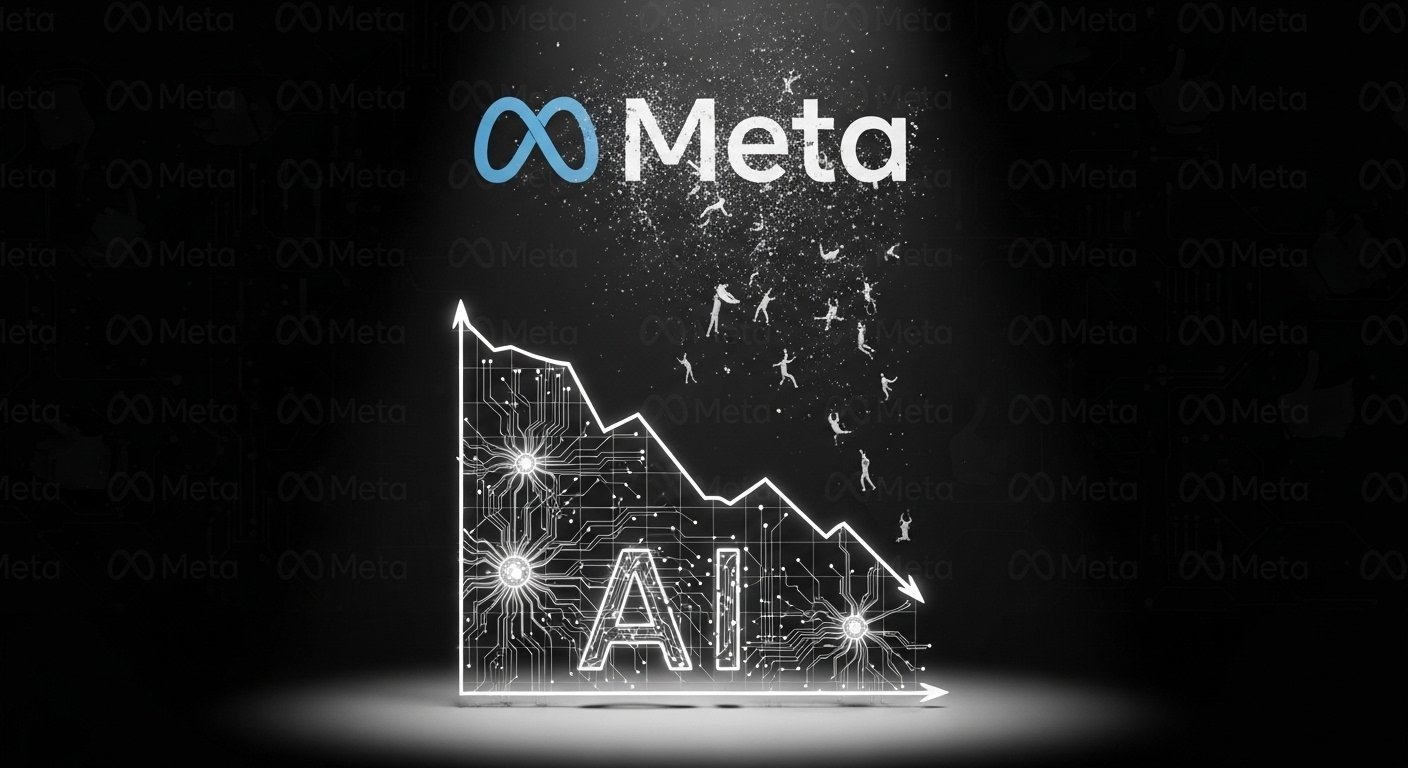
The recent surge in Meta’s stock price following the announcement of hundreds of job cuts reflects a significant shift in investor psychology. In 2026, the market is no longer viewing tech layoffs as a sign of distress, but rather as a strategic “trimming of the sails” to power the massive capital requirements of the Artificial Intelligence race.
The Strategy Behind the Surge
Investors are responding to a specific set of financial and operational signals sent by Meta’s leadership:
- Reallocation of Capital: By cutting roles in legacy divisions and hardware-heavy sectors of Reality Labs, Meta is diverting billions toward its $115–$135 billion AI infrastructure goal.
- The “Efficiency” Premium: Mark Zuckerberg’s continued “Year of Efficiency” philosophy suggests that AI-driven automation is now handling tasks that previously required large human teams, lowering the company’s long-term “cost per output.”
- Executive Stability: The simultaneous announcement of stock-based incentives for key leaders like CFO Susan Li and CTO Andrew Bosworth has reassured Wall Street that the “brain trust” behind Meta’s AI pivot is locked in for the long haul.
Impacted Divisions: Where the Cuts Hit
The layoffs on March 25, 2026, were highly targeted, affecting approximately 700 roles across specific global departments:
| Division | Nature of Impact |
| Reality Labs | Massive shift away from pure VR headsets toward AI-integrated AR glasses. |
| Recruiting & Sales | Automation of ad-buying and hiring processes reduced the need for mid-level administrative roles. |
| Instagram & Facebook | Internal operational teams were flattened to speed up decision-making. |
| Global Ops | Minor reductions in regional hubs (e.g., Ireland) to centralize AI development in the U.S. |
What’s Next: The “Personal Superintelligence” Era
Meta is moving toward a “north star” goal of becoming the world’s leading provider of AI-native hardware and software. Their immediate roadmap includes:
- “Avocado” AI Model: Launching their next-generation large language model designed to power a new ecosystem of autonomous agents.
- AI-Native Tooling: Deploying internal AI systems to allow individual engineers to manage projects that previously required entire departments.
- Monetizing Intelligence: Transitioning from experimental AI features to high-margin, AI-driven advertising tools designed to recoup infrastructure costs by 2027.
