

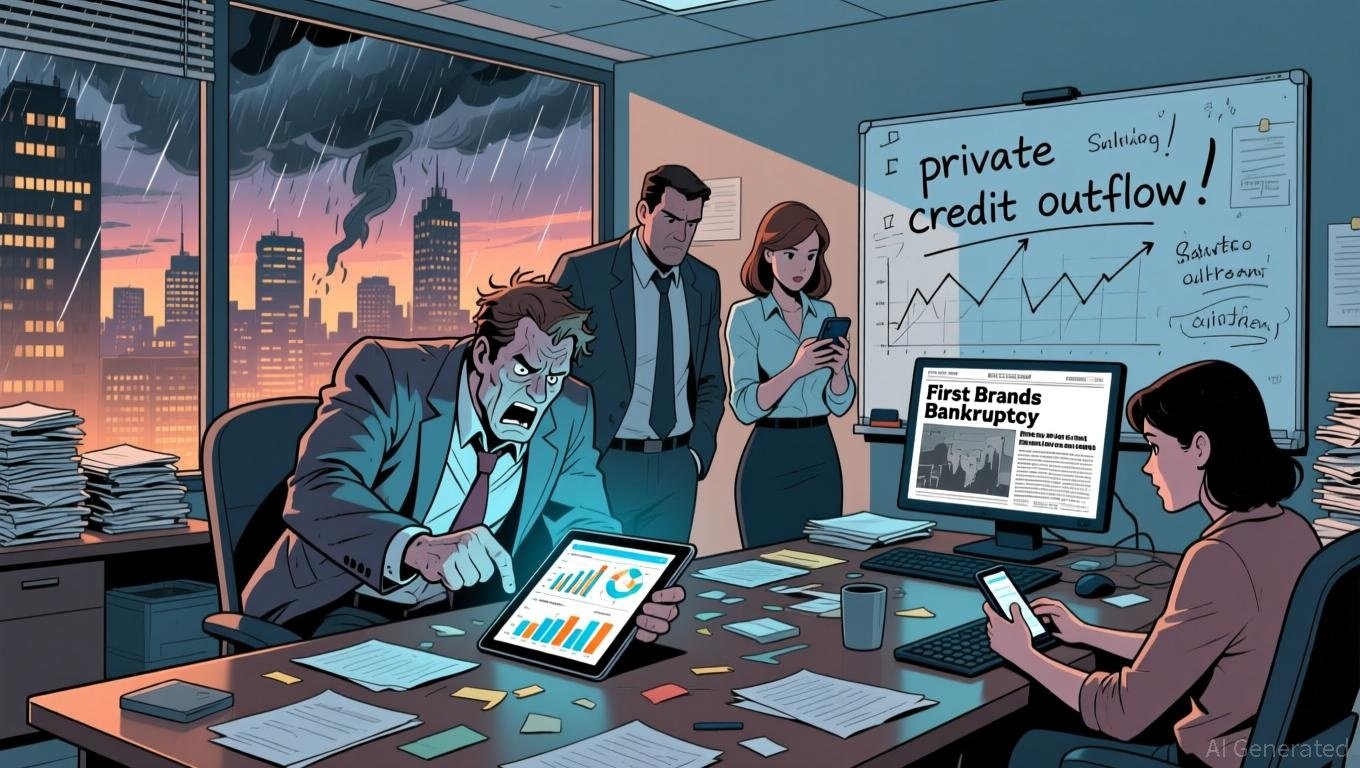
The U.S. Securities and Exchange Commission (SEC) has heightened its oversight of the private credit market, citing concerns over “opacity,” rising default rates, and a recent surge in investor redemption requests.
In a significant address at the Economic Club of Washington D.C. on April 21, 2026, SEC Chairman Paul Atkins warned that the $1.7 trillion sector is facing emerging pressures as it navigates its first major period of economic stress in its current, expanded form.
Regulatory Red Flags
Chairman Atkins identified three primary areas of concern that the commission is currently investigating:
-
The “Opacity” Problem: Unlike public markets, private credit deals are negotiated behind closed doors. Atkins noted that this lack of transparency makes it difficult for regulators to assess the true quality of underlying assets.
-
Valuation Gaps: There are growing worries about how private funds value their loans. Without market-based pricing, funds may be “marking to model” rather than reflecting real-world losses, potentially misleading investors.
-
Liquidity Mismatch: Major investment firms, including Blackstone and Apollo Global, have seen a significant increase in redemption requests (investors asking for their money back). Since the underlying loans are illiquid and cannot be sold quickly, this creates a “liquidity crunch” risk.
Why Now? The “Testing Period”
The private credit market ballooned after the 2008 financial crisis as traditional banks pulled back from mid-market lending due to stricter regulations.
-
The Credit Gap: Atkins acknowledged that private credit filled a vital “lending gap” for small and medium enterprises.
-
The “Untested” Risk: Experts from Fitch Ratings and the European Central Bank (ECB) have echoed the SEC’s caution, labeling the sector as “untested” in a high-interest-rate, high-default environment.
-
Interconnectedness: Regulators are particularly wary of “contagion” risks—the deepening ties between private credit funds and traditional insurance companies or pension funds.
The “Texas Two-Step” and Collateral Concerns
Beyond valuation, regulators are monitoring specific legal and structural risks:
-
Collateral Double-Dipping: Recent bankruptcies have exposed instances where the same collateral was pledged to multiple debt holders, complicating recovery efforts.
-
Bankruptcy Tactics: Lawmakers are concurrently moving to curb the “Texas Two-Step”—a controversial bankruptcy strategy used by corporations to offload mass tort liabilities, which can negatively impact credit recovery for lenders.
What This Means for Investors
While SEC officials and Federal Reserve Chair Jerome Powell have stated that private credit does not yet pose a “systemic risk” to the entire financial system, the message to retail and institutional investors is clear: caution is paramount.
The SEC is urging investors to look closely at higher fees, limited liquidity, and the appropriateness of the investment before committing capital to a sector that is increasingly under the regulatory microscope.
