

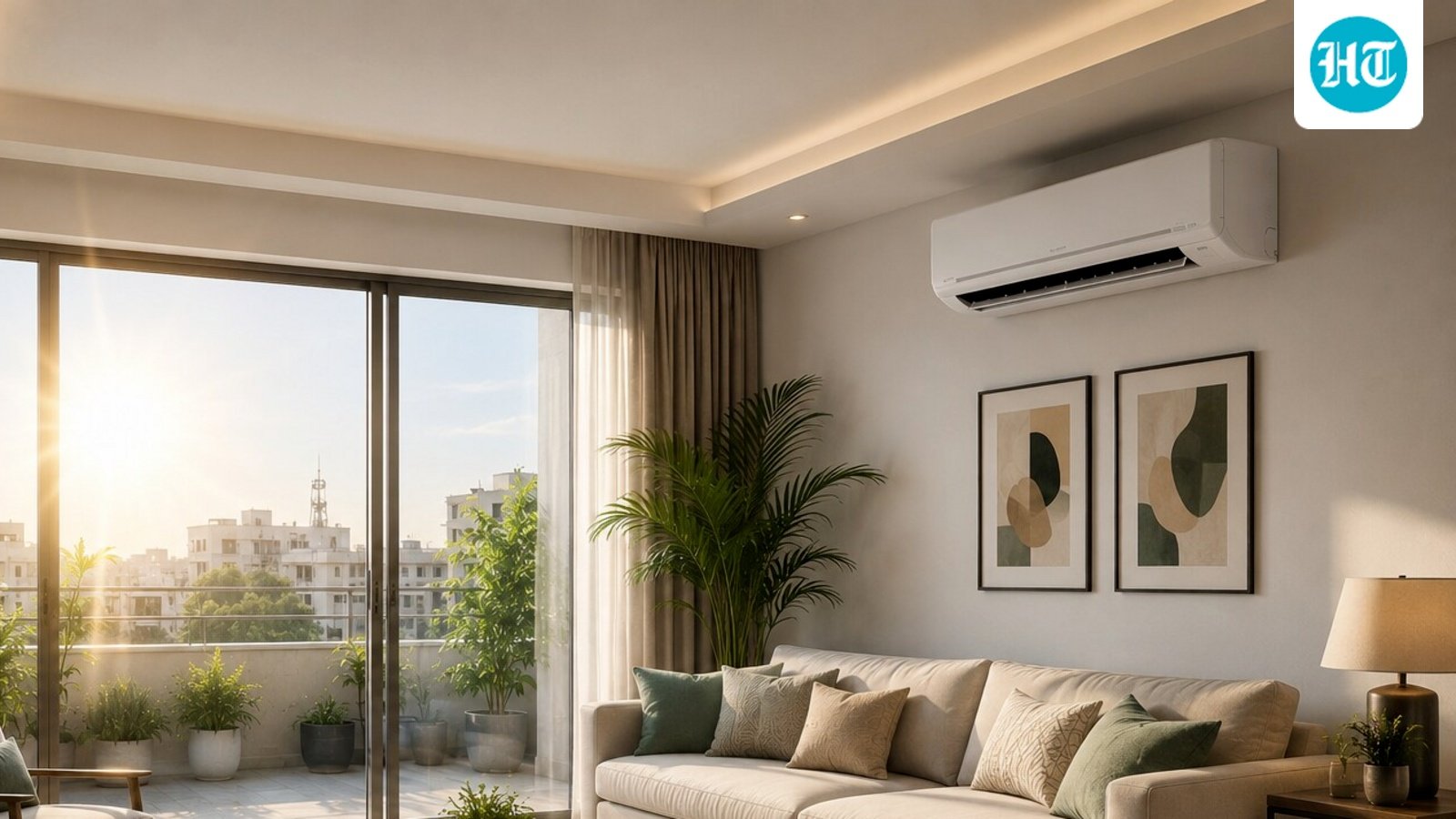
If you live directly under a terrace or in a modern apartment with soaring ceilings, the standard “1.5-ton for 150 sq. ft.” rule is a recipe for a warm room and a heartbreaking electricity bill. As India’s summer temperatures breach the 45°C–55°C mark in 2026, standard tonnage charts are officially obsolete for non-standard homes.
The physics is simple but brutal: in a top-floor flat, your ceiling is a giant concrete radiator that bleeds heat long after sunset. To stay cool, you need to calculate for volume and thermal load, not just floor area.
The New Math: Calculating for ‘Non-Standard’ Spaces
Standard calculators assume a 10-foot ceiling and “protected” walls. If your home breaks these rules, apply these buffers:
-
The Top-Floor Penalty: If you are directly under the roof, add 20–25% to your required tonnage. This often means jumping from a 1.5-ton to a 2-ton unit.
-
The Volume Trap: For every 2 feet of ceiling height above 10 feet, increase your capacity by 10%. ACs cool air volume, not floor tiles.
-
The West-Facing Tax: Large windows facing the afternoon sun require an additional 0.5 ton of cooling power to counteract the solar gain.
Top Picks for High-Heat & High-Volume Rooms
| Category | Recommended Model | Key Highlight |
| Best for High Heat | LG 1.5 Ton AI Inverter | Cools effectively at 55°C; “Viraat” mode offers 110% capacity. |
| Best for High Ceilings | IFB 2.0 Ton AI Powered | 8-in-1 Flexi Mode allows overclocking to 115% capacity. |
| Best for Large Spaces | Panasonic 2.0 Ton 4-Star | Matter-enabled; high ISEER of 5.20 for lower bills in large halls. |
| Best for Small Top-Floors | Lloyd 1.0 Ton 3-Star | Heavy-duty performance that cools even at 52°C. |
4 Hidden Heat Sources You’re Ignoring
-
Human Occupancy: Every person in the room acts as a roughly 100W heater. If your 150 sq. ft. room is a social hub, round up your tonnage.
-
Appliance Load: Gaming PCs, large OLED TVs, and proximity to kitchen heat significantly raise the “Internal Heat Load.”
-
The Glass Factor: Floor-to-ceiling windows are thermal disasters. Without blackout curtains or heat-reflective film, your AC compressor will run at 100% indefinitely.
-
The ISEER Metric: Look past the stars. The ISEER (Indian Seasonal Energy Efficiency Ratio) tells you how the unit performs in actual Indian seasons. For top floors, a “Heavy Duty” inverter is non-negotiable to prevent the unit from “tripping” when the terrace hits 50°C.
The 2026 Tonnage Cheat Sheet
-
100 – 120 sq. ft. (Middle Floor): 1.0 Ton
-
100 – 120 sq. ft. (Top Floor/High Ceiling): 1.5 Ton
-
150 – 180 sq. ft. (Middle Floor): 1.5 Ton
-
150 – 180 sq. ft. (Top Floor/Huge Windows): 2.0 Ton
Pro-Tip: Buying a slightly larger unit (e.g., 2-ton instead of 1.5-ton) for a top-floor room actually saves money. A larger unit reaches the set temperature quickly and “idles,” whereas an undersized unit runs at max power 24/7, leading to premature wear and a 30% spike in your power bill.
