

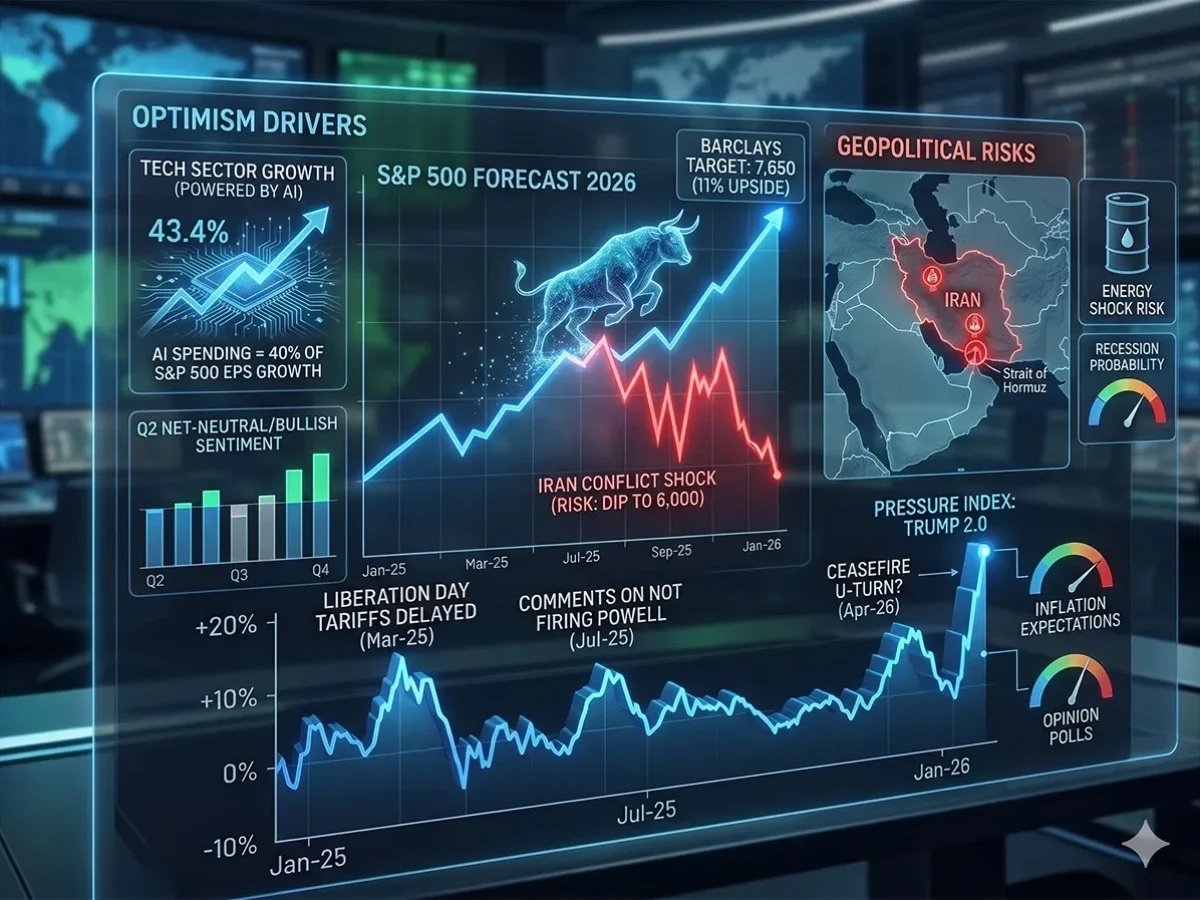
The optimistic narrative of early 2026 is facing a harsh reality check. Following a week of volatile data, the S&P 500 slipped today, weighed down by a “one-two punch” of hot consumer and producer inflation. The market is now pricing in a fundamentally different Federal Reserve path than it was just a month ago.
With U.S. Producer Prices (PPI) marking their steepest climb since early 2022, the “readjustment trade” we’ve been seeing in India is now mirrored on Wall Street.
The “Warsh” Factor and Fed Uncertainty
A significant shadow over today’s trading is the leadership transition at the Federal Reserve. With Jerome Powell’s term ending this Friday (May 15, 2026), the market is adjusting to the arrival of Kevin Warsh.
-
Rate Hike Risks: The CME FedWatch Tool now shows a 34.3% chance of a rate hike by December—a massive jump from 15% just last week.
-
Policy Shift: Warsh is perceived as more hawkish; his arrival, combined with 6% wholesale inflation, suggests that rate cuts are completely off the table for 2026.
The Geopolitical Wildcard: Trump in Beijing
While inflation dominated the ticker, the “real-world” news is centered on President Trump’s arrival in Beijing. Accompanied by tech titans Elon Musk and Jensen Huang (Nvidia), the visit aims to address trade imbalances. However, Trump’s downplaying of China’s role in the Iran conflict adds a layer of diplomatic tension that could keep global energy prices—and by extension, inflation—unpredictably high.
Market Snapshot: May 13, 2026 (09:45 AM ET)
Despite the broader index slip, a “flight to quality” and specific sector strength (notably chips) provided some support:
| Stock / Index | Price / Change | Context |
| S&P 500 | Slipping 0.19% | Drifting from record highs as utilities and energy feel the heat. |
| ON Semiconductor | +10.48% | Leading the gainers as automotive chip demand remains resilient. |
| First Solar | +5.06% | A rare green spot in energy as domestic solar demand hedges against oil volatility. |
| Coterra Energy | -8.62% | Sliding as investors weigh the risk of a demand slowdown against high prices. |
| Nasdaq | Flat | Supported by the Philadelphia Semiconductor Index (+1.7%), showing AI hardware remains a priority. |
Connecting the Dots for Indian Investors
The ripples from today’s U.S. session will likely hit the Indian markets in the next trading session:
-
Tech Resilience: The strength in Nvidia and the broader chip sector suggests that the AI industry interest we’ve been tracking remains a “safe haven” even in a high-rate environment.
-
Currency & FIIs: With the Fed potentially leaning toward a hike rather than a pause, the pressure on the Rupee (near 95.80) will intensify, likely leading to continued FII outflows from Indian equities.
-
Austerity & Consumption: As global markets brace for “restrictive policy,” the Indian government’s call for austerity looks increasingly like a strategic move to preserve forex reserves and manage the trade deficit.
Bottom Line: The market is no longer looking for “when” rates will fall, but “if” they will rise again. For your watchlist, the focus should remain on companies with low debt and high pricing power—firms that can thrive even if the cost of capital stays high throughout the year.
The optimistic narrative of early 2026 is facing a harsh reality check. Following a week of volatile data, the S&P 500 slipped today, weighed down by a “one-two punch” of hot consumer and producer inflation. The market is now pricing in a fundamentally different Federal Reserve path than it was just a month ago.
With U.S. Producer Prices (PPI) marking their steepest climb since early 2022, the “readjustment trade” we’ve been seeing in India is now mirrored on Wall Street.
The “Warsh” Factor and Fed Uncertainty
A significant shadow over today’s trading is the leadership transition at the Federal Reserve. With Jerome Powell’s term ending this Friday (May 15, 2026), the market is adjusting to the arrival of Kevin Warsh.
-
Rate Hike Risks: The CME FedWatch Tool now shows a 34.3% chance of a rate hike by December—a massive jump from 15% just last week.
-
Policy Shift: Warsh is perceived as more hawkish; his arrival, combined with 6% wholesale inflation, suggests that rate cuts are completely off the table for 2026.
The Geopolitical Wildcard: Trump in Beijing
While inflation dominated the ticker, the “real-world” news is centered on President Trump’s arrival in Beijing. Accompanied by tech titans Elon Musk and Jensen Huang (Nvidia), the visit aims to address trade imbalances. However, Trump’s downplaying of China’s role in the Iran conflict adds a layer of diplomatic tension that could keep global energy prices—and by extension, inflation—unpredictably high.
Market Snapshot: May 13, 2026 (09:45 AM ET)
Despite the broader index slip, a “flight to quality” and specific sector strength (notably chips) provided some support:
| Stock / Index | Price / Change | Context |
| S&P 500 | Slipping 0.19% | Drifting from record highs as utilities and energy feel the heat. |
| ON Semiconductor | +10.48% | Leading the gainers as automotive chip demand remains resilient. |
| First Solar | +5.06% | A rare green spot in energy as domestic solar demand hedges against oil volatility. |
| Coterra Energy | -8.62% | Sliding as investors weigh the risk of a demand slowdown against high prices. |
| Nasdaq | Flat | Supported by the Philadelphia Semiconductor Index (+1.7%), showing AI hardware remains a priority. |
Connecting the Dots for Indian Investors
The ripples from today’s U.S. session will likely hit the Indian markets in the next trading session:
-
Tech Resilience: The strength in Nvidia and the broader chip sector suggests that the AI industry interest we’ve been tracking remains a “safe haven” even in a high-rate environment.
-
Currency & FIIs: With the Fed potentially leaning toward a hike rather than a pause, the pressure on the Rupee (near 95.80) will intensify, likely leading to continued FII outflows from Indian equities.
-
Austerity & Consumption: As global markets brace for “restrictive policy,” the Indian government’s call for austerity looks increasingly like a strategic move to preserve forex reserves and manage the trade deficit.
Bottom Line: The market is no longer looking for “when” rates will fall, but “if” they will rise again. For your watchlist, the focus should remain on companies with low debt and high pricing power—firms that can thrive even if the cost of capital stays high throughout the year.
