

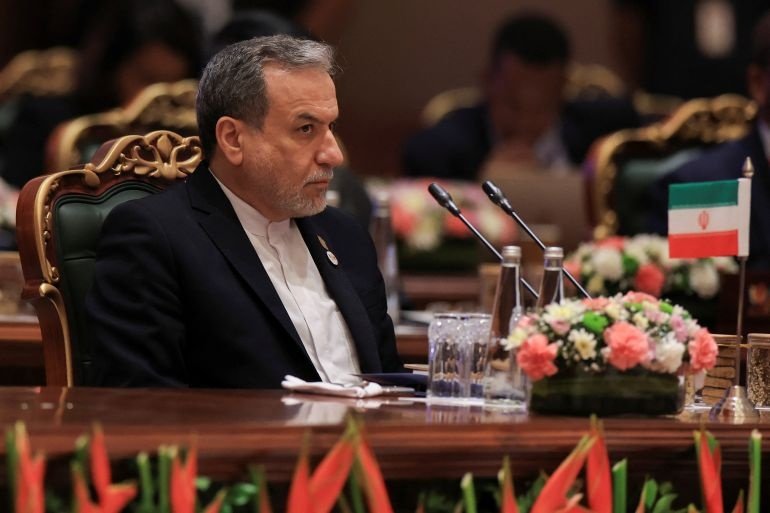
In a high-stakes diplomatic confrontation, Iranian Foreign Minister Abbas Araqchi appealed to the BRICS nations on Thursday to formally condemn the United States and Israel. Speaking at the BRICS Foreign Ministers’ Meeting in New Delhi, Araqchi characterized the ongoing conflict as a violation of international law that threatens global stability.
Rare Confrontation with the UAE
The meeting provided a rare and tense moment as Iranian and Emirati officials shared a room for the first time since the outbreak of the U.S.-Israeli war against Iran on February 28.
Araqchi used the platform to level serious accusations against the United Arab Emirates, an ally of the United States. He alleged that the UAE has been directly involved in military operations against Iranian territory. This public accusation complicates regional dynamics just as Prime Minister Narendra Modi is scheduled to visit the UAE to discuss long-term energy security and oil supply deals.
Focus on International Law
The Iranian Foreign Minister’s address focused on several key demands:
-
Sovereignty and Legality: He urged the emerging economies of BRICS to uphold the principles of the UN Charter and reject what he described as Western military aggression.
-
Regional Security: Araqchi argued that the presence of “extra-regional” forces—referring to U.S. and Israeli military assets—is the primary cause of instability in the Middle East and the closure of the Strait of Hormuz.
The BRICS Response
The meeting, hosted in the shadow of the regional war, underscores the growing role of BRICS as a forum for geopolitical negotiation outside of Western-led institutions. While Indian Foreign Minister S. Jaishankar has called for general UN reform and representation for the Global South, the group now faces the challenge of addressing direct conflict between a long-term member (Iran) and a key regional partner (the UAE).
The outcome of these talks in New Delhi is expected to influence the joint statement issued by the BRICS ministers, as they attempt to balance the interests of their diverse membership amid escalating global tensions.
