

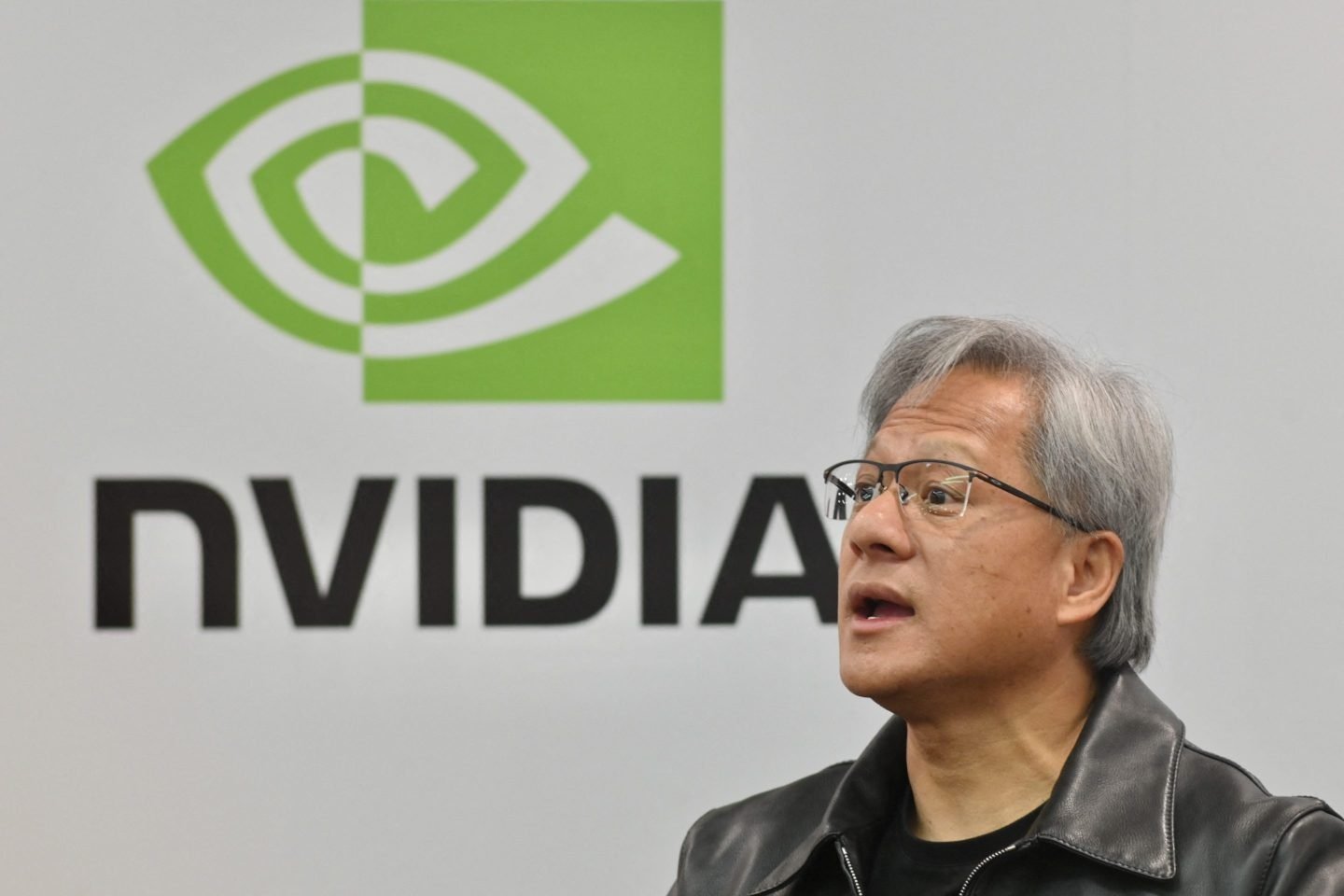
It is a peculiar paradox of the current technology cycle: a company can deliver a flawless financial scorecard, comfortably beat Wall Street’s consensus estimates, issue blockbuster forward guidance, and still see its stock price slip in after-hours trading.
This is the reality confronting Nvidia. Having successfully engineered its corporate identity from a hardware chip manufacturer into a full-stack artificial intelligence infrastructure provider, the company is learning that its biggest near-term challenge isn’t a competitor’s chip—it is the sheer weight of institutional expectations.
The Fundamental Engine: Beyond the Chip
Nvidia’s quarter proved that the global AI infrastructure spend is still actively expanding. The data center business remains an unrivaled growth engine, fed by a capital expenditure super-cycle with four distinct demand pillars:
-
Hyperscaler CapEx: Cloud titans continuing to aggressively stack graphics processing units (GPUs) to train next-generation frontier models.
-
Enterprise Adoption: Mainstream corporate entities moving past theoretical AI pilots and deploying fine-tuned models into production workflows.
-
Sovereign AI: Nation-states investing directly in domestic computing infrastructure to maintain technological independence.
-
Agentic AI: The sudden architectural transition toward autonomous AI agents that require constant, low-latency inference capacity.
CEO Jensen Huang’s underlying thesis is that AI has shifted from a speculative software trend to a permanent, foundational technology layer for the global economy.
The Friction Points: Why the Street Paused
If the underlying operational metrics are so robust, why did the stock experience immediate post-earnings selling pressure? Investors are actively balancing Nvidia’s current execution against three structural head-winds:
-
The Valuation Ceiling: Markets had already priced in a near-perfect operational narrative. When a stock is valued at an extreme multiple of its sales, matching estimates is no longer enough; it requires a massive, un-forecasted blowout to force a leg higher.
-
The Geopolitical Blindspot (China): Ongoing U.S. export restrictions continue to restrict Nvidia’s addressable market. The company’s forward guidance now assumes minimal to zero financial contribution from Chinese enterprise clients, leaving a massive geographic engine permanently sidelined.
-
The Vertical Threat: While legacy chip rivals like AMD continue to expand their product roadmaps, the more potent threat comes from Nvidia’s own largest customers. Google, Amazon, and Microsoft are building custom, in-house application-specific integrated circuits (ASICs) to decouple themselves from Nvidia’s premium pricing.
The Tactical Takeaway: Nvidia’s ultimate defense is not its silicon architecture; it is its deeply entrenched CUDA software ecosystem. Millions of developers are structurally locked into Nvidia’s software framework, making a hardware-only migration incredibly costly for enterprises. However, as cloud providers try to build custom silicon to bypass this premium, Nvidia must continually prove that its integrated system stack delivers a total cost of ownership (TCO) that internal cloud projects simply cannot replicate.
