

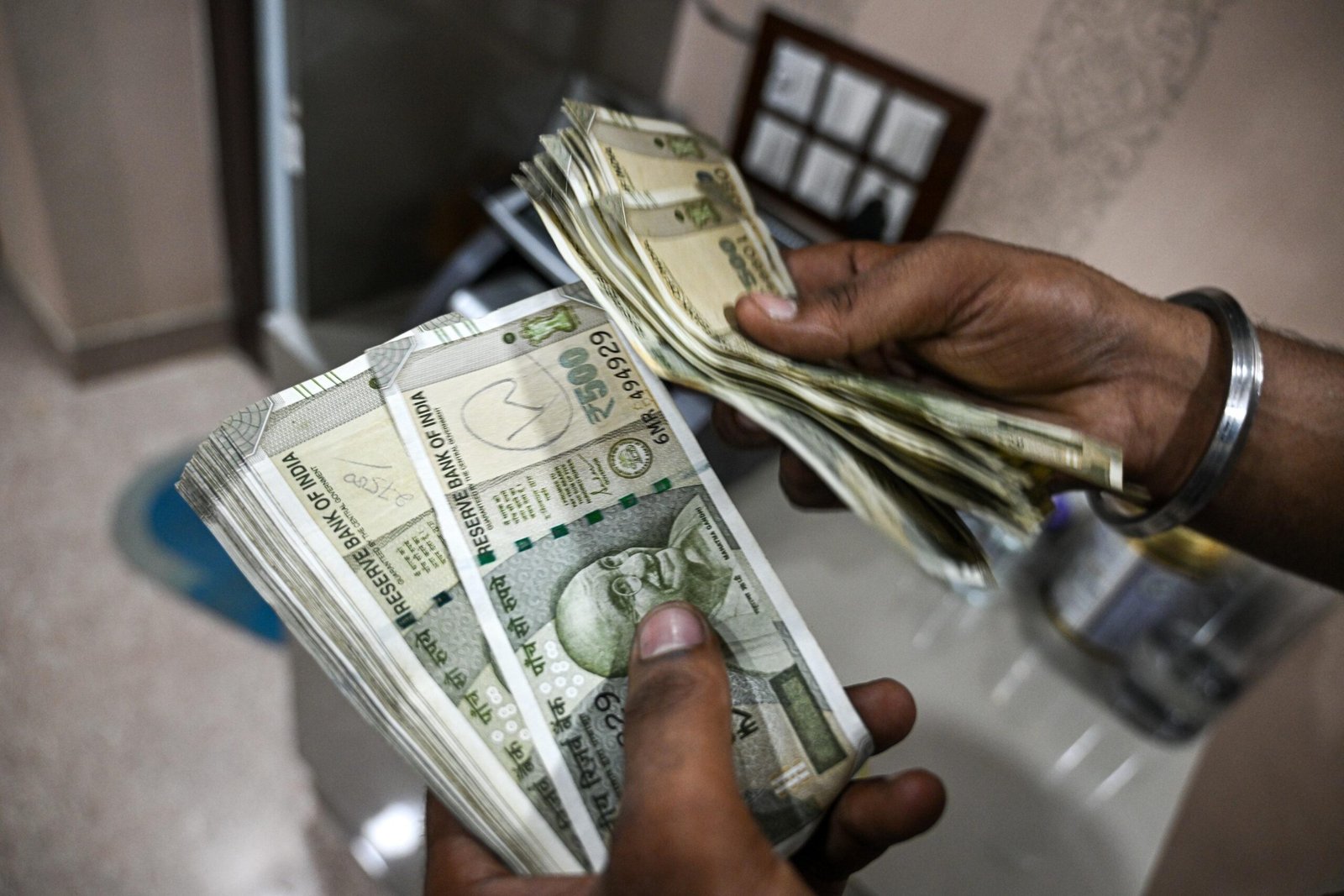
The relentless depreciation of the Indian rupee has pushed international asset managers to recalibrate their emerging-market playbooks. A widening trade deficit and aggressive global fund outflows are fueling intense structural pressure, forcing powerhouse asset management firms to actively game out a once-unthinkable macroeconomic scenario: the rupee breaching the symbolic three-digit threshold of 100 per US dollar.
Global institutions—including Aberdeen Investments, MetLife Investment Management, and Gamma Asset Management SA—now openly acknowledge that a multi-month, structural stalemate in the West Asia conflict could permanently elevate India’s oil import bill and accelerate the defensive flight toward the greenback.
The Anatomy of an Outflow Super-Cycle
The currency’s sharp, 7.4% year-to-date collapse far exceeds the historical 3% to 4% annual depreciation zone that the Reserve Bank of India typically flags as sustainable. This sudden structural shift is directly linked to an aggressive realignment of global portfolio capital:
-
The Equity Capitulation: Global funds have dumped a staggering, record-breaking $23 billion worth of Indian equities so far in 2026. This mass exodus has easily overwhelmed the minor $1.3 billion that institutional debt investors trickled into local index-eligible bonds.
-
The Yield Cushion Squeeze: As foreign portfolio managers watch local currency losses rapidly dissolve their underlying asset gains, the risk premium required to hold Indian debt is surging, placing heavy strain on local sovereign bond yields.
Wall Street Alters the Target Matrix
As the spot market rapidly knocks on the doors of 97, major banking desks and macroeconomic researchers are aggressively lifting their USD/INR projection ceilings:
| Banking Institution | New Projected Trading Band | Previous Target Baseline | Primary Macro Driver |
| DBS Bank | 95.00 – 100.00 | 90.00 – 95.00 | Prolonged energy shock and structurally higher logistics costs. |
| Kotak Mahindra Bank | 93.00 – 99.00 | Revised Upper Ceiling | Persistent capital account deficits and FII equity liquidations. |
| Citigroup Inc. | 98.00 (Short-Term) | Immediate View | Tactical macro positioning ahead of localized central bank interventions. |
| ANZ Banking Group | 97.50 (Year-End) | 93.00 | Higher-for-longer oil import strain weighing on net foreign assets. |
The Counter-Contrarian View: The Bounce Play
Despite the heavy bearish consensus dominating macro desks, some of the world’s largest allocators argue that the selling has become over-extended. The London-based Amundi Investment Institute suggests that the broad-based capitulation across Asian emerging-market currencies has created deep valuation cushions:
“There is more upside surprise eventually on the appreciation side,” notes Alessia Berardi, Global Head of Macroeconomics at Amundi. The thesis rests on the idea that once regional geopolitical standoffs reach a definitive diplomatic resolution, cheap local assets will trigger an explosive multi-billion-dollar mean reversion rally.
The Central Bank Interventions
For global funds currently maintaining a strict underweight stance on the rupee, the near-term trading trajectory relies heavily on the scale of the Reserve Bank of India’s market firewall. While the RBI consistently reiterates that its primary mission is smoothing excessive intraday volatility rather than maintaining a hard psychological line, an institutional slide toward 100/USD is highly likely to trigger aggressive, non-standard intervention defense protocols.
The Structural Reality: The rupee’s ongoing battle with the 100-mark isn’t just a domestic concern—it is a clear reflection of a global economy grappling with structurally elevated energy costs and a hawkish Federal Reserve. For institutional macro desks, the core strategy has transitioned from chasing high-growth domestic yields to building aggressive currency hedges that can survive a prolonged macroeconomic storm.
