

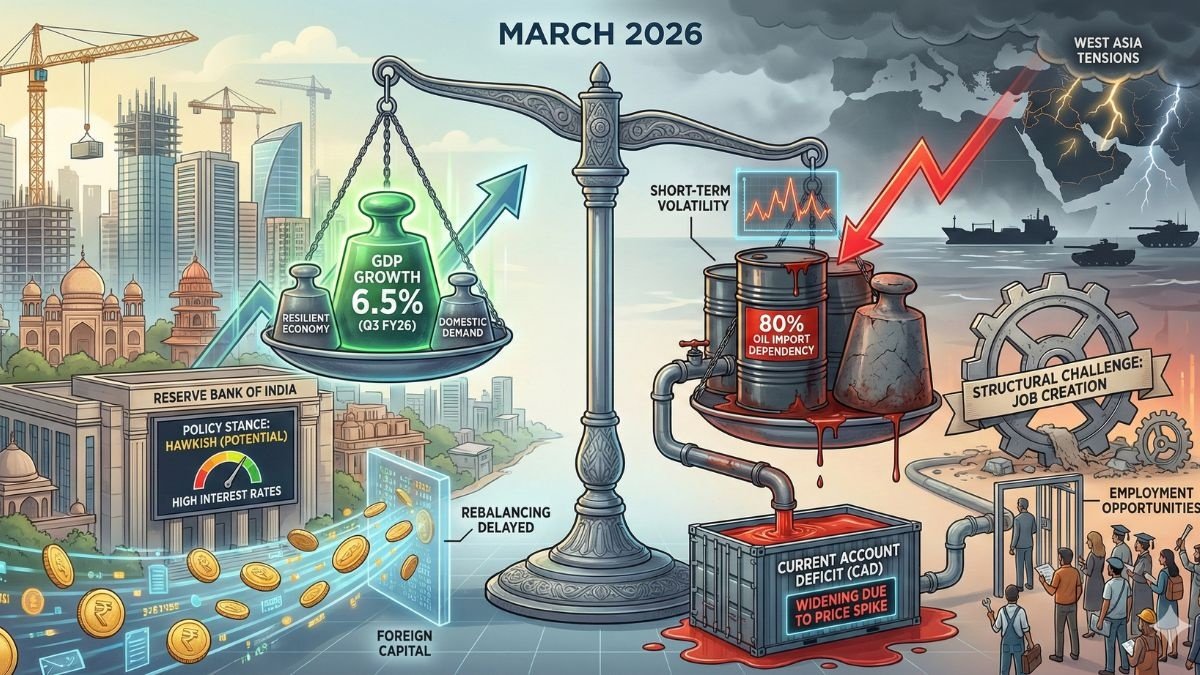
The warning from Indian commerce officials on April 4, 2026, underscores a critical shift in the trade landscape. While initial concerns focused on energy and logistics, the government is now highlighting a “contagion effect”—where a prolonged West Asia crisis threatens the broader competitiveness of Indian exports to the US, Europe, and Asia.
Here is the breakdown of the official stance and the resulting impact on global trade.
1. The “Contagion” of Export Logistics
Commerce Secretary Rajesh Agrawal and other senior officials have noted that the crisis is no longer confined to the Middle East. The disruption is rippling across the globe through three main channels:
-
The Freight Spike: Container shipping rates have jumped by up to 40% in the first few days of April. This is driven by a massive spike in “war-risk” insurance premiums and higher fuel costs.
-
The Route Detour: With the Strait of Hormuz effectively restricted and the Red Sea facing renewed threats, vessels are being forced to reroute via the Cape of Good Hope. This adds 15–20 days to transit times for shipments bound for the US and Europe.
-
Inventory Crunch: Delayed arrivals of raw materials (like solvents for pharma or chips for electronics) are creating a “backward” disruption, where Indian factories cannot produce enough goods to fulfill orders for the rest of the world.
2. Sector-Specific Red Alerts
| Sector | Nature of Impact | Official Outlook |
| Pharmaceuticals | Shortage of critical intermediates/solvents; freight delays to the US. | Expected to stay “positive” for FY26, but the $32 billion target is now unlikely. |
| Textiles & Apparel | High sensitivity to shipping costs; buyers in Europe are showing reluctance to accept price hikes. | High risk of order cancellations if the “Cape Route” becomes the new norm. |
| Petrochemicals | Surge in input costs due to energy supply chain breaks. | Government has exempted 40 critical items from customs duty to provide “targeted relief.” |
3. The Strategy: “Resilience & Diversification”
The government is urging exporters to move away from “just-in-time” supply chains to a “just-in-case” model:
-
Reducing Dependency: Officials are pushing the pharma and tech industries to find non-Middle Eastern sources for raw materials.
-
Market Diversification: A renewed focus on ASEAN and Latin American markets is being encouraged to offset the logistics nightmare of the Atlantic and Mediterranean routes.
-
LPG Prioritization: To keep the wheels of industry moving, the government is prioritizing limited LPG supplies for the manufacturing sector.
The “friendly nation” caveat
Interestingly, while the Strait of Hormuz is largely blocked, Iran has reportedly allowed eight India-flagged vessels (including the Shivalik and Jag Laadki) to pass through in the last 48 hours. This “friendly nation” status is providing a small, high-risk window for essential trade, but officials warn it is not a sustainable solution for the massive volume of India’s global exports.
Bottom Line: The official message is clear: India’s domestic growth remains resilient, but its role as a global export powerhouse is currently at the mercy of the “fog of war” in West Asia.
