

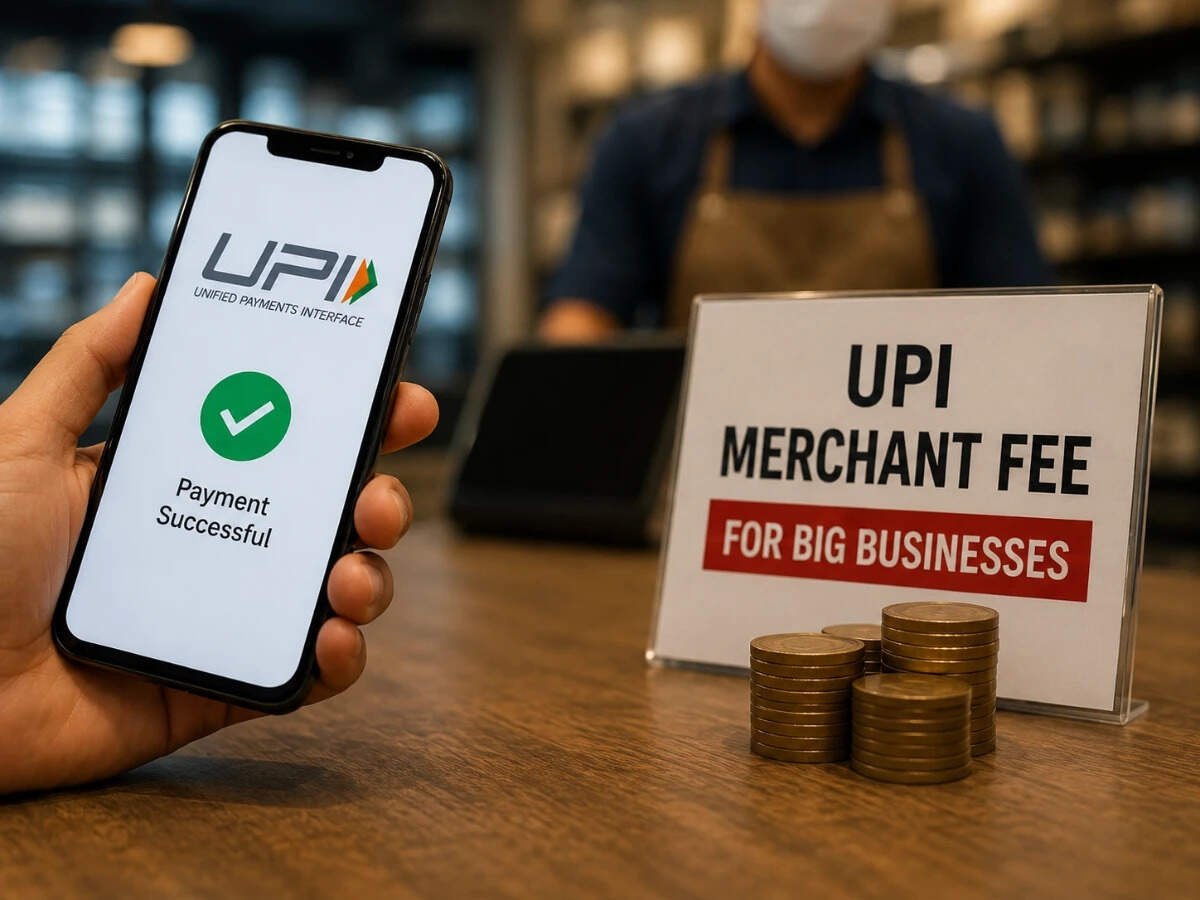
As the Indian government deliberates reintroducing a Merchant Discount Rate (MDR) on select high-value Unified Payments Interface (UPI) transactions for large businesses, industry experts are raising flags. The debate, they argue, must pivot from the commercial sustainability of fintech firms to a more pressing macroeconomic concern: who ultimately bears the cost, and how will it impact the broader economy?
1. The Reality of Who Pays the MDR
While the proposed structural shift is designed to apply strictly to large retailers—specifically targeting merchants with an annual turnover above ₹1 crore to ₹1.5 crore on transactions exceeding ₹2,000—experts argue that banks and payment platforms will not absorb this cost.
Instead, the fee will act as a direct addition to corporate operating expenses. For high-volume businesses operating on thin margins, an MDR of even 5 to 7 basis points will squeeze profitability and limit capital available for reinvestment.
2. A Silent Threat to Consumer Spending
The reintroduction of MDR could trigger an unfavorable feedback loop for retail consumption:
-
Fewer Promotional Offers: To offset the newly introduced transaction processing costs, retailers are highly likely to scale back consumer incentives, cashbacks, and promotional discounts.
-
Price Creep: Merchants may gradually bake the processing fees into the base price of goods and services, directly offsetting government policy efforts intended to lower the cost of doing business.
-
Slowing Low-Value Traction: Even if small kirana stores remain technically exempt, systemic friction or confusion around high-value thresholds could lead to a broader psychological resistance toward digital checkouts.
3. Threatening Digital Public Infrastructure (DPI) Status
A core consensus among economic analysts is that UPI should be treated like a national utility rather than a commercial product. Public digital platforms like Aadhaar, DigiLocker, and the GST Network (GSTN) are traditionally evaluated based on the massive, economy-wide value they unlock rather than their individual ability to churn direct corporate profits.
“Introducing a commercial fee structure risks weakening the core simplicity and absolute accessibility that made UPI a globally recognized technology success story in the first place.”
4. Alternate Monetization Channels Already Exist
Experts argue that payment processors do not strictly require a transaction tax to survive. Many large payment entities have successfully scaled by utilizing free payments as a high-velocity customer acquisition funnel. They actively monetize this massive user base through high-margin financial services:
-
Digital Lending & MSME Credit Lines
-
Insurance Distribution Partnerships
-
Wealth Management & Mutual Fund Gateways
The consensus priority among market observers remains clear: the government must find a way to provide sufficient infrastructure incentives to banks and ecosystem participants without increasing structural business costs, hurting consumer demand, or slowing down India’s population-scale digital adoption.
