

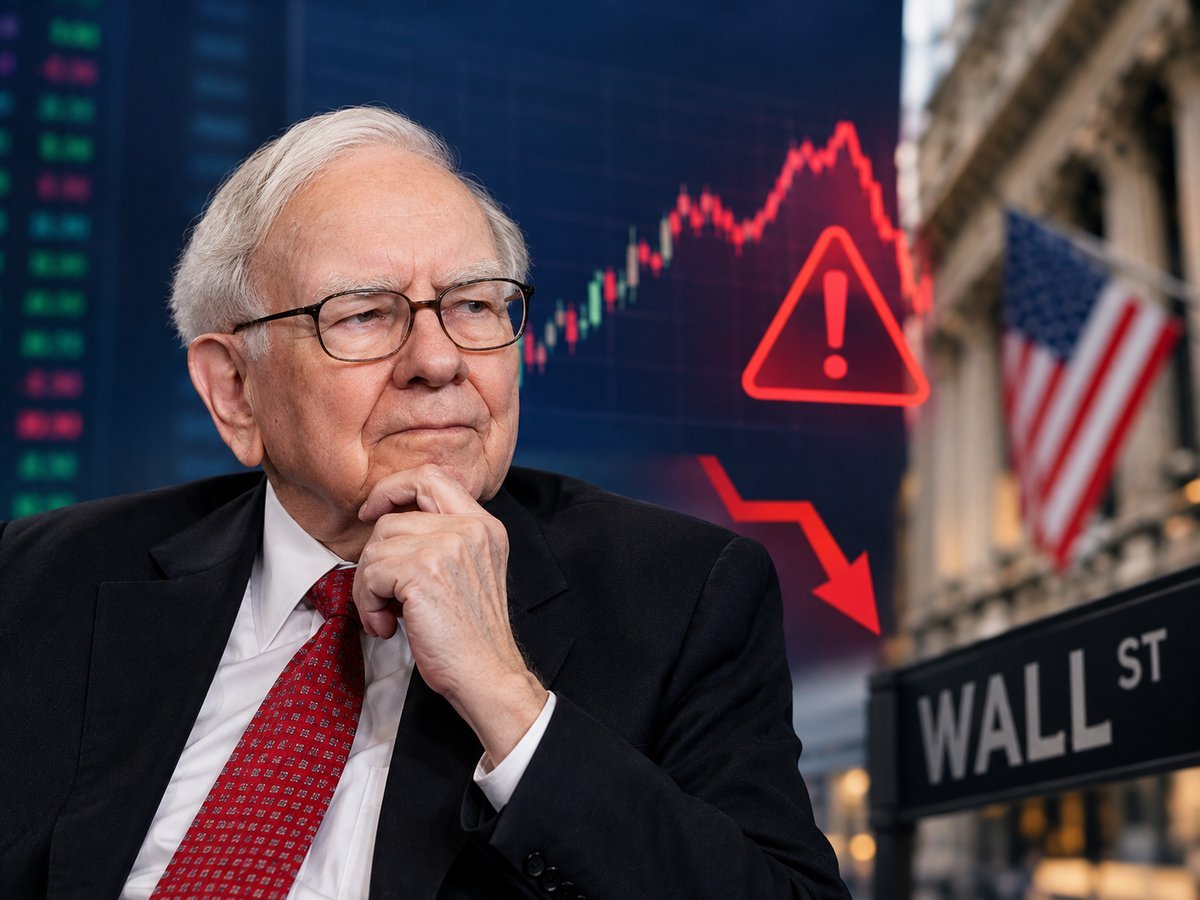
The US stock market is currently flashing a rare and significant valuation warning. According to a recent report by Yahoo Finance, the S&P 500’s cyclically adjusted price-to-earnings (CAPE) ratio—which measures market prices against 10 years of inflation-adjusted earnings—has climbed to approximately 41.
To put this in historical perspective:
-
The long-term average of the CAPE ratio over the past 155 years sits at 17.8.
-
The only other comparable extreme in history was the ~44 reading reached at the height of the dot-com bubble in 2000.
While elevated CAPE readings are generally indicative of weaker long-term returns over the coming years, financial experts note that they do not serve as reliable predictors of an imminent near-term market crash. Markets can remain expensive for extended periods.
Warren Buffett’s Market Caution and Philosophy
Against this backdrop of soaring market valuations, 96-year-old investing legend Warren Buffett has issued blunt warnings regarding current market behavior. In a recent conversation with CNBC’s Becky Quick, Buffett remarked:
“It’s tough to find values when everybody is preferring gambling.”
Buffett has repeatedly characterized the modern market environment as “a church with a casino attached,” noting that he has rarely witnessed investors in such a speculative, gambling-oriented mood.
Rather than chasing short-term trends or the ongoing artificial intelligence frenzy—though Berkshire Hathaway did initiate a position in Alphabet roughly a year ago—Buffett’s core investment philosophy remains rooted in:
-
Economic Moats: Focusing on businesses with durable competitive advantages such as strong brands, scale, switching costs, or powerful network effects.
-
Durable Cash Flows: Prioritizing companies that generate reliable cash flows to fund dividends, share buybacks, or internal reinvestment to drive long-term compounding.
-
Disciplined Timing: Preferring to buy when the broader market is fearful or indifferent rather than when speculative narratives dominate.
Leadership Transition at Berkshire Hathaway
This milestone market moment coincides with a monumental leadership shift for Berkshire Hathaway. After more than six decades at the helm—during which the company delivered an extraordinary annual compound return of about 19.7% between 1965 and 2025 (compared to 10.5% for the S&P 500 including dividends)—Warren Buffett is stepping down as chairman.
-
New Role: Buffett will assume the title of chairman emeritus with immediate effect and will remain active as a member of the board of directors and a major shareholder.
-
Succession: His oldest son, Howard Buffett, who has served on Berkshire’s board since 1993, will succeed him as chairman as part of the company’s long-planned succession strategy.
Reflecting on his transition and the company’s future, Buffett expressed absolute confidence:
“The company is in excellent hands, and I look forward to remaining a shareholder alongside you.”
