

Senior executives frequently operate in high-stakes environments where information is incomplete, priorities compete, and the long-term consequences of strategic choices remain obscured. In these conditions, accumulating more data does not automatically improve judgment; instead, the fundamental challenge lies in determining what matters, how to interpret it, and which alternatives deserve attention.
The Hidden Impact of Cognitive Biases
Cognitive biases heavily influence how leaders frame problems, evaluate evidence, and assess potential outcomes—often operating beneath conscious awareness.
-
The Trap of Experience: While professional experience builds valuable pattern recognition, it can also breed rigid assumptions. A playbook that yielded success in one market can mislead a leader when applied to a fundamentally different environment.
-
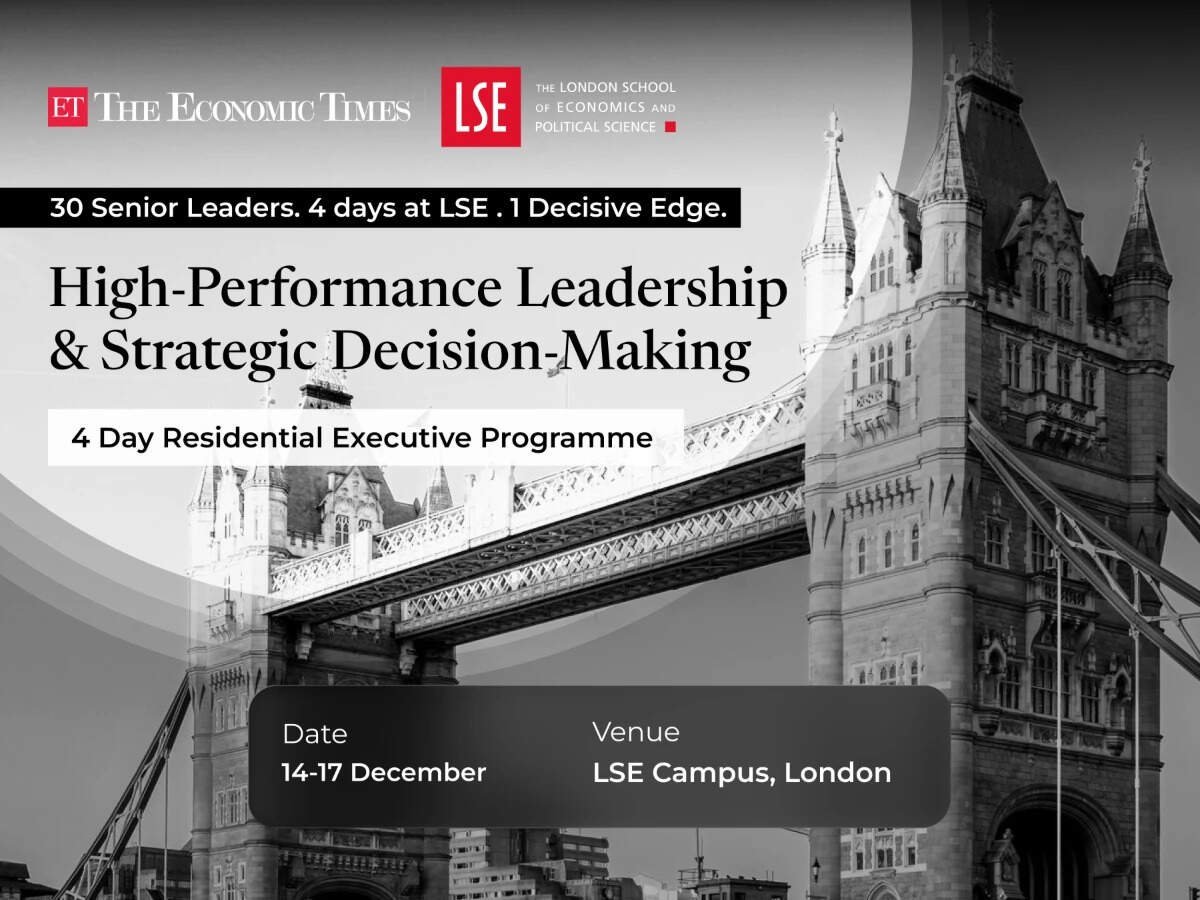
Systemic Influence: As examined in executive education initiatives like the High-Performance Leadership & Strategic Decision-Making programme—a collaboration between The Economic Times and the London School of Economics & Political Science (LSE) led by Dr. Barbara Fasolo—the goal is moving beyond simply acknowledging biases. Leaders must actively study how these mental shortcuts distort judgment.
Designing Better Decision Environments
Good decision-making extends beyond individual intellect; it requires deliberate choice architecture. Because executive choices are shaped by leadership teams and organizational processes, leaders must evaluate whether their corporate systems genuinely encourage teams to question baseline assumptions or merely reinforce established echo chambers.
Ultimately, sophisticated leadership is not about eliminating uncertainty or relying purely on past intuition. It is about building systematic debiasing frameworks, challenging initial interpretations, and designing environments that support objective, deliberate strategic choices.
