

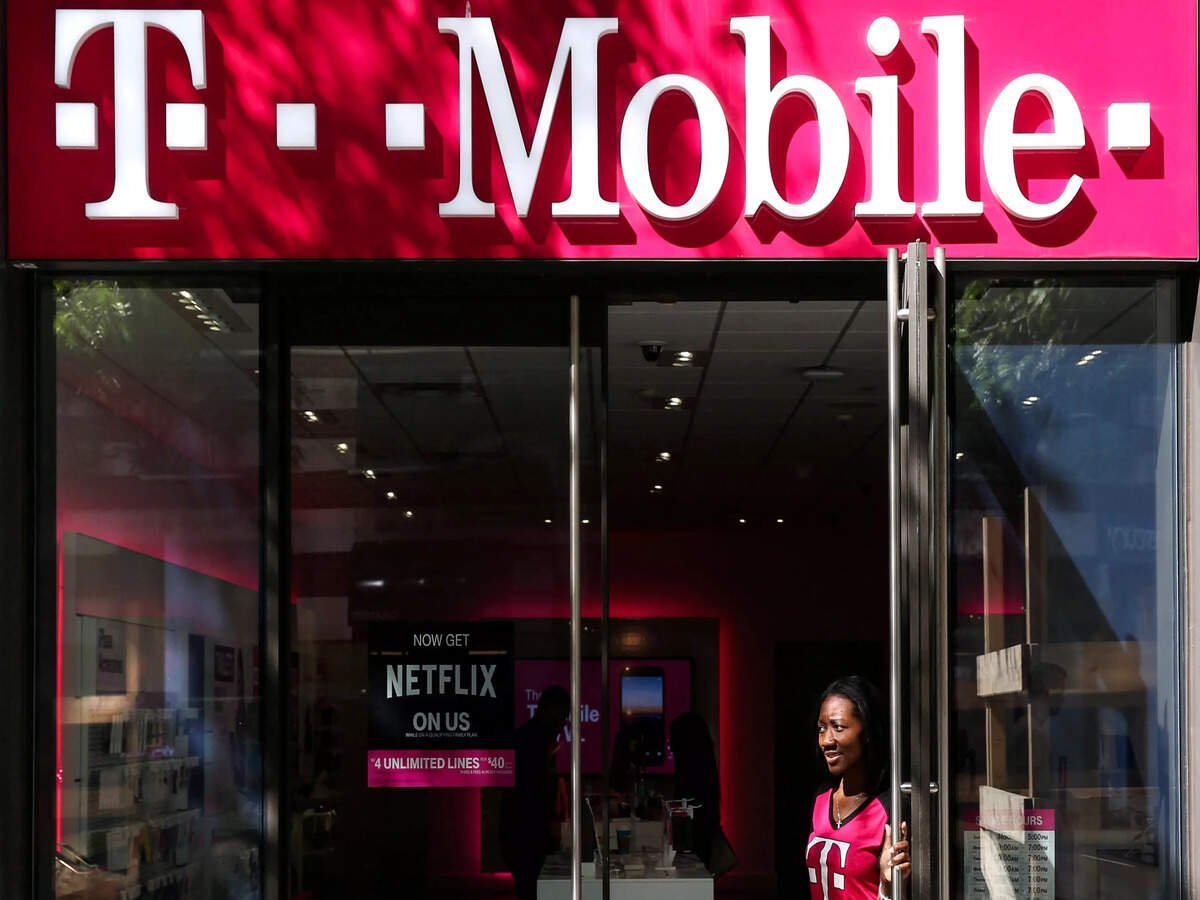
A major selloff recently wiped out billions in market value across the U.S. telecommunications sector, triggering intense debate among retail investors, institutional traders, and Wall Street analysts.
1. T-Mobile Rebounds After Historic Single-Day Decline
T-Mobile US shares edged up roughly 0.39% in overnight trading following a brutal 13%+ drop on Friday, October 9, 2026. This marked the steepest single-day decline for T-Mobile since it went public in 2013.
The sharp drop was sparked by news that SpaceX is expanding its satellite wireless ambitions, sending shockwaves across the entire wireless carrier ecosystem.
2. Retail Investors Bet on a Recovery
Despite the historic decline, retail sentiment turned aggressively bullish. Data from Stocktwits revealed that sentiment for T-Mobile reached its most optimistic level since July, with retail traders viewing the drop as a compelling “buy-the-dip” opportunity.
However, market analysts caution that retail optimism alone cannot offset structural shift risks.
3. SpaceX’s $8B Spectrum Deal Sparks Telecom Fears
The primary catalyst for the selloff was SpaceX’s definitive agreement to acquire nationwide low-band 800 MHz spectrum from private equity firm Grain Management in an $8 billion transaction.
By acquiring low-band spectrum, SpaceX’s Starlink Mobile aims to:
-
Dramatically enhance indoor penetration and signal reach.
-
Transition from supplemental remote coverage to direct mobile connectivity.
-
Expand low-latency mobile voice and data services.
The transaction remains subject to approval from the Federal Communications Commission (FCC).
4. Sector-Wide Telecom Selloff
The panic extended far beyond T-Mobile as investors reassessed the long-term moat of terrestrial cellular networks:
The uniform drop indicates that markets are pricing in systemic disruption to traditional wireless business models rather than single-operator issues.
5. Direct-to-Cell: A Structural Threat?
Starlink’s Direct-to-Cell technology enables standard LTE-capable smartphones to establish satellite connections without specialized hardware modifications.
While direct satellite connectivity initially targeted dead zones and emergency services, acquiring low-band spectrum allows SpaceX to build out broader, higher-capacity cellular coverage.
Key Execution Hurdles for SpaceX:
-
Regulatory approval timelines from the FCC.
-
Satellite constellation scaling and backhaul management.
-
Network capacity limits compared to dense terrestrial tower networks.
6. Valuation vs. Long-Term Disruption Timelines
Wall Street remains divided on whether the selloff was an overreaction:
-
Citi Analysis: According to research cited by Barron’s, analysts at Citi believe traditional carriers retain near-to-medium term earnings support. Low customer churn and extended device replacement cycles provide cash-flow stability.
-
Impact Horizon: Citi projects that any material financial or subscriber displacement caused by SpaceX’s satellite network will likely not show up in carrier financial statements until at least 2029.
7. Upcoming Earnings: The Next Reality Test
T-Mobile’s upcoming Q3 earnings release on October 28 will serve as an immediate test for the stock’s recovery.
Key Metrics to Watch:
-
Postpaid phone net subscriber additions.
-
Average Revenue Per User (ARPU) trends.
-
Management’s formal assessment of space-based competition and spectrum strategy.
Investor Takeaway
While Starlink’s spectrum acquisition introduces long-term uncertainty for legacy telecom carriers, traditional operators maintain vast fiber backhaul and capacity advantages in urban markets. The October 28 earnings report will reveal whether fundamentals remain intact enough for dip-buyers to sustain a rally.
