

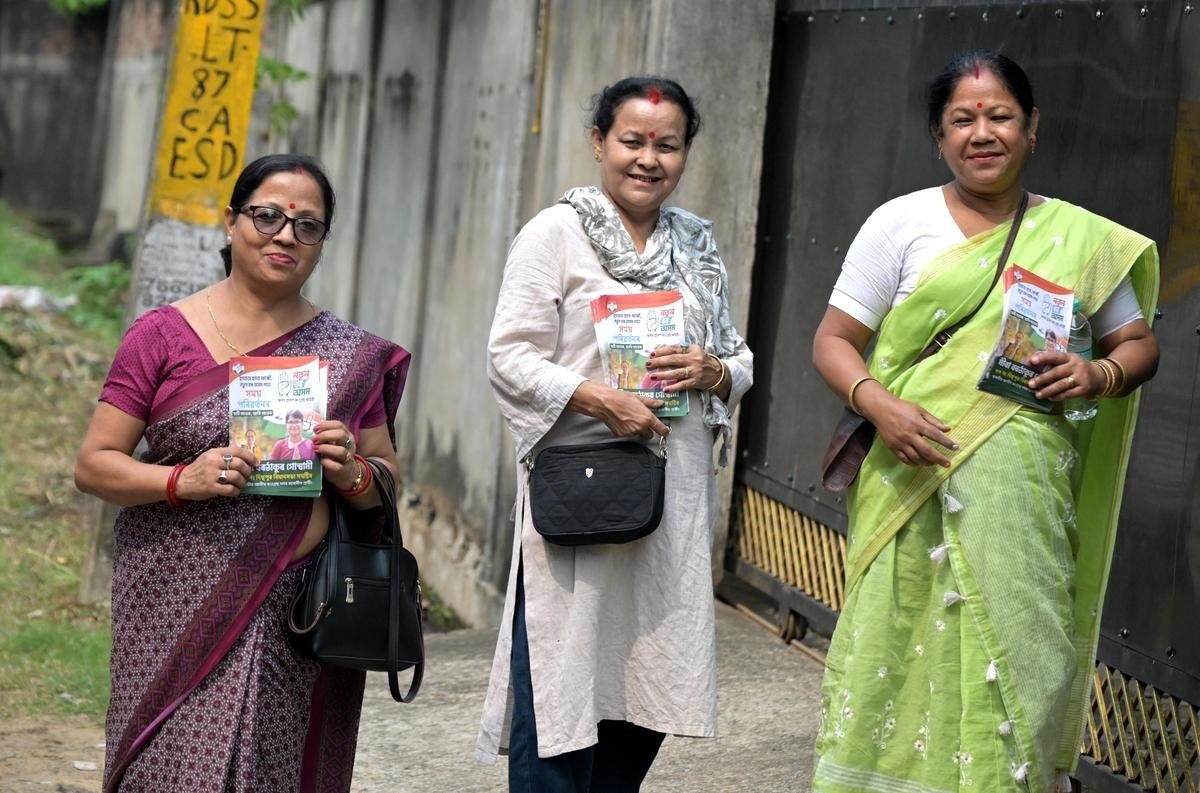
In a tactical departure from its usual high-decibel “Mission 100+” style campaigning, the Bharatiya Janata Party (BJP) has adopted a more measured approach for the ongoing 2026 Assam Assembly Elections. Instead of publicly announcing rigid seat targets, the party is focusing on a broader “vote share surge” to consolidate its dominance in the Northeast.
1. The Shift in Strategy: Why No Seat Targets?
Political analysts suggest this shift is a calculated move to manage internal and external expectations:
- Avoiding Overconfidence: By not setting a public “magic number,” the party aims to prevent voter complacency and minimize the impact of anti-incumbency against local MLAs.
- Consolidation over Numbers: The leadership is betting on a significant increase in its overall vote share (aiming beyond the 44-46% mark) to demonstrate a deeper, more permanent penetration into the state’s diverse electorate.
- Managing Alliances: Working with partners like the Asom Gana Parishad (AGP) and the United People’s Party Liberal (UPPL) requires a delicate balance of seat-sharing, where fixed targets can sometimes create friction.
2. Key Pillars of the BJP Campaign
The party’s “bet” on a vote share surge rests on three major pillars:
- Development & Infrastructure: Highlighting the completion of major bridges, medical colleges, and the expansion of the national highway network over the last decade.
- Direct Benefit Transfers (DBT): The “Orunodoi” scheme remains a massive silent force, with the party counting on the support of millions of women beneficiaries (Mahila Morcha) to tip the scales.
- Identity & Security: Reiteration of the party’s stance on protecting “Indigenous” interests and border security, which continues to resonate in the Brahmaputra Valley.
3. The Opposition Factor
The BJP’s shift comes as the opposition—led by the Congress-led United Opposition Forum—attempts to consolidate the anti-incumbency vote.
- The Math: If the BJP successfully increases its vote share even by 2-3%, it could negate any gains the opposition makes through strategic seat-sharing, effectively making several “swing” constituencies safe for the ruling alliance.
4. What to Watch For
- The “Char” Areas: How much the BJP can minimize its losses or even make minor inroads into the minority-dominated regions.
- Upper Assam: Whether the party can maintain its near-total sweep of the tea tribe heartland, which was instrumental in its 2016 and 2021 victories.
Summary: BJP’s 2026 Assam Playbook
| Old Strategy (2021) | New Strategy (2026) |
| Focus on “Mission 100+” (Seats) | Focus on Aggregate Vote Share |
| High-decibel rallies | Deep-rooted “Panna Pramukh” micro-management |
| Focus on anti-CAA rhetoric | Focus on Infrastructure & DBT (“Orunodoi”) |
The results will ultimately determine if this “quiet consolidation” is more effective than the aggressive seat-chasing of the past.
