

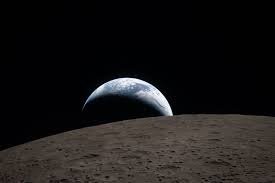
In a monumental leap for human deep-space exploration, NASA’s Artemis II mission concluded on Friday with a flawless splashdown in the Pacific Ocean. Carrying four astronauts, the Orion capsule—aptly named Integrity—successfully navigated a high-stakes re-entry, marking the first time humans have returned from the vicinity of the Moon in over half a century.
The Ultimate Stress Test: 5,000 Degrees of Friction
The most critical moment of the 10-day mission was the “re-entry,” where the capsule’s heat shield faced unprecedented thermal stress.
-
The Velocity: Orion slammed into Earth’s atmosphere at 32 times the speed of sound.
-
The Heat: Friction generated temperatures reaching 5,000°F (2,760°C) on the spacecraft’s base.
-
The Strategy: To address concerns following the Artemis I uncrewed test, NASA modified Orion’s re-entry trajectory. This specific path was designed to minimize the duration of peak heat exposure, ensuring the current heat shield design remained within safe operating limits for the crew.
Breaking Apollo-Era Records
The mission was more than just a return to lunar orbit; it redefined the boundaries of human reach in space.
-
Distance Record: The crew reached 252,756 miles (406,771 kilometers) from Earth, surpassing the previous record held by the ill-fated Apollo 13 mission by over 4,000 miles.
-
A Diverse Crew: In a historic shift from the Apollo program, Artemis II included:
-
Christina Koch: The first woman to travel to the Moon.
-
Victor Glover: The first person of color to travel to the Moon.
-
Jeremy Hansen (CSA): The first non-American to travel to the Moon.
-
The Mission at a Glance
| Milestone | Data Point |
| Total Distance Traveled | 694,481 miles (1.1 million km) |
| Mission Duration | ~10 Days |
| Re-entry Speed | Mach 32 |
| Max Temperature | 5,000°F (2,760°C) |
What’s Next for Artemis?
With Integrity safely back on Earth, NASA will begin an exhaustive study of the data collected during this flight. The success of Artemis II serves as the final validation needed for Artemis III, which aims to land humans on the lunar surface—potentially as early as 2028.
While this heat shield design was deemed safe for this mission, future Artemis crafts will transition to a next-generation shield to support the more frequent and rigorous demands of building a permanent lunar base.
