

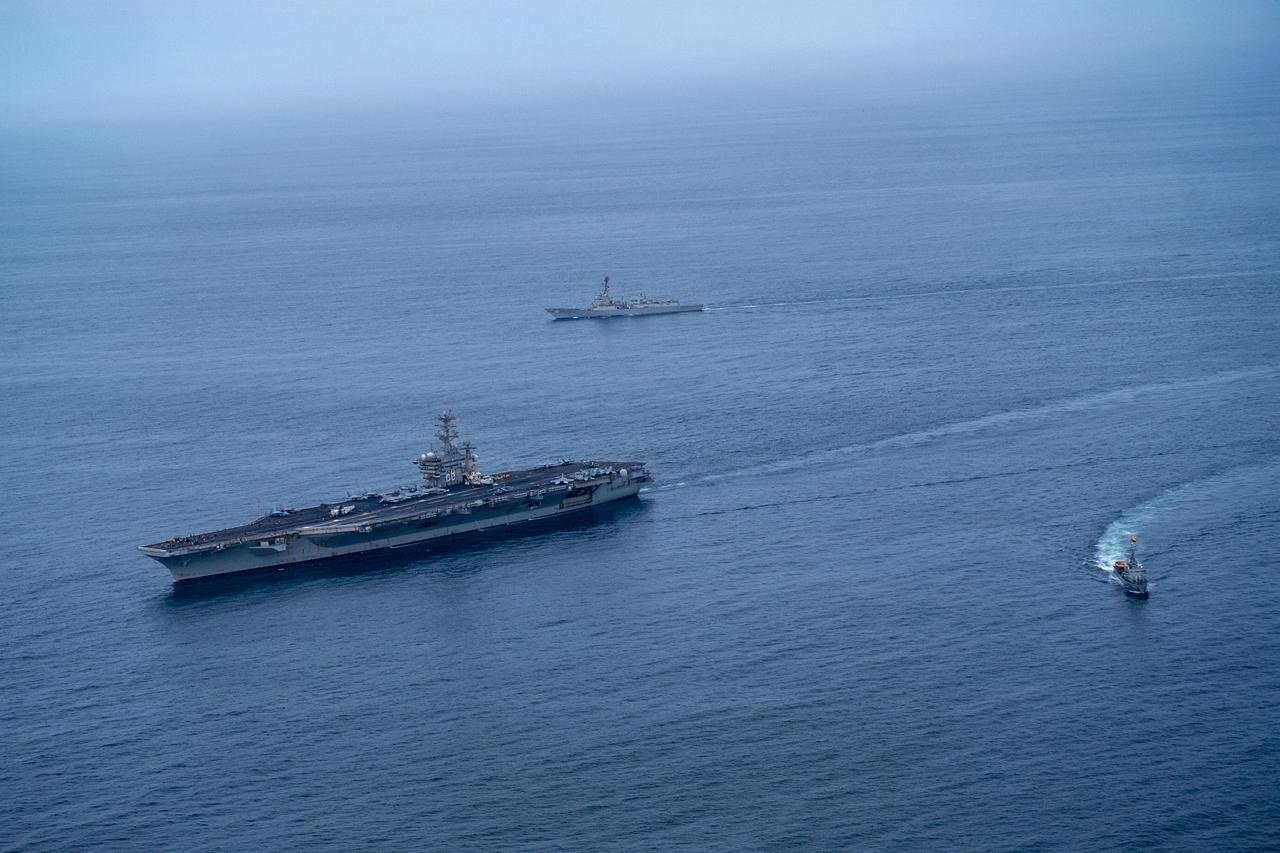
As of April 15, 2026, the Strait of Hormuz has become the center of a high-stakes psychological and military standoff. Both the United States and Iran have issued conflicting claims regarding the effectiveness of a newly implemented US maritime blockade.
1. The US Claim: “Total Economic Halt”
US Central Command (CENTCOM) announced today that it has successfully implemented a sweeping blockade of all maritime traffic entering or exiting Iranian ports.
-
The Operation: Under the command of Admiral Brad Cooper, the US says it has “completely halted” Iran’s sea trade within just 36 hours of the order.
-
The Force: The blockade is enforced by over 10,000 personnel, supported by a dozen warships and dozens of aircraft.
-
The Impact: CENTCOM claims that during the first 24 hours, no ships successfully bypassed the blockade, and at least six merchant vessels were forced to turn back.
-
Selective Enforcement: The US clarifies that this is a “selective blockade”—freedom of navigation is maintained for ships transiting to non-Iranian destinations (like the UAE or Kuwait), but anything linked to Iran is being interdicted.
2. The Iranian Counter: “Sailing Openly”
Tehran has moved quickly to debunk the narrative of a “total blockade.” The Iranian Consulate in Mumbai issued a statement today claiming a major breach of the US line.
-
The Supertanker: Iran claims a Very Large Crude Carrier (VLCC), which was already on a US blacklist, successfully transited the Strait of Hormuz.
-
“No Concealment”: Crucially, the Consulate stated the tanker sailed with its tracker (AIS) on and did not attempt to hide its position, reaching Iranian shores without obstruction.
-
The Message: This move is seen as a direct challenge to US “maritime superiority,” intended to show that Iranian oil can still move despite the massive naval presence.
3. Why the Blockade? (Context of 2026)
This escalation follows the collapse of the “Islamabad Talks” over the weekend, which were rare direct negotiations between the US and Iran aimed at ending the war that began on February 28, 2026.
-
Economic Strangulation: With 90% of Iran’s economy tied to sea trade, the US objective is to force a policy change through “economic strangulation” rather than a full-scale ground war.
-
The “Insurance Blockade”: The conflict has already caused a 70% drop in general tanker traffic, with many ships choosing to anchor outside the strait rather than risk the high insurance premiums and potential for drone or missile strikes.
Current Situation Table: April 15, 2026
| Feature | US Centcom Position | Iranian Position |
| Status | “Fully Implemented” | “Ineffective/Broken” |
| Trade Flow | 0% success for Iranian trade | Supertanker reached shore safely |
| Target | All vessels entering/leaving Iran | “Open sailing” for sanctioned fleet |
| Force Used | 10k+ personnel, dozens of ships | “Picture abhi baaki hai” (Trailer phase) |
Regional Impact: The Consulate in Mumbai has been particularly vocal, even using Bollywood references (citing Shah Rukh Khan’s “Abhi toh trailer hai…”) to suggest that Iran has more tactical surprises in store. Meanwhile, Indian vessels have been among the few to transit the area safely, with 8 ships reported to have made it through earlier this month.
