

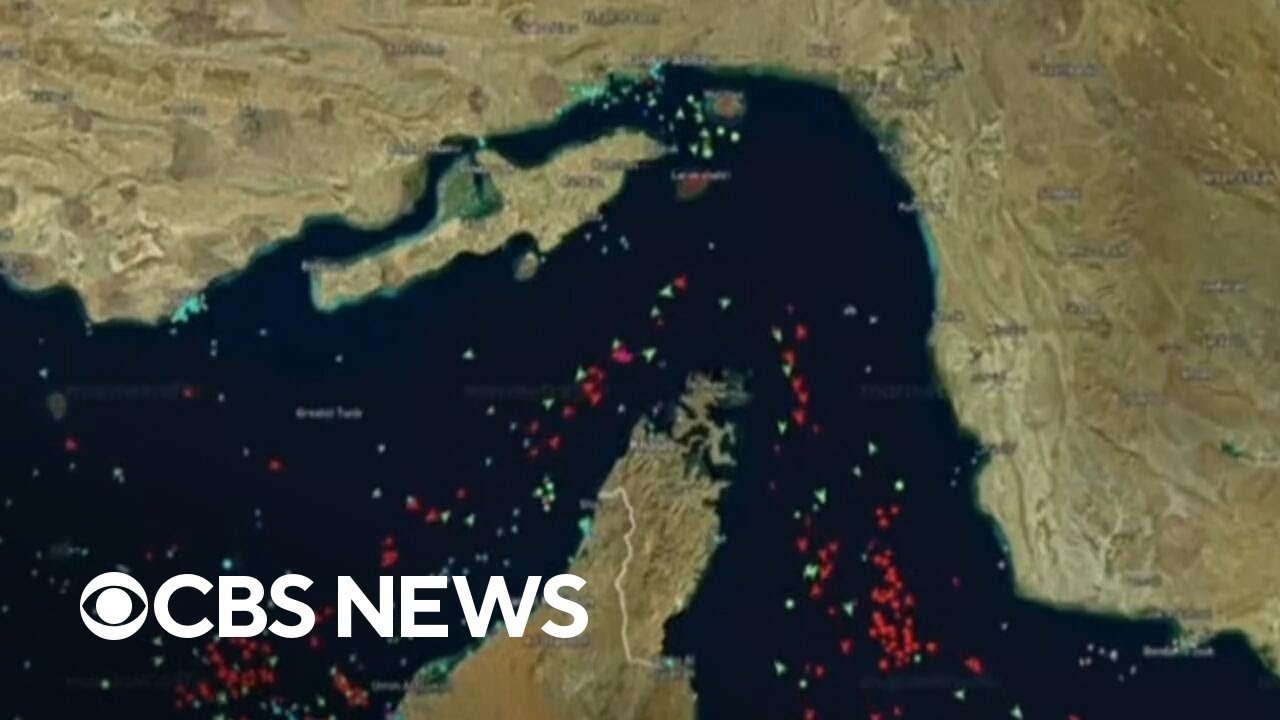
Despite the high-stakes naval blockade ordered by President Donald Trump, maritime tracking data reveals that at least two vessels successfully transited the Strait of Hormuz on Monday, bypassing the U.S. “maximum pressure” cordon just hours after it took effect.
The breach highlights the immense logistical challenge facing the U.S. Navy in monitoring one of the world’s most congested and strategic waterways.
The Vessels Involved
Data from maritime analytics firm Kpler identified the following ships that successfully cleared the strait:
-
The Christianna: A Liberia-flagged bulk carrier. It transited the strait around 1600 GMT on Monday—two hours after the blockade officially began—having just unloaded corn at the Iranian port of Bandar Imam Khomeini.
-
The Elpis: A Comoros-flagged tanker carrying 31,000 tonnes of methanol from the port of Bushehr. It cleared the strait at approximately the same time.
-
The Rich Starry: A Chinese tanker that crossed overnight into Tuesday. Notably, it utilized an Iranian-approved vetting route south of Larak Island to reach Oman, signaling that some shippers are still adhering to Tehran’s transit protocols despite U.S. warnings.
Tactical and Legal Friction
The “effective immediately” order from the White House targets vessels of all nations entering or departing Iranian coastal areas. However, these early successful transits underscore several critical hurdles:
-
Enforcement Gaps: Analysts suggest that “plugging” the Strait of Hormuz requires a massive concentration of naval assets that may not have been fully in position by the 1400 GMT deadline.
-
The “Vetting” Conflict: Iran continues to operate its own “friendly” transit lanes, charging fees and allowing specific ships to pass, directly challenging the U.S. claim of total maritime control.
-
International Law: Experts warn that blockading commercial vessels from third-party nations (like Liberia or China) in international waters raises significant legal concerns and could escalate diplomatic friction with global trade partners.
Economic Stakes
The failure to achieve a “watertight” blockade on day one is a point of concern for Washington, as the strategy relies on a total halt of Iranian cash flow. Supply chain analysts continue to warn that even a partially successful blockade will inevitably drive up global prices for fertilizer, food, and oil, impacting consumers far beyond the Persian Gulf.
The Bottom Line: While the U.S. Navy remains the most powerful force in the region, these initial breaches show that “strangling” Iranian trade in the Strait of Hormuz is easier said than done. The coming days will determine if the U.S. can effectively deter merchant vessels or if the blockade remains porous.
