

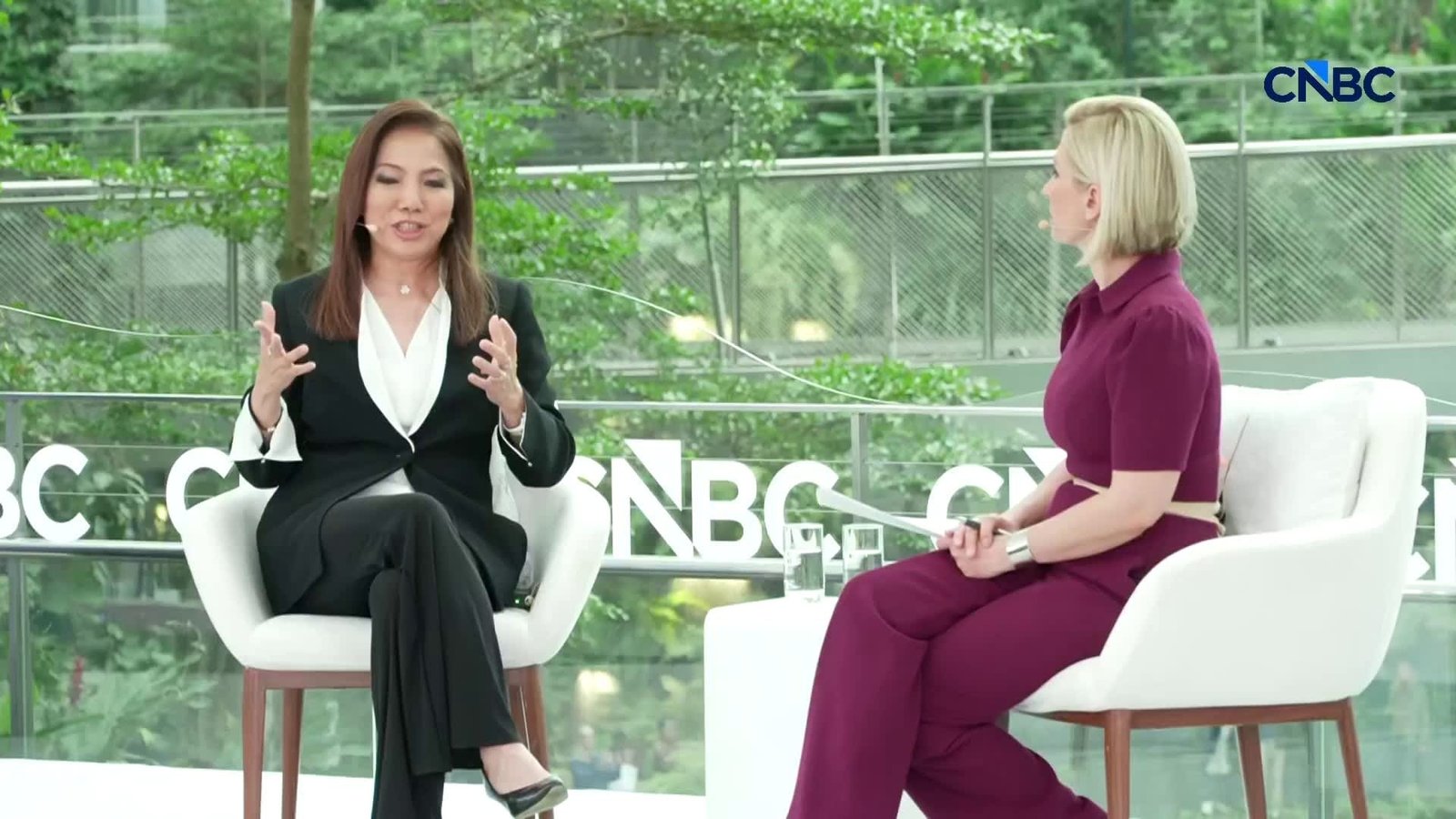
For Tan Su Shan, the CEO of Southeast Asia’s banking giant DBS Group, the greatest threat to global stability isn’t a market crash or a geopolitical standoff—it’s the invisible battleground of cyber warfare.
Speaking at the CNBC CONVERGE LIVE event in Singapore, Tan identified cybersecurity as the “new war” that defines the current financial landscape, emphasizing that the speed of AI development has made the threat environment more unpredictable than ever.
The Strategy: “Deliberate Paranoia”
To combat these evolving threats, DBS has moved away from traditional security models toward a culture of Zero Trust. Key pillars of their defense include:
-
“Trust Nothing, Trust Nobody”: A fundamental shift in internal mindset where every access point and user is continuously verified.
-
Continuous Red Teaming: Regularly simulating sophisticated cyberattacks to identify vulnerabilities before hackers can find them.
-
The Guardrail Rule: Ensuring that AI systems interacting with customer data or core production systems have strict, non-negotiable safety boundaries.
The Double-Edged Sword: Agentic & Generative AI
While AI offers “fantastic opportunities” for banking efficiency, Tan warned that it also lowers the entry barrier for cybercriminals.
| AI Type | Potential Benefit | New Risk |
| Generative AI | Personalized banking & automated support. | Deepfakes and highly convincing phishing. |
| Agentic AI | Autonomous task execution and problem-solving. | Expansion of the “attack surface” in critical systems. |
Resilience in a Volatile World
The CEO noted that the world is currently navigating a “polycrisis” environment—ranging from trade tensions and supply chain disruptions to the ongoing Iran war. In this climate, Tan argues that cybersecurity must be treated with the same contingency planning as physical infrastructure:
-
Data Lifecycle Management: Governance from creation to deletion.
-
Redundancy: Building alternative pathways for payments if one system is compromised.
-
The Playbook: Having pre-defined responses for the “worst-case scenario.”
“What will separate the winners from the losers is good adoption, smart adoption, and safe adoption.” — Tan Su Shan, CEO of DBS
