

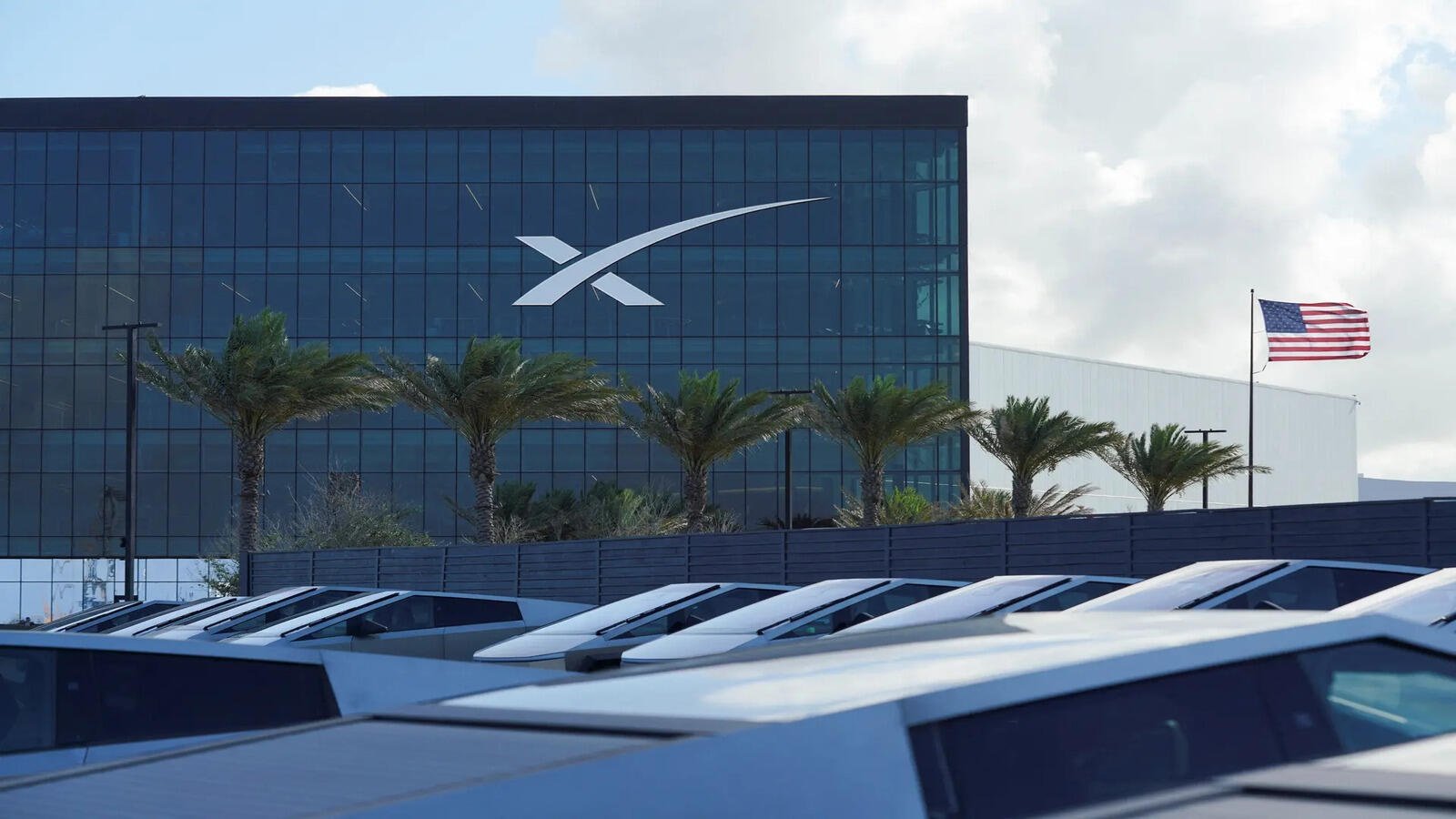
Space Exploration Technologies Corp. (SpaceX) is set to shake up Wall Street on Friday as it makes its official debut on the Nasdaq under the ticker symbol SPCX. Market analysts and grey-market data indicate the rocket and satellite giant could open at a robust 25% premium over its initial public offering (IPO) price, fueled by massive, historic investor demand.
The company finalized its pricing on Thursday, fixing shares at $135 each. By selling 555.56 million shares, SpaceX raised a staggering $75 billion, cementing its place as the largest initial public offering in global corporate history—completely eclipsing Saudi Aramco’s previous $29.4 billion record set in 2019. At this base price, SpaceX enters the public market with a jaw-dropping valuation of $1.77 trillion (and close to $1.8 trillion on a fully diluted basis).
Key Highlights of the Blockbuster Debut
-
Unprecedented Demand: The IPO closed massively oversubscribed, drawing over $250 billion in total orders—roughly 3.5 to 4 times the available shares.
-
The Retail Revolution: In an unconventional move that bypassed traditional Wall Street playbooks, Elon Musk reserved an unusually large 30% of the entire float specifically for everyday retail investors, who placed more than $100 billion in orders alone.
-
Instant Mega-Cap Status: Upon listing, SpaceX will immediately rank as the seventh-largest publicly traded company in the United States, positioning it just behind corporate titans like NVIDIA, Alphabet, Apple, Microsoft, Amazon, and Broadcom.
-
Musk’s Iron Grip: Despite going public, Elon Musk will retain firm control of the enterprise, holding approximately 42% of the equity but a massive 82% of the total voting power through Class B shares.
The Financial Blueprint: Risk vs. Reward
While the sheer scale of the listing has electrified global capital markets, the company’s financials reveal that investors are betting heavily on a future-tech growth curve rather than present-day profitability.
| Metric | Financial Data (Full Year 2025 / Q1 2026) |
| 2025 Total Revenue | $18.7 Billion (A 33% year-over-year increase) |
| Starlink Contribution | $11.4 Billion (Accounting for 61% of total revenue) |
| Adjusted EBITDA | $6.6 Billion |
| Q1 2026 GAAP Net Loss | $4.28 Billion (Driven by intense AI infrastructure and Starlink capex) |
The Analyst Consensus: Skeptics point to the company’s steep GAAP net losses and heavy cash burn—particularly a $2.5 billion per-quarter deficit tied to scaling its artificial intelligence wings. However, the oversubscribed order book proves that Wall Street is overwhelmingly willing to pay the “Elon Musk Premium.” Investors are viewing SpaceX not simply as a launch provider, but as a multi-planetary infrastructure monopoly bridging satellite internet, global defense contracts, and next-generation AI.
