

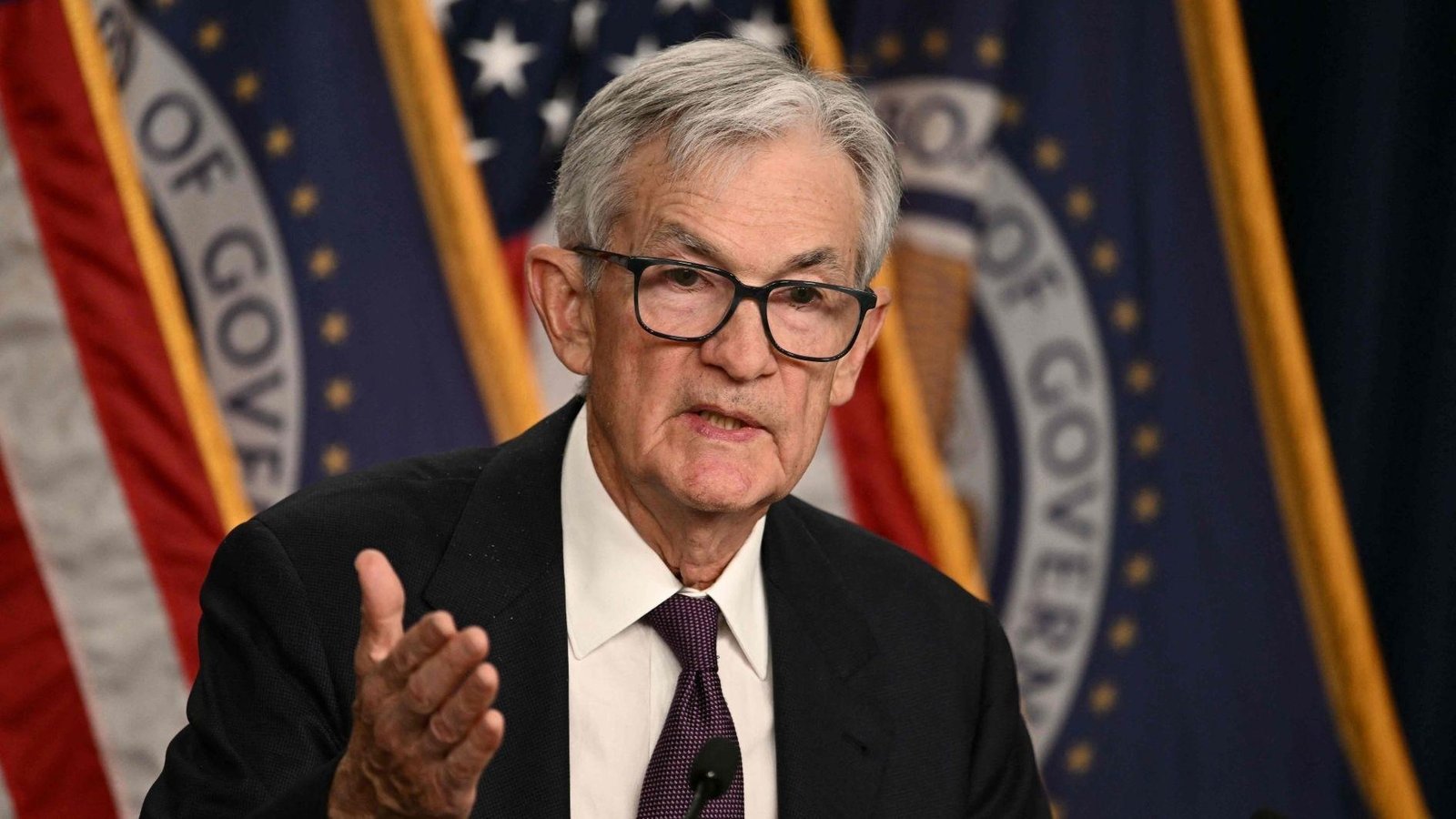
The US Federal Reserve is widely expected to maintain interest rates at their current levels as policymakers weigh strong domestic economic data against the destabilizing effects of the US-Israel-Iran conflict. The “higher-for-longer” narrative has gained renewed traction as the ripple effects of the war—specifically rising energy costs—threaten to complicate the central bank’s fight against inflation.
With the Federal Open Market Committee (FOMC) set to meet this week, the focus has shifted from “when will rates cut?” to “how long can they stay here?”
The Fed’s Dilemma: Inflation vs. Geopolitics
The recent escalation in the Middle East has introduced a new layer of complexity for Fed Chair Jerome Powell. The central bank is currently navigating three major pressures:
-
Energy Price Shocks: Brent crude prices, hovering near $110, act as a “tax” on consumers while simultaneously driving up the cost of goods. This “stagflationary” pressure makes rate cuts nearly impossible in the immediate term.
-
Resilient Labor Market: US employment data remains surprisingly robust. With low unemployment and steady wage growth, the Fed lacks the economic “weakness” typically required to justify lowering rates.
-
Global Supply Chains: Potential disruptions in the Strait of Hormuz are being monitored closely. Any prolonged blockage could reignite supply-side inflation, similar to the shocks seen in 2021-2022.
Market Expectations & The “Dot Plot”
Investors are looking for clues in the Fed’s messaging regarding the remainder of 2026.
| Metric | Current Status | Market Expectation |
| Federal Funds Rate | 5.25% – 5.50% | No Change (98% probability) |
| Projected Cuts (2026) | 3 Cuts initially signaled | 1 to 2 Cuts (Likely pushed to Q4) |
| Inflation Target | 2% | Remaining sticky near 3.2% – 3.5% |
Impact on Global Markets
The decision to hold rates steady has significant implications for emerging markets and asset classes:
-
The US Dollar (DXY): The dollar remains strong, hovering near 106.00. This puts pressure on the Indian Rupee and other EM currencies, making imports (especially oil) more expensive.
-
Yields: The 10-year Treasury yield continues to trade near 4.6%, attracting capital away from riskier equity markets and into “safe-haven” US debt.
-
Tech Stocks: High-growth sectors remain sensitive to the Fed’s commentary. Any hint of a “hawkish hold” (holding rates but threatening further hikes) could trigger a sell-off in valuation-heavy AI and software stocks.
The Investor Strategy
Analysts suggest a “wait-and-see” approach. Until there is a durable ceasefire or a significant drop in crude prices, the Fed is unlikely to pivot. For portfolios, this reinforces the shift toward cash-rich large-caps and defensive sectors like Healthcare and Utilities that can thrive even in a high-rate environment.
The Bottom Line: While the market hoped for a spring pivot, the geopolitical “ripple effects” from the Iran conflict have likely locked the Fed into a holding pattern for the summer.
