

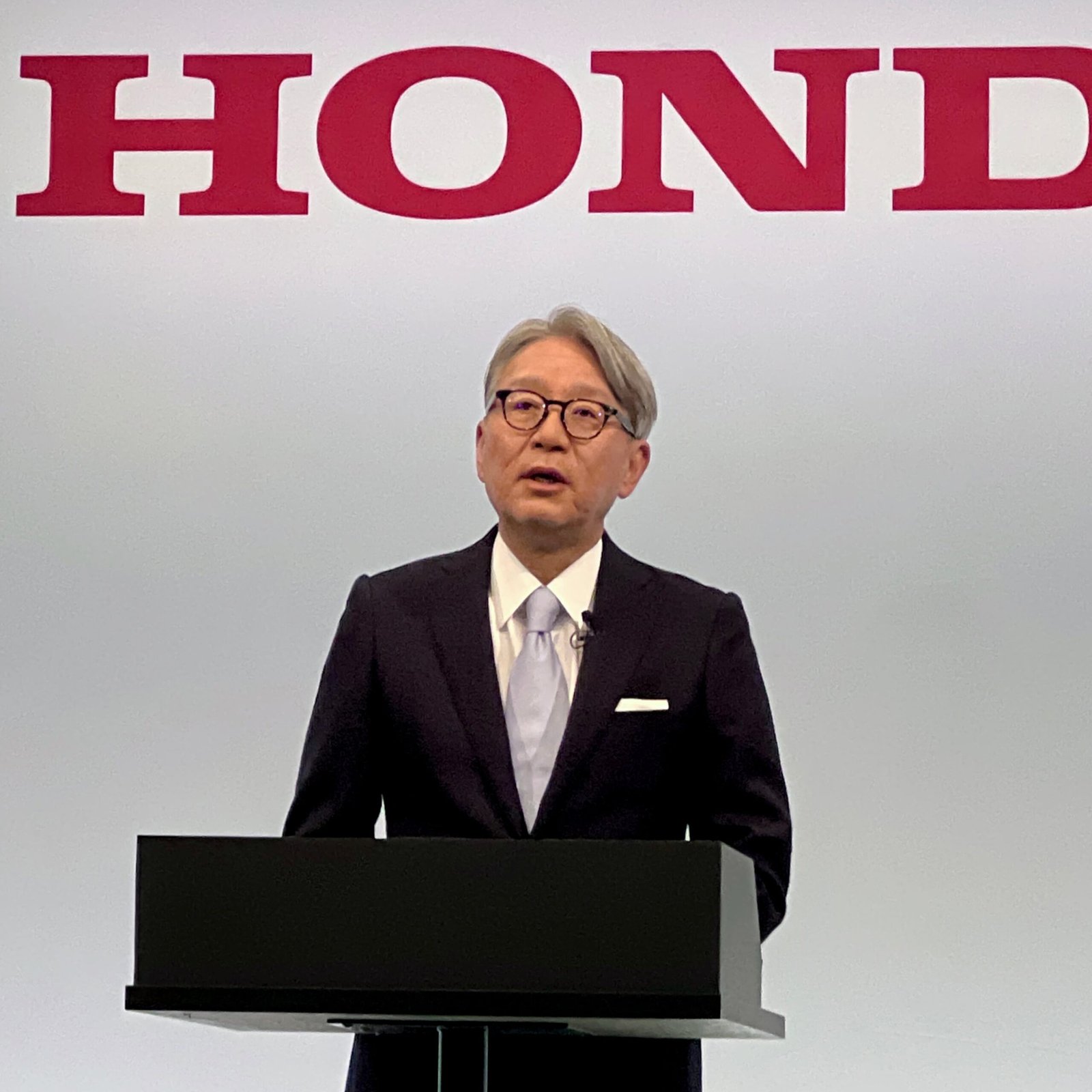
A dramatic boardroom crisis has been unveiled at Honda Motor, where a powerful faction of retired heavyweight executives orchestrated a months-long campaign to force out Chief Executive Toshihiro Mibe. Despite an extraordinary face-to-face confrontation where former CEO Nobuhiko Kawamoto ordered Mibe to resign, the current chief executive refused to budge—clinging to power with the critical backing of Honda’s board of directors.
The internal warfare underscores a deeper identity crisis plaguing traditional automotive giants as they struggle to pivot away from combustion engines.
The Case Against the CEO
Beginning late last year, a group of influential Honda alumni began holding private meetings and exchanging text chains to build a case against Mibe, a former engineer who took the helm in 2021. According to internal summaries reviewed by Reuters, the old guard leveled several damning accusations against his leadership:
-
The $12 Billion EV Meltdown: Critics blasted Mibe for making a “failed” bet on electric vehicles. Honda recently backtracked on Mibe’s ambitious pledge to go entirely electric by 2040, wiping out $9 billion in EV-related costs after scrapping three vehicles mid-development. Total write-down projections could climb to $12 billion, leading Honda toward its first annual loss in seven decades.
-
The Abandonment of China: Under Mibe’s watch, Honda’s market share in China—the world’s largest automotive market—crumbled from 8% in 2020 to less than 3% last year. The old guard accused Mibe of violating Honda’s core philosophy of genba (focusing on the “actual place” where work gets done) by rarely visiting China or its premier auto shows.
-
Corporate Distractions: The retired executives went as far as accusing the CEO of paying more attention to playing rounds and managing Honda’s high-profile golf sponsorships than navigating the company’s existential business hurdles.
Traditional Car Production vs. The Chinese EV Speed
Honda’s struggle highlights a massive structural gap between legacy Japanese engineering and modern EV competitors.
| Attribute | Legacy Japanese Automakers (Honda) | Next-Gen EV Competitors (China) |
| Core Heritage | Painstaking manufacturing systems focused on mechanical reliability. | Software-laden, tech-first digital ecosystems. |
| Development Speed | Years of rigorous engineering and multi-stage sign-offs. | Aggressive, rapid rollout taking a fraction of the time. |
| Primary Vulnerability | Defending legacy business while funding capital-intensive EV development. | Price wars and aggressive market-share acquisition. |
The industry is facing severe headwinds in the crucial U.S. market, where corporate margins are being squeezed by a rollback of electric vehicle subsidies and stringent trade tariffs.
The Fallout and the Road Ahead
While Mibe successfully withstood the coup, the damage to Honda’s corporate standing is undeniable. To take corporate responsibility for the looming historic annual loss, Mibe has agreed to accept a 30% pay cut for three consecutive months.
Meanwhile, external industry experts view the internal strife as a sign that time is running out for the world’s largest engine manufacturer to successfully redefine itself.
“I don’t know the way out for them. Definitely in short order, it’s going to be too late to turn it around.”
— Jeffrey Rothfeder, Author of Driving Honda
