

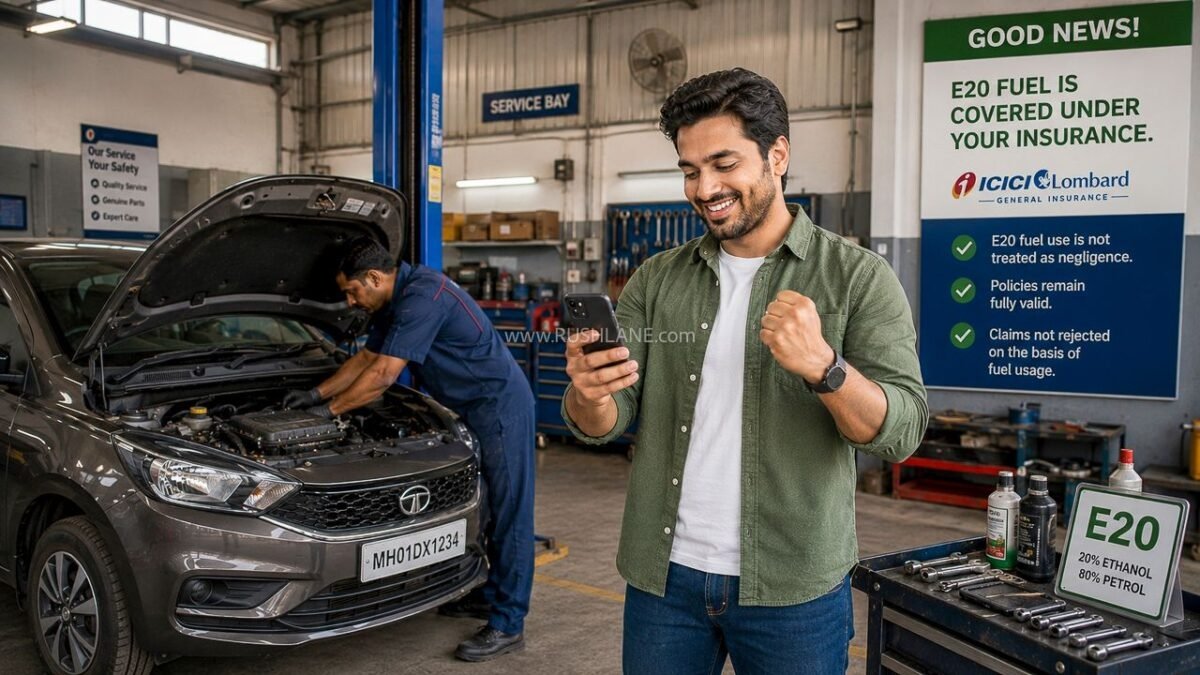
In response to widespread social media anxiety and conflicting reports, ICICI Lombard General Insurance and the Government of India (via PIB Fact Check) have issued definitive statements clarifying that using E20 fuel—even in older, non-compatible vehicles—will not void your motor insurance policy or impact regular claim settlements.
The issue originally gained traction after an initial blog post from ICICI Lombard suggested that fueling a vehicle with non-recommended fuel could be interpreted as “improper use or negligence.” Recognizing the panic this caused for millions of Indian motorists driving older cars, the private insurer retracted that stance, explicitly confirming that India’s ethanol-blending initiative is a progressive, eco-friendly step and will not be penalized.
The Core Clarification: Insured Perils vs. Fuel Type
ICICI Lombard clarified that motor insurance policies are structured around insured events (or perils) rather than the type of fuel resting in your tank.
-
What Remains Fully Covered: If your vehicle is involved in an accident, stolen, causes third-party damage, or is affected by a natural calamity, your insurance claim is fully admissible. The fact that the car was running on E20 fuel at the time of the incident will not be used as a ground for rejection.
-
The Equality Rule: The insurer noted that if a claim is legally admissible while a vehicle runs on conventional petrol, diesel, or CNG, it remains identically admissible under E20 usage.
The Fine Print: Why Mechanical Breakdowns Are Still Excluded
While the validity of your insurance policy is safe, both legal experts and insurers emphasize a crucial distinction: policy validity does not mean coverage for internal fuel-related corrosion.
Older cars manufactured before the widespread adoption of BS6 Phase 2 norms (April 2023) were largely engineered for lower ethanol concentrations (E10 or pure gasoline). High-blend ethanol (E20) behaves aggressively inside non-compliant engines over prolonged periods.
Standard comprehensive motor insurance policies across the industry explicitly exclude consequential damage, mechanical breakdowns, and gradual wear and tear. Even specialized “Engine Protection” add-on covers are typically designed to shield policyholders from hydro-lock (water entering the engine during floods) or sudden oil leakage—not gradual chemical degradation caused by the vehicle’s fuel diet.
The Motorist’s Dilemma
Since E20 has been operationalized as the baseline retail petrol blend across India, owners of older vehicles face a tight spot. Pure, unblended high-octane options (like XP100) are heavily priced at upwards of ₹160 per liter and have limited distribution.
While you do not need to worry about an accident claim being rejected due to your fuel choice, any internal mechanical failures or component replacements arising from long-term ethanol exposure will have to be borne entirely out-of-pocket as regular vehicle maintenance.
