

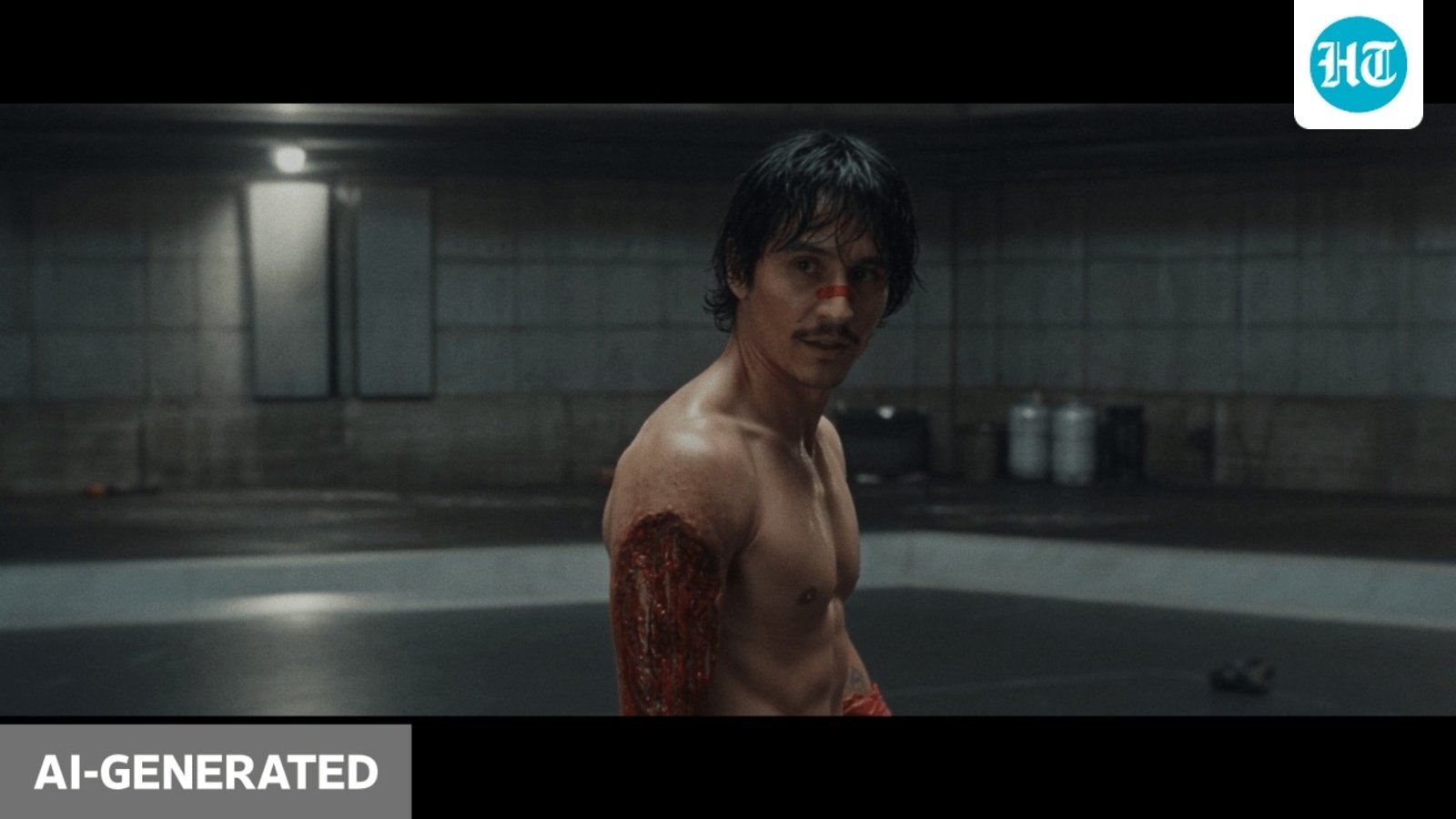
The 2026 Cannes Film Festival market witnessed a major cinematic turning point with the premiere of “Hell Grind,” a 95-minute action-fantasy feature. Billed as the world’s first full-length AI-native feature film, the project challenges traditional Hollywood budgets—but reveals a massive new financial bottleneck: the cost of artificial intelligence compute.
The film was produced by San Francisco-based startup Higgsfield AI using ByteDance’s Seedance 2.0 video generation model. While a traditional Hollywood blockbuster of this visual scale would typically require tens of millions of dollars and months of production, “Hell Grind” represents a completely rewritten rulebook.
The Production Math
| Metric | Details |
| Total Production Budget | $500,000 |
| AI Compute Costs | $400,000 (80% of the budget) |
| Human Team Size | 15 professional directors, DPs, and editors |
| Production Timeline | Just 14 days |
| Estimated Traditional Cost | ~$50 million (according to Higgsfield) |
The Plot and Creative Vision
Co-written by Aitore Zholdaskali and veteran Cannes filmmaker Adilkhan Yerzhanov, Hell Grind follows a close-knit group of four street thieves: Roco, Lulu, Jax, and Rein. During a heist, Roco accidentally activates an ancient artifact that opens a portal, dragging his love interest, Lulu, into the underworld.
What follows is a chaotic, globe-spanning journey through a mystical Tibetan temple and feudal Japan as Roco fights to save her. The filmmakers pitch the project as genre cinema with heavy emotional stakes: “Fantasy as tragedy. Action as grief.”
The Mind-Boggling Technical Process
While the film required zero cameras, physical sets, or live actors, it was far from a “one-click” generation. It demanded an immense amount of meticulous human labor and cloud orchestration:
-
Mega-Prompts: Higgsfield’s content team revealed that the text prompts used to guide the AI averaged an astonishing 3,000 words each. These prompts included hyper-specific cinematic instructions detailing IMAX 8K photorealism, contre-jour (backlit) natural lighting, and explicit physics rules (e.g., “respect gravity and inertia,” “correct contact shadows,” and “no floating objects”).
-
A 64-to-1 Culling Ratio: To fight the uncanny, over-polished “AI sheen,” the team generated massive volumes of alternative footage. For the first 25 minutes of the film alone, the crew generated 16,181 initial video clips to distill down to just 253 final, coherent shots.
-
Compute Workarounds: To keep the $400,000 compute bill from exploding even higher, Higgsfield bypassed legacy cloud giants and routed their rendering workloads through “neo-cloud” GPU infrastructure providers like CoreWeave and Nebius.
The Filmmaker’s Take: “We are showing studios and creators that the infrastructure already exists to execute their most complex visions at a fraction of the cost of a traditional production.” — Alex Mashrabov, CEO of Higgsfield AI.
The reception at Cannes has sparked fierce industry debate. While some filmmakers express deep concern over workforce displacement and the automation of artistry, others see it as an equalizer for independent creators. Legendary Hollywood director Chuck Russell (The Mask), who watched an early cut, noted that the project achieved something rare for AI: it made him genuinely empathize with the characters.
