

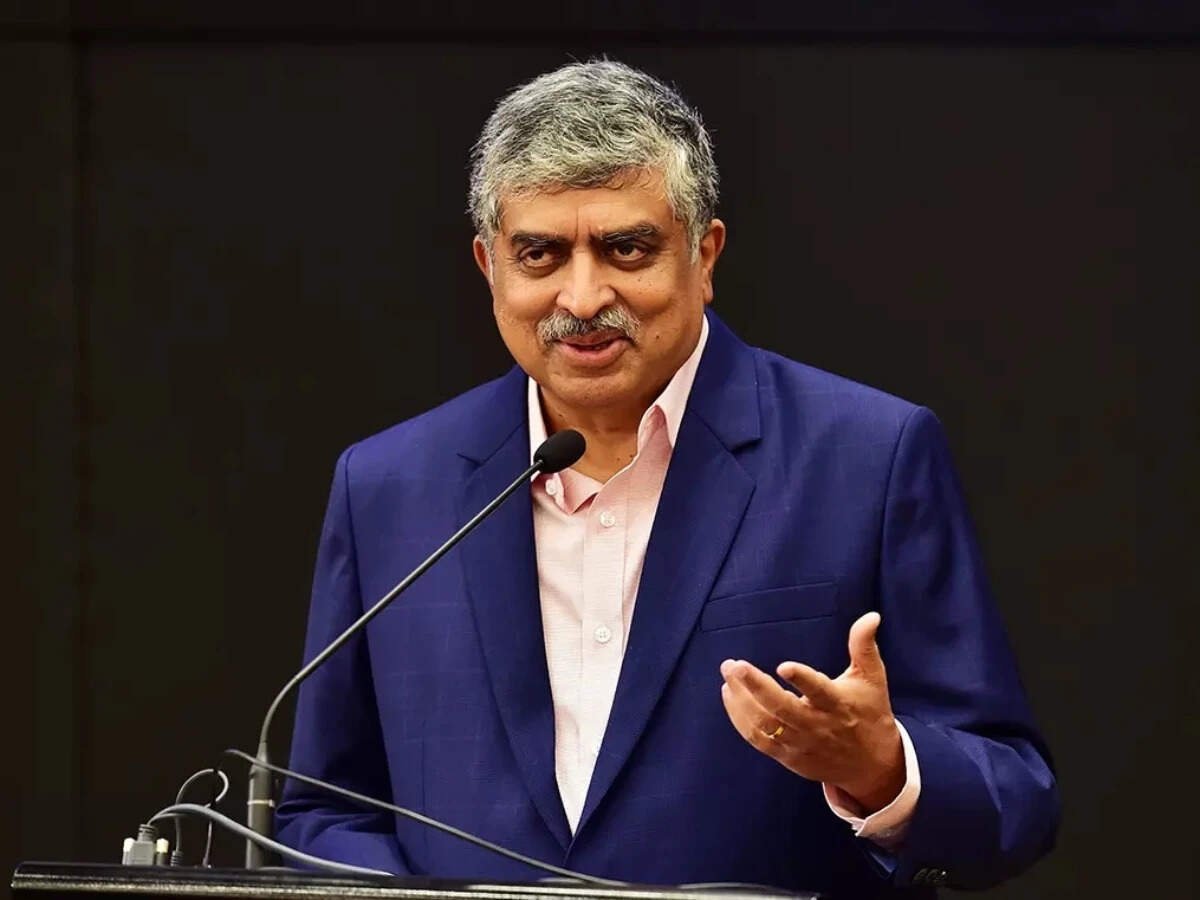
Dismissing widespread anxieties that artificial intelligence will make traditional IT services redundant, Infosys Chairman Nandan Nilekani asserted that generative AI will act as a major growth multiplier rather than a replacement for the Indian tech giant.
Speaking at the company’s annual general meeting, Nilekani outlined a massive pipeline for the firm’s AI-focused initiatives, revealing that Infosys is currently working on or bidding for AI-related contracts worth more than $1 billion.
Amplification Over Replacement
Addressing the core debate surrounding AI and white-collar automation, Nilekani emphasized that technology shifts historically expand the scope of IT services rather than shrinking them.
“AI will not replace Infosys. AI will amplify Infosys. Every time there is a technological paradigm shift, the amount of work to be done increases exponentially because enterprises need a trusted partner to navigate the complexity.” — Nandan Nilekani, Chairman, Infosys
Instead of displacing human developers, Nilekani envisions AI taking over routine coding and maintenance tasks, which will free up engineers to tackle high-value architecture, strategy, and complex system integrations for global clients.
Strategic Priorities for the AI Era
To capitalize on this shift, Infosys is positioning itself through a multi-pronged approach:
-
The $1 Billion Pipeline: The company is actively pursuing large-scale transformation deals centered around its specialized AI suite, Infosys Topaz, indicating robust enterprise demand for scaling AI models.
-
Massive Reskilling: Infosys has already trained over 250,000 employees in generative AI concepts and tools, creating one of the largest AI-ready workforces in the technology sector.
-
The “AI-First” Corporate Model: Internally, the firm is embedding AI assistants into its own software development lifecycles, project management systems, and HR processes to drive operational efficiency and pass productivity gains to clients.
The Macro View: Navigating the Tech Shift
Nilekani’s remarks come at a critical time when global enterprises are shifting from experimental AI pilots to full-scale production deployments. While acknowledging that the transition requires heavy up-front investments in data engineering and cloud infrastructure, he remains highly confident that India’s IT services sector will emerge as the primary execution engine for the global AI economy.
