

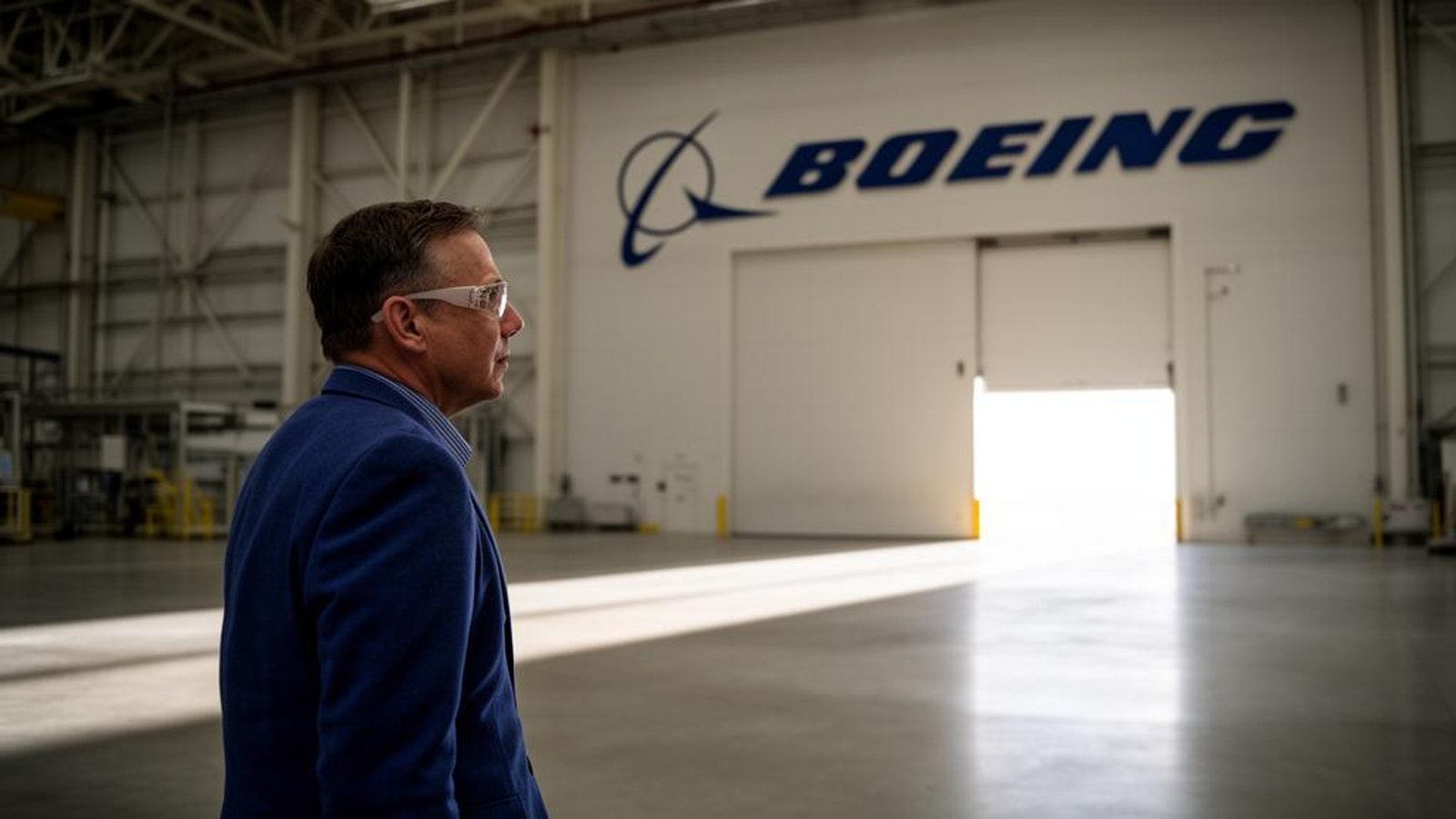
Boeing has reported a significantly smaller-than-expected loss for the first quarter of 2026, signaling that the aerospace giant’s long-term recovery strategy is finally taking flight. Bolstered by surging commercial deliveries and a stabilizing defense sector, the company outperformed Wall Street’s bleakest projections.
Q1 2026 Financial Scorecard
The results highlight a “major beat” against analyst estimates, primarily driven by improved operational efficiency and a massive backlog.
-
Core Loss Per Share: Reported at $0.20, far better than the $0.66 to $0.83 loss analysts had predicted.
-
Revenue: Climbed 14% year-over-year to $22.2 billion, surpassing the $21.9 billion consensus.
-
Net Loss: Narrows to $7 million, compared to $31 million in the same quarter last year.
-
Market Reaction: Boeing shares surged roughly 4.7% in early trading following the announcement.
Key Drivers of the Turnaround
[Image representing Boeing’s three-pronged recovery: Production Stabilization, Backlog Growth, and Defense Profitability]
-
Commercial Delivery Win: Boeing delivered 143 commercial aircraft in Q1, notably outpacing Airbus (114) for the first time in a quarterly window since 2019. Production of the 737 MAX has stabilized at 42 jets per month.
-
Surging Backlog: The total company backlog has swelled to a record $695 billion, encompassing over 6,100 commercial airplanes, providing a massive multi-year revenue cushion.
-
Defense & Space Recovery: The Defense, Space & Security (BDS) segment saw revenue grow 21% to $7.6 billion, aided by the successful launch of NASA’s Artemis II mission and increased global defense spending.
Regulatory and Geopolitical Context
Despite the “cash burn” of $1.5 billion due to expansion costs in South Carolina and Washington, investor sentiment is high due to two critical factors:
-
Certification Clarity: FAA leadership recently indicated that the 737 MAX 7 and MAX 10 models are on track for certification by the end of 2026, removing a significant legal and financial shadow.
-
Geopolitical Resilience: CEO Kelly Ortberg stated that despite ongoing conflicts in West Asia, the company has seen no major deferrals in jetliner deliveries, citing the “long-cycle” nature of the aviation business.
The Bottom Line
While Boeing is still technically operating in the red, the Q1 results suggest the “mountain of debt” is beginning to level off. With debt reduced by $6.9 billion this quarter and production lines ramping up, the company is shifting from “crisis management” to “market competition.”
Management Memo: “We’re off to a good start and continue building on our momentum… restoring trust with our customers while growing our record backlog.” — Kelly Ortberg, Boeing CEO
