

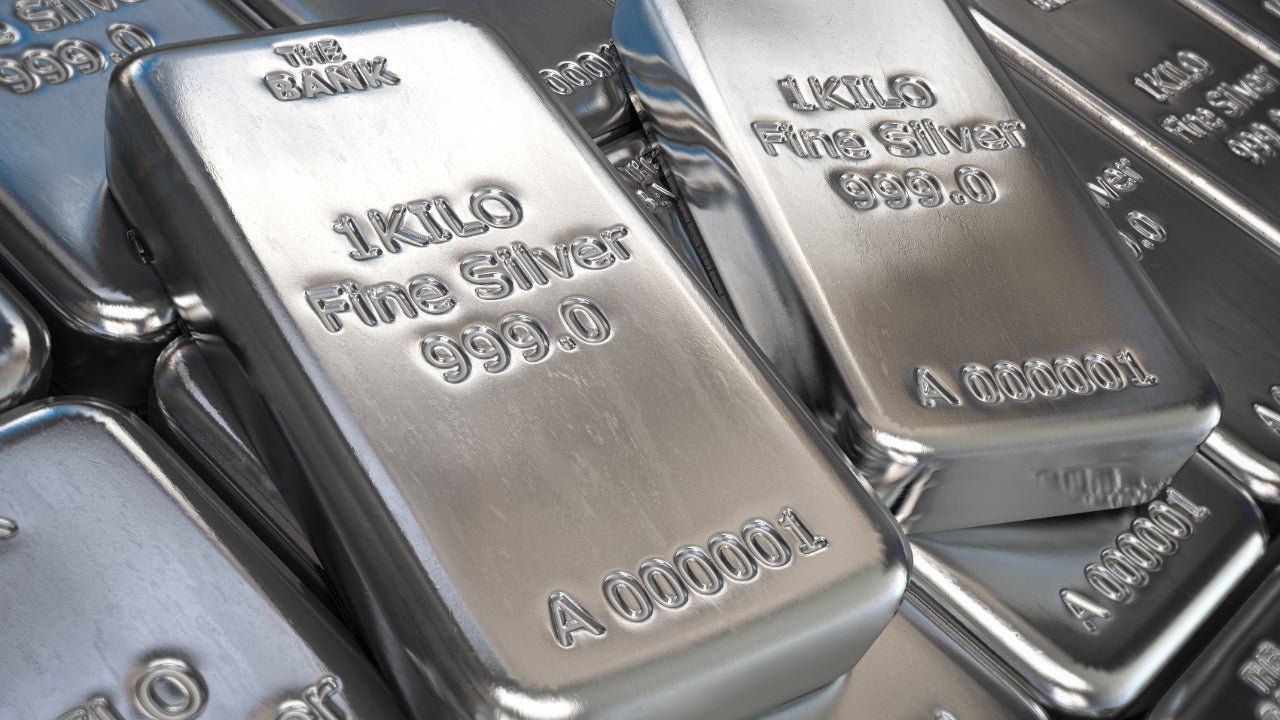
The Union Government on Saturday, May 16, 2026, issued a notification imposing immediate restrictions on silver imports. The move is part of a broader economic offensive aimed at curbing the surge of precious metal imports, narrowing India’s widening trade deficit, and stabilizing the rupee against mounting external pressures.
According to the order issued by the Directorate General of Foreign Trade (DGFT), the import policy for high-purity silver bars—including silver plated with gold or platinum containing 99.9% or more silver by weight—has been shifted from “Free” to “Restricted.”
Under the “Restricted” category, traders and businesses can no longer import these items freely and must secure a specific government license for every shipment.
The Three-Step Crackdown on Precious Metals
This weekend’s silver restriction marks the third major intervention by the government this month to control bullion inflows:
1. Aggressive Tariff Hikes (May 13)
The Finance Ministry reversed its mid-2024 tax cuts by slashing incentives for bullion inflows. The basic customs duty on multiple categories of gold and silver imports was hiked from 5% to 10%. Combined with the existing 5% Agriculture Infrastructure and Development Cess (AIDC), the total effective import tax now stands at a steep 15%.
2. Stricter Gold Quantity Caps
Earlier this month, the DGFT tightened compliance norms under the Advance Authorisation (AA) scheme, which allows duty-free gold imports specifically for jewelry re-export.
-
The New Limit: The government introduced a strict maximum permissible quantity cap of 100 kilograms per authorization. Previously, there was no upper limit.
-
Arbitrage Concerns: Officials noted the cap was necessary to prevent traders from misusing the duty-free route for local “price arbitrage” following the main tariff hike to 15%.
3. Levering the 3% IGST
India also began enforcing a 3% Integrated Goods and Services Tax (IGST) on gold and silver imports. The immediate friction caused commercial banks to halt imports for over a month, pushing April import volumes to a near 30-year low. While banks have since resumed imports after complying with the IGST, bullion dealers expect volumes to crash again under the weight of the new 15% tariff.
The Economic Balancing Act
| Intended Economic Benefits | Industry Concerns & Risks |
| Defending the Currency: Lowering bullion demand preserves foreign exchange reserves, supporting the rupee—which has been tracking as one of Asia’s worst-performing currencies this year. | Resurgence of Smuggling: Bullion industry officials warn that pushing total taxes to 15% will inevitably revive illegal smuggling networks, which had largely dismantled after the 2024 tax cuts. |
| Trade Deficit Management: Restricting non-essential luxury imports helps balance India’s macroeconomic ledger amid high global crude oil prices. | Dampened Retail Demand: Higher localized prices are expected to severely cool consumer buying sentiment in India, the world’s second-largest consumer of precious metals. |
The aggressive fiscal tightening aligns with a recent appeal by Prime Minister Narendra Modi, who urged citizens to voluntarily moderate their gold purchases for a year to protect the nation’s foreign exchange reserves. Since India relies almost entirely on imports to meet its massive domestic precious metal consumption, the new license-quota regime for silver is expected to act as a hard brake on inbound trade.
