

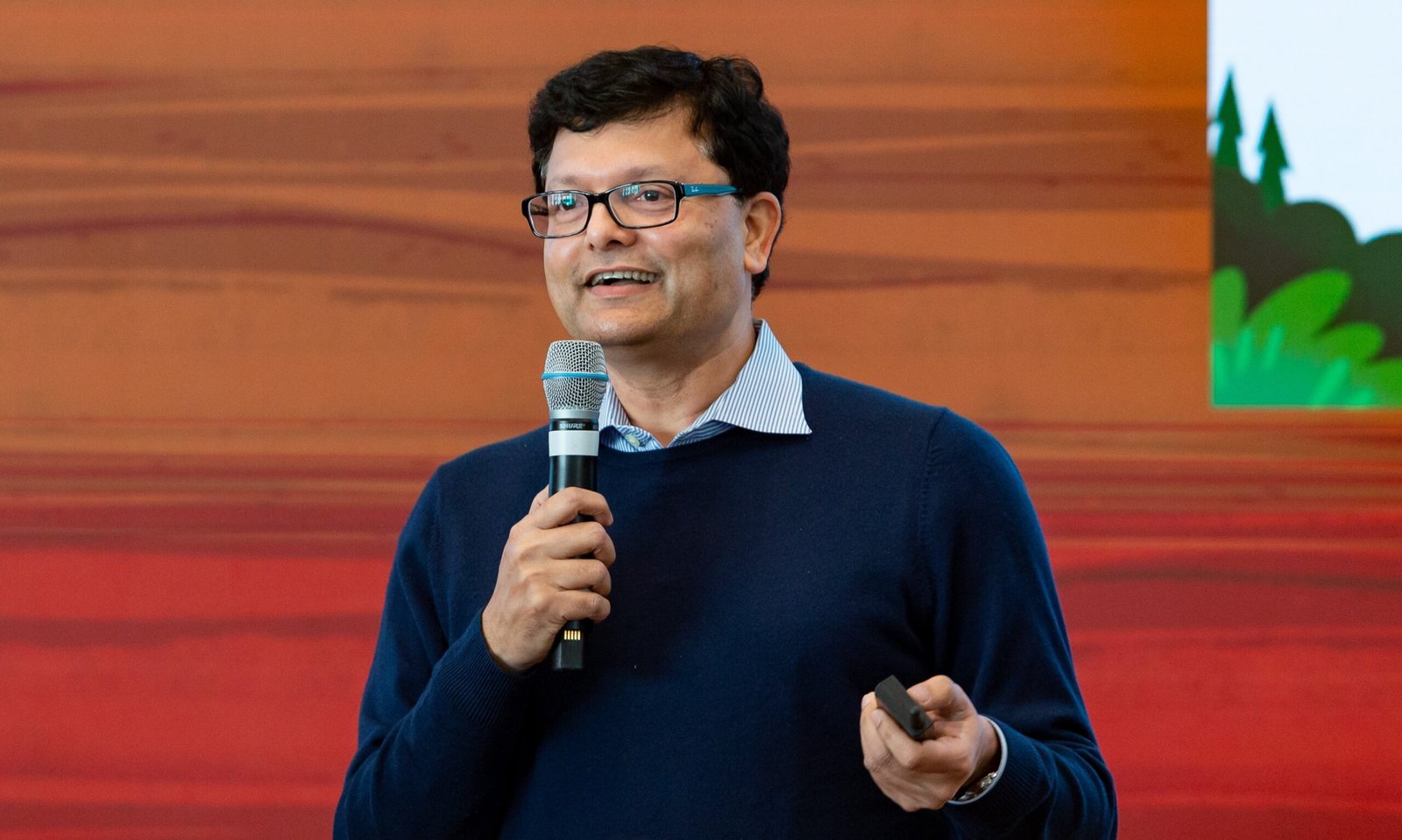
Sudhir Chowdhary sits down with Srini Tallapragada, President and Chief Engineering & Customer Officer at Salesforce, to discuss the shift from SaaS to AI-native platforms and why many firms are stuck in “pilot purgatory.”
The Evolution: From SaaS to Agentforce
Tallapragada notes that Software as a Service (SaaS) is entering a new era. While SaaS democratized software access, the new platform, Agentforce, is designed to manage autonomous, AI-driven agents.
“Salesforce has consistently adapted to major technology shifts… Agentforce is the next step in that evolution, built for the AI era.”
Breaking Out of “Pilot Purgatory”
Many companies struggle to move AI from a demo to production. Tallapragada identifies several critical components for the “last mile” of adoption:
-
Clean Data Foundations: AI is only as good as the data it sits on.
-
Defined Guardrails: Security, trust, and compliance are non-negotiable for enterprise scale.
-
Redesigned Workflows: Success isn’t just about adding a model; it’s about rethinking how work gets done.
The Internal Success Story: “Customer Zero”
Salesforce implemented its own agentic AI to handle customer service, yielding dramatic results:
-
One Year Ago: Humans handled 1.3 million calls; AI handled zero.
-
Today: AI agents manage 2–3 million calls, while humans still handle 1.3 million high-value interactions.
-
Bottom Line: Over $100 million in annual savings.
India’s Strategic Role
India has evolved into one of Salesforce’s most critical hubs for R&D and business.
-
Full-Stack Development: Indian teams are building core Agentforce engines and industry-specific solutions end-to-end.
-
Fastest Growing Unit: India remains the fastest-growing operating unit for the company globally.
Advice for the IT Ecosystem
For IT services firms like TCS, Infosys, and Accenture, the challenge has shifted from “building” to “implementing.” Tallapragada emphasizes that the market will now judge the ecosystem based on tangible outcomes rather than just technological capability.
“Our biggest constraint isn’t demand, it’s implementation capacity.”
