

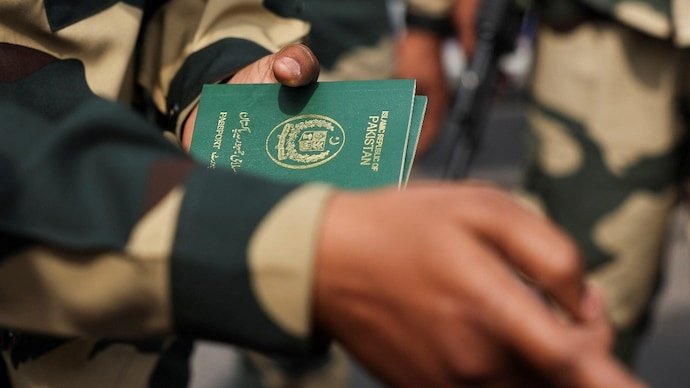
The Ministry of Home Affairs (MHA) has officially notified the Citizenship (Amendment) Rules, 2026. Under these newly updated regulations, any individual applying for Indian citizenship who hails from Pakistan, Afghanistan, or Bangladesh must completely disclose and subsequently surrender their foreign passports.
The notification, issued on May 18, 2026, states that these rules take effect immediately upon their publication in the Official Gazette. Officials stated that the primary objective of this amendment is to streamline documentation, verify legal identities, and bring absolute procedural clarity to citizenship applications involving migrants from these three neighboring countries.
The New Requirement: Schedule IC Amendment
The MHA has inserted a strict new clause into Schedule IC of the Principal Citizenship Rules. Applicants are now legally required to declare whether they hold a valid or an expired passport issued by the governments of Pakistan, Afghanistan, or Bangladesh.
Under this revised framework, applicants face two distinct disclosure tracks:
-
Non-Possession Declaration: Explicitly confirming under oath that they do not hold any valid or expired passport from their country of origin.
-
Full Disclosure & Surrender: Providing comprehensive data if they do possess a passport—including the passport number, date of issue, place of issue, and expiry date.
What Happens If an Applicant Possesses a Foreign Passport?
If an applicant holds an active or expired foreign passport, the amendment outlines a strict timeline for its disposal once Indian citizenship is granted.
The 15-Day Surrender Rule: Within exactly 15 days of receiving official approval for their Indian citizenship application, the individual must physically surrender their valid and/or expired Pakistani, Afghan, or Bangladeshi passport to the concerned Senior Superintendent of Post or Superintendent of Post.
The official text added to the citizenship forms reads as follows:
“I hereby agree to surrender my valid and/or expired Pakistani/Afghanistani/Bangladeshi passport to the Senior Superintendent of Post or the Superintendent of Post concerned within 15 days of approval of the citizenship application.”
The Broader Legislative Timeline
| Legislative Milestone | Date of Enactment | Primary Objectives & Implications |
| Principal Citizenship Rules | February 25, 2009 | Established the fundamental modern administrative framework for processing Indian citizenship applications. |
| Citizenship (Amendment) Act | December 2019 | Passed by Parliament to fast-track citizenship for persecuted religious minorities (Hindus, Sikhs, Buddhists, Jains, Parsis, and Christians) from Pak, Afghan, and Bangladesh. |
| Citizenship (Amendment) Rules | May 18, 2026 | Introduced the mandatory passport disclosure and local postal authorities surrender protocol to tighten security checks. |
This latest regulatory update builds upon the historic legislative framework established by the Citizenship (Amendment) Act passed in December 2019. During its introduction, Union Home Minister Amit Shah had assured migrating minority communities facing religious persecution in Pakistan, Afghanistan, and Bangladesh a permanent sanctuary in India.
Under those statutory provisions, eligible migrants are granted Indian citizenship retroactively from their exact date and year of entry into India. Additionally, the law mandates that all pending illegal migration cases and parallel legal proceedings against such individuals be officially closed, ensuring their business, trade, and civil interests are legally protected on equal footing with domestic citizens. The 2026 amendment acts as an operational layer to ensure that foreign identity documents are safely decommissioned once Indian nationality is conferred.
