

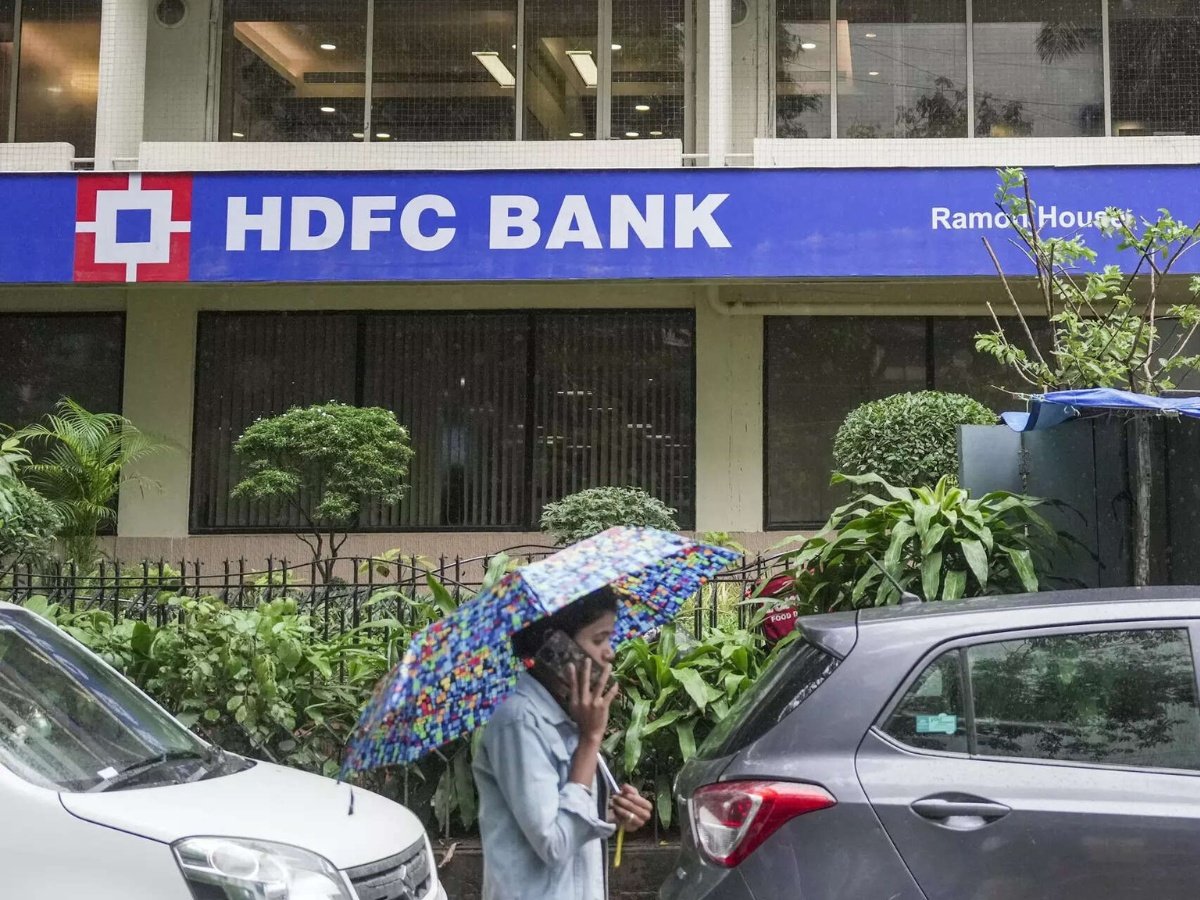
An independent legal review commissioned by HDFC Bank has found no evidence or merit to support the allegations made by its former Part-Time Chairman and Independent Director, Atanu Chakraborty. The findings, submitted to the bank’s board following a comprehensive three-month probe, effectively provide a “clean chit” to India’s largest private-sector lender regarding its corporate governance practices.
The controversy began on March 18, 2026, when Chakraborty—a retired 1985-batch IAS officer—abruptly resigned from his post. In his resignation letter, he vaguely cited “certain happenings and practices within the bank” over the previous two years that were “not in congruence with [his] personal values and ethics.” The sudden departure of the bank’s top independent overseer rattled financial markets, briefly erasing nearly 14% (around $16 billion) of HDFC Bank’s market value and prompting the Reserve Bank of India (RBI) to issue a rare public statement reassuring investors of the systemically important lender’s structural health.
The Investigation Scope and Methodology
On March 24, 2026, the HDFC Bank board appointed a combination of prominent domestic and international law firms—Wadia Ghandy & Co. and Wilson Sonsini Goodrich & Rosati, PC—to systematically evaluate whether the issues flagged by Chakraborty were borne out by official bank records.
The legal review spanned three months and executed an exhaustive mandate:
-
Document Audit: Reviewers combed through thousands of internal documents, core board files, and agenda materials covering the two years preceding the resignation.
-
Minutes Verification: Law firms scrutinized the minutes of all board and board committee sessions attended by Chakraborty to check for documented opposition or procedural irregularities.
-
Stakeholder Interviews: Individual interviews were conducted with every Independent Director, the Chairpersons of all relevant board committees, Managing Director & CEO Sashidhar Jagdishan, and senior executives heading the bank’s internal control, risk, and compliance functions.
Key Findings of the Review
The external legal review concluded that Atanu Chakraborty’s statements and their ethical implications were entirely unsubstantiated by official records, contemporaneous communications, and witness testimonies.
-
Absence of Documented Dissent: The law firms highlighted that HDFC Bank utilizes a comprehensive drafting, review, and approval process for its meeting minutes. This framework provided Chakraborty with regular opportunities to formally record any practices breaching his ethical standard. However, no support for his assertions was found in any board materials or associated communications.
-
The “Dubai Matter” Inconsistency: While Chakraborty later referred to an operational issue in Dubai in post-resignation public remarks—specifically relating to regulatory friction over customer re-onboarding timelines within the UAE—the review found no evidence that he had raised ethical objections or voted against board decisions regarding the matter while in office.
-
Refusal to Participate: Despite repeated requests from the law firms and HDFC Bank to sit down for an interview and clarify his specific grievances, Chakraborty ultimately did not engage with the independent review process.
Market and Strategic Implications
The completion of this independent legal review eliminates a severe corporate governance overhang for HDFC Bank, which has experienced volatile stock performance following its massive $40 billion merger with parent company HDFC Ltd.
By demonstrating that its internal oversight mechanisms, whistleblower protocols, and boardroom decision-making processes showed no material deficiencies, the bank has significantly reinforced institutional investor confidence. Reflecting the market’s relief, HDFC Bank’s U.S.-listed shares climbed 1.7% following the formal stock exchange disclosure, stabilizing leadership continuity under interim chairperson Keki Mistry.
