

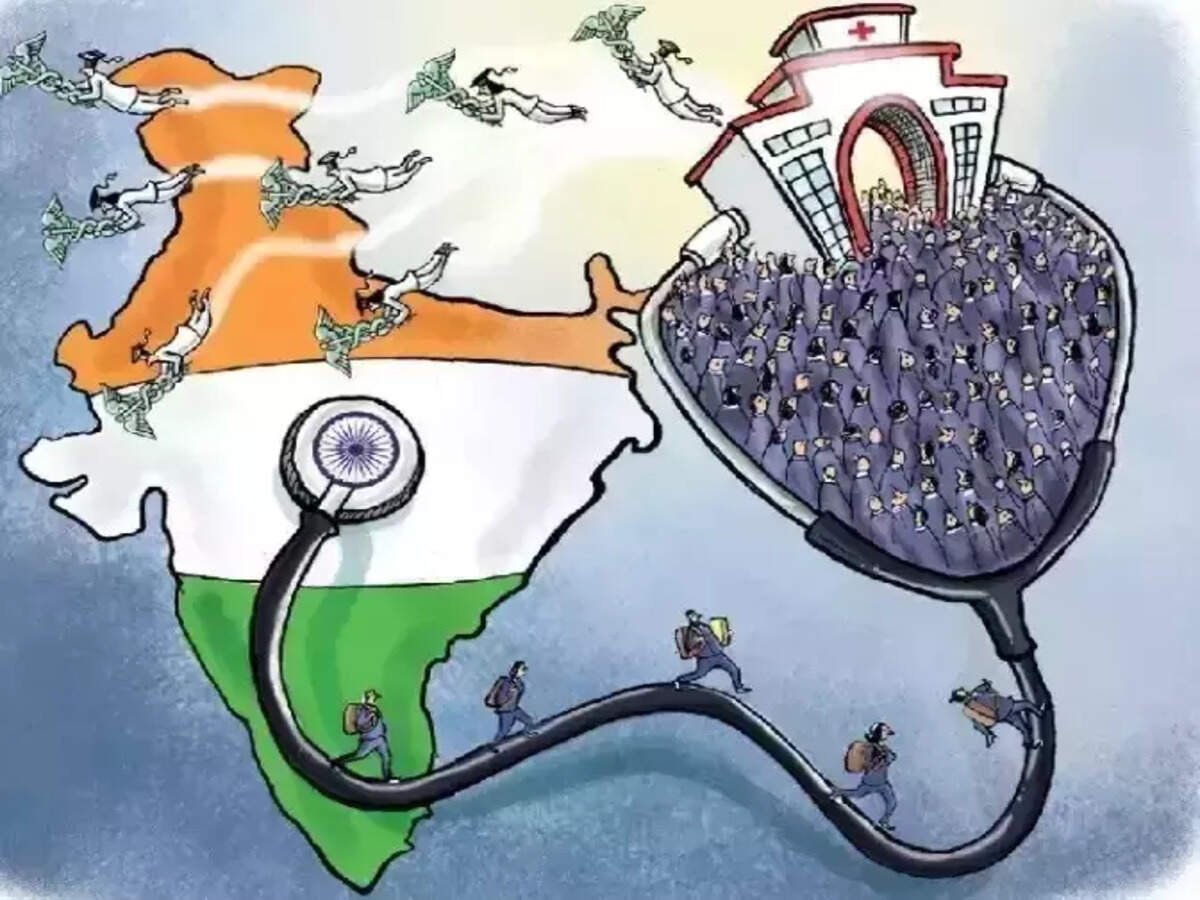
A landmark health survey released by the Ministry of Statistics (NSS 80th Round) reveals a dramatic shift in India’s healthcare landscape. For the first time, health insurance penetration in rural India (47.4%) has eclipsed that of urban centers (44.3%), marking an extraordinary leap from figures recorded just eight years ago.
The Insurance Leap: 2018 vs. 2025
The expansion is primarily credited to the aggressive rollout of government-sponsored insurance schemes (such as Ayushman Bharat), which now cover nearly half of the rural population.
| Region | Coverage in 2017-18 | Coverage in 2025 | Growth Factor |
| Rural | 14.1% | 47.4% | ~3.3x |
| Urban | 19.1% | 44.3% | ~2.3x |
Key Driver: Government schemes alone account for 45.5% of rural enrollments, compared to just 12.9% in the previous survey cycle.
Hospitalization & Out-of-Pocket Expenses
While coverage has widened, the cost of medical care remains a significant factor for Indian households.
-
Average Hospitalization Cost: The national average stands at ₹34,064 (excluding childbirth).
-
Rural Spend: ₹31,484
-
Urban Spend: ₹38,688
-
-
The Public Hospital Advantage: Costs are drastically lower in public facilities, averaging ₹6,631. Notably, 50% of patients in public hospitals spent ₹1,100 or less, highlighting the critical role of state-funded infrastructure.
Morbidity Trends: Rising Ailments
The report indicates a rise in “morbidity levels”—the percentage of people reporting an ailment in a 15-day window.
-
National Rate: Increased to 13.1% in 2025 from 7.5% in 2017-18.
-
Vulnerable Groups: Senior citizens (60+) reported the highest ailment rates at 43.9%.
-
State Highlights: Kerala reported the highest morbidity rate at 39.7%, followed by West Bengal and Andhra Pradesh.
-
Primary Causes of Hospitalization:
-
Infections: 20.7% (Leading cause)
-
Injuries: 11.2%
-
Cardiovascular: 10.9%
-
Universal Institutional Deliveries
One of the most significant achievements noted in the survey is the near-total transition to hospital-based births.
-
National Average: ~96% of all births now occur in hospitals.
-
Rural vs. Urban: Rural institutional deliveries have reached 95.6%, narrowing the gap with urban areas (97.8%).
Analysis: A Structural Shift
The data suggests that the “rural-urban divide” in healthcare access is rapidly dissolving. The massive uptick in government insurance has created a safety net that was largely absent a decade ago. However, the rising morbidity rates—particularly for non-communicable diseases like cardiovascular issues after age 30—underscore a growing need for preventive healthcare alongside insurance coverage.
Data Source: 80th Round of the National Sample Survey (NSS) on Health, Ministry of Statistics and Programme Implementation.
