

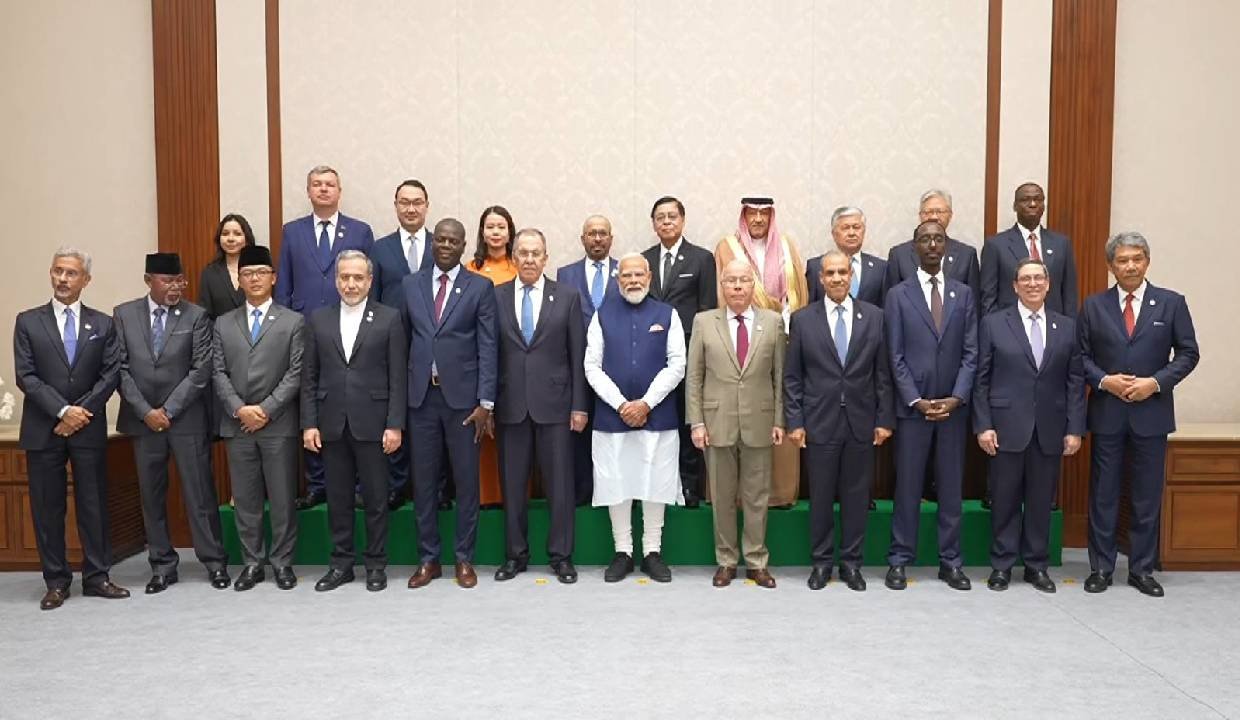
Indian Foreign Minister Subrahmanyam Jaishankar issued a strong call for the modernization of global institutions on Friday, stating that the United Nations and its subsidiary bodies must be reformed to reflect current global realities. Speaking at the BRICS Foreign Ministers’ Meeting in New Delhi, Jaishankar argued that the current UN structure is outdated and representative of an “earlier era.”
The Push for Fairer Representation
A central theme of the minister’s address was the lack of adequate representation for the Global South within the UN’s most powerful bodies. Jaishankar emphasized that reform is no longer optional if the organization wishes to remain relevant.
Key points from his speech included:
-
Expanding the Security Council: Jaishankar highlighted that the UN Security Council (UNSC) must include permanent representation from Asia, Africa, and Latin America.
-
Reflecting Modern Realities: He argued that keeping the current structure—which largely mirrors the geopolitical landscape of 1945—is unsustainable in a multipolar world.
-
Centrality of Reform: The minister noted that the credibility of the UN depends on its ability to evolve alongside the shifting balance of global power.
The BRICS Context
The meeting in New Delhi serves as a critical platform for the BRICS nations (Brazil, Russia, India, China, and South Africa, along with newer members) to coordinate on global governance. India has consistently used the forum to champion the interests of developing nations and to advocate for a “multipolar” world order.
Jaishankar’s remarks come at a time when global disruptions—from energy market volatility to regional conflicts—have tested the effectiveness of international institutions. By positioning UN reform as a top priority for BRICS, India aims to build a consensus among emerging economies to pressure the established powers for systemic change.
