

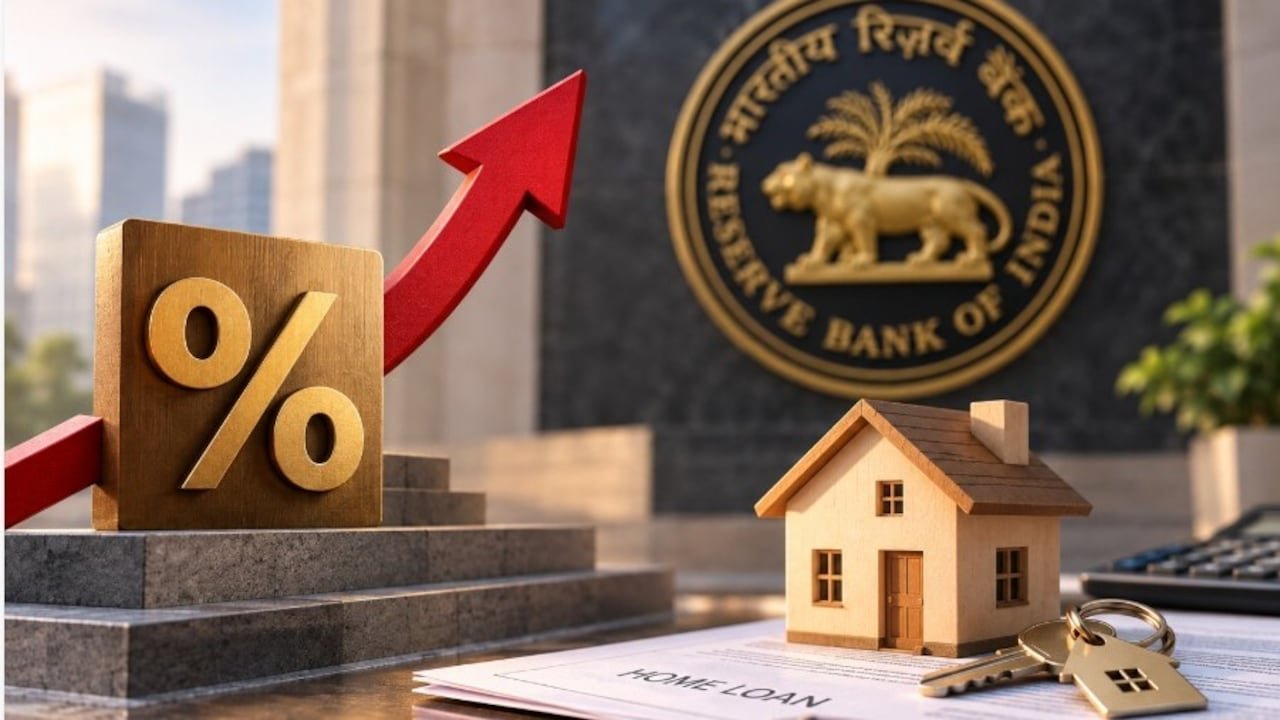
Following the Reserve Bank of India’s (RBI) Monetary Policy Committee decision to increase the repo rate by 25 basis points (from 5.25% to 5.50%), the prolonged low-interest-rate cycle has officially drawn to a close.
What the Rate Hike Means for Borrowers
For borrowers with floating-rate home loans linked to external benchmarks (such as the Repo-Linked Lending Rate / EBLR), the rate hike translates into higher borrowing costs.
-
Immediate vs. Lagged Impact: While repo-linked loans adjust quickly as lenders pass on the transmission, loans linked to the older MCLR benchmark see a slower, more gradual impact. Fixed-rate borrowers remain unaffected.
-
The Financial Impact (Example):
-
On a typical ₹50 lakh home loan with a 25-year remaining tenure, a 25 bps hike increases the monthly EMI by roughly ₹817. Over the course of the tenure, this can add over ₹2.45 lakh in total interest outgo if left unmanaged.
-
For larger loans—such as a ₹50 lakh to ₹2 crore loan with a 20-year term—monthly EMIs can jump by anywhere between ₹3,000 to ₹3,100+ depending on the exact interest bracket transition.
-
Watch Out for the “Tenure Extension” Trap
When interest rates go up, many banks automatically extend your loan’s tenure instead of increasing your monthly EMI. While keeping your monthly payout unchanged feels convenient at first, extending the tenure costs significantly more over the life of the loan—often adding lakhs of rupees in extra interest.
Smart Ways to Manage the Hike
-
Opt for Higher EMIs Over Longer Tenures: If your budget allows, absorbing a slight increase in your monthly EMI is far cheaper over the long run than letting your loan duration stretch out.
-
Make Regular Prepayments: Even small, periodic partial prepayments can aggressively neutralize the additional interest burden created by the rate hike.
-
Explore Refinancing: If your credit score is strong (700+) and another lender is offering a significantly lower rate, evaluating a home loan balance transfer can help lower your overall costs.
