

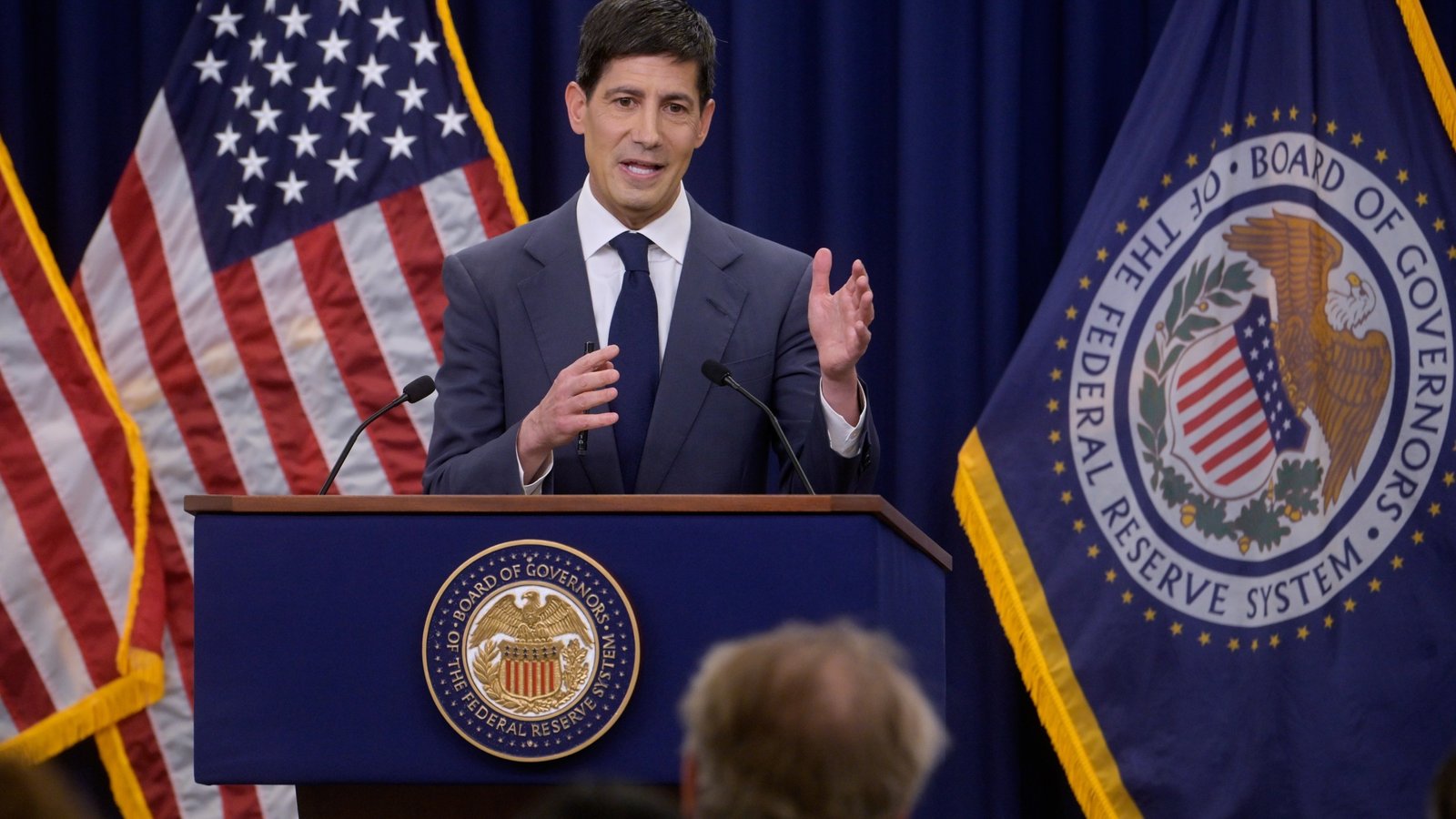
For years, global financial markets have grown deeply accustomed to “forward guidance”—a strategy where Federal Reserve officials constantly signal, explain, and hint at their upcoming monetary policy moves. However, Kevin Warsh, a leading candidate to become the next Federal Reserve Chair, advocates for a drastic shift away from this hyper-communicative approach. While a quieter central bank might sound like a stabilizing force, experts warn it is a massive gamble that could trigger widespread market volatility and push borrowing costs higher.
Moving Away from “Forward Guidance”
Under recent leadership, the Fed has operated like a predictable driver, using its words to smoothly guide Wall Street through interest rate hikes and cuts. Warsh argues that this constant stream of commentary has made the Fed a hostage to short-term market expectations, forcing the central bank to over-explain its every move. His proposed strategy aims to restore the Fed’s independence and flexibility by cutting back on the relentless public speeches and media commentary.
Why Silence Breeds Volatility
While the goal is to make the Fed more disciplined and less reactionary, investors and analysts fear the sudden lack of communication could backfire. In the absence of clear hints from central bankers, markets would be forced to guess the Fed’s next moves based purely on economic data releases.
This guesswork is highly likely to cause sharp, sudden swings in asset prices. Instead of smoothly pricing in an upcoming interest rate decision over several weeks, markets could react with sudden panic or euphoria the moment a policy decision is officially announced.
The Risk of Higher Interest Rates
Beyond day-to-day market turbulence, a tight-lipped Federal Reserve could lead to structurally higher interest rates. When investors feel uncertain about the future direction of monetary policy, they demand compensation for taking on that extra risk.
This “uncertainty premium” would likely manifest as higher yields on government bonds, which act as the benchmark for global borrowing. As a result, mortgage rates, corporate loans, and consumer credit could all become more expensive, effectively tightening financial conditions without the Fed even lifting a finger.
A High-Stakes Financial Experiment
Proponents of Warsh’s approach believe that breaking Wall Street’s addiction to Fed hand-holding will ultimately build a healthier, more self-reliant financial system. However, critics argue that stripping away forward guidance in an interconnected, high-speed trading environment is incredibly dangerous. If a quieter Fed leaves investors in the dark, the resulting friction could disrupt the broader global economy.
