

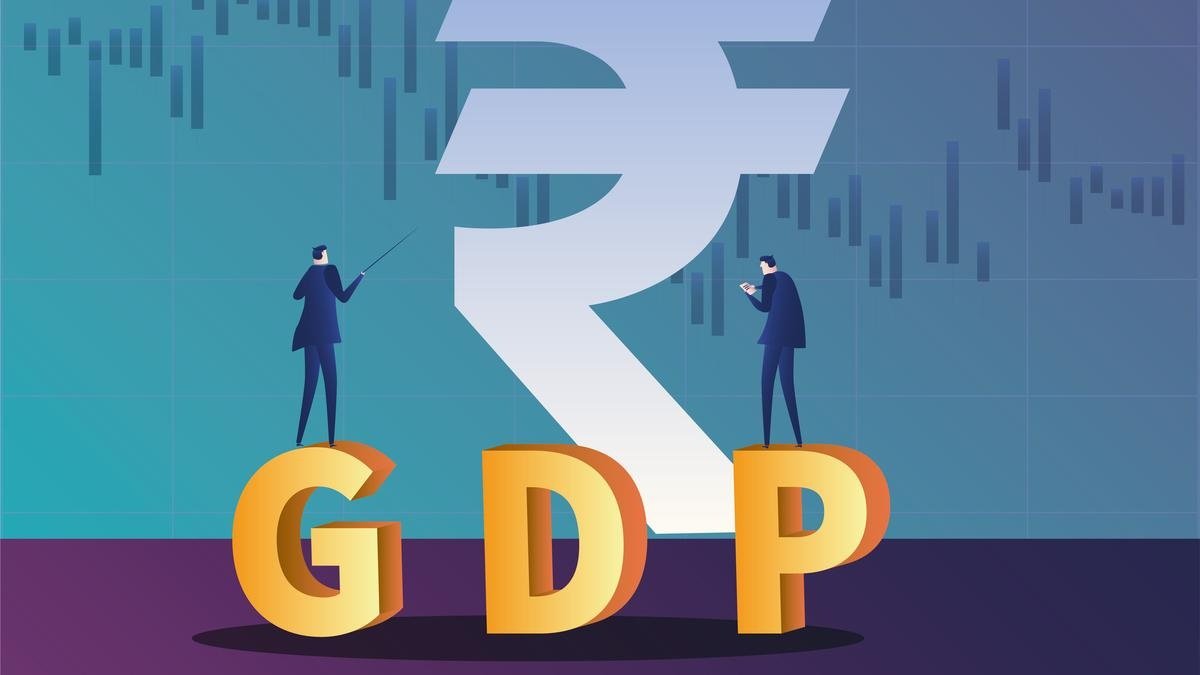
The ground beneath India’s macroeconomic data just shifted, but not because of a sudden market crash or an unexpected policy pivot. Instead, the measuring tape itself got an upgrade.
On June 5, the government released its first full-year provisional growth numbers under a brand-new economic yardstick: the GDP base year has officially changed from 2011-12 to 2022-23.
Under this recalibrated base, the Ministry of Statistics and Programme Implementation (MoSPI) announced that real GDP growth for FY26 hit a robust 7.7%, while nominal GDP reached ₹346.36 lakh crore.
Nothing changed in the actual factories, fields, or digital boardrooms on June 5. However, because the starting point (the denominator) has changed, every macro metric you track as an investor will now read differently.
Why the Change Was Overdue
A country’s economic makeup shifts drastically over a decade. The old 2011-12 base was completely blind to massive structural changes in modern India, such as:
-
The explosive growth of the gig economy and digital platform services.
-
The massive scale-up of renewable energy networks.
-
Post-pandemic consumption shifts, which are now tracked more accurately using real-time administrative data like GST filings and the e-Vahan automobile portal.
By updating the base to 2022-23—the first stable, “normal” economic year following the disruptions of the pandemic—the data finally catches up to reality.
The Checklist: 4 Ratios Investors Must Re-Evaluate
Because the nominal GDP figure has been reset, you cannot cleanly map old macro headlines directly to new ones. Here is how your standard investing toolkit changes:
1. Market-Cap-to-GDP (The Buffett Indicator)
-
What it tracks: Whether the stock market is overvalued or undervalued relative to the size of the economy.
-
The Impact: With a fresh nominal GDP base of ₹346.36 lakh crore, the denominator changes. An expensive-looking stock market might suddenly look slightly more reasonable on paper, simply because the underlying economic base expanded to capture newer sectors.
2. Fiscal Deficit-to-GDP
-
What it tracks: The government’s borrowing health and a primary driver of bond yields and inflation.
-
The Impact: Because fiscal deficit targets are expressed as a strict percentage of nominal GDP, a reset denominator automatically alters the final percentage. Keep an eye on how the upcoming budget adjustments navigate this updated baseline.
3. Corporate Debt-to-GDP
-
What it tracks: Systemic leverage and banking sector risk.
-
The Impact: India’s corporate balance sheets have been in a “deleveraging” phase for years. When measured against the modern 2022-23 baseline, the overall debt-to-GDP ratio will provide a highly accurate view of exactly how much headroom corporate India has left to borrow and spend on new projects (CapEx).
4. Tax-to-GDP Ratio
-
What it tracks: The efficiency of government tax collection and compliance.
-
The Impact: With compliance tools like GST data now natively baked into how GDP is calculated, this ratio gives a much truer picture of formalization.
Investor Takeaway: Don’t let the next round of macro headlines startle you. If a key financial ratio looks like it suddenly ticked up or down, check the baseline first. The economy didn’t pivot overnight—the accounting just grew up.
