

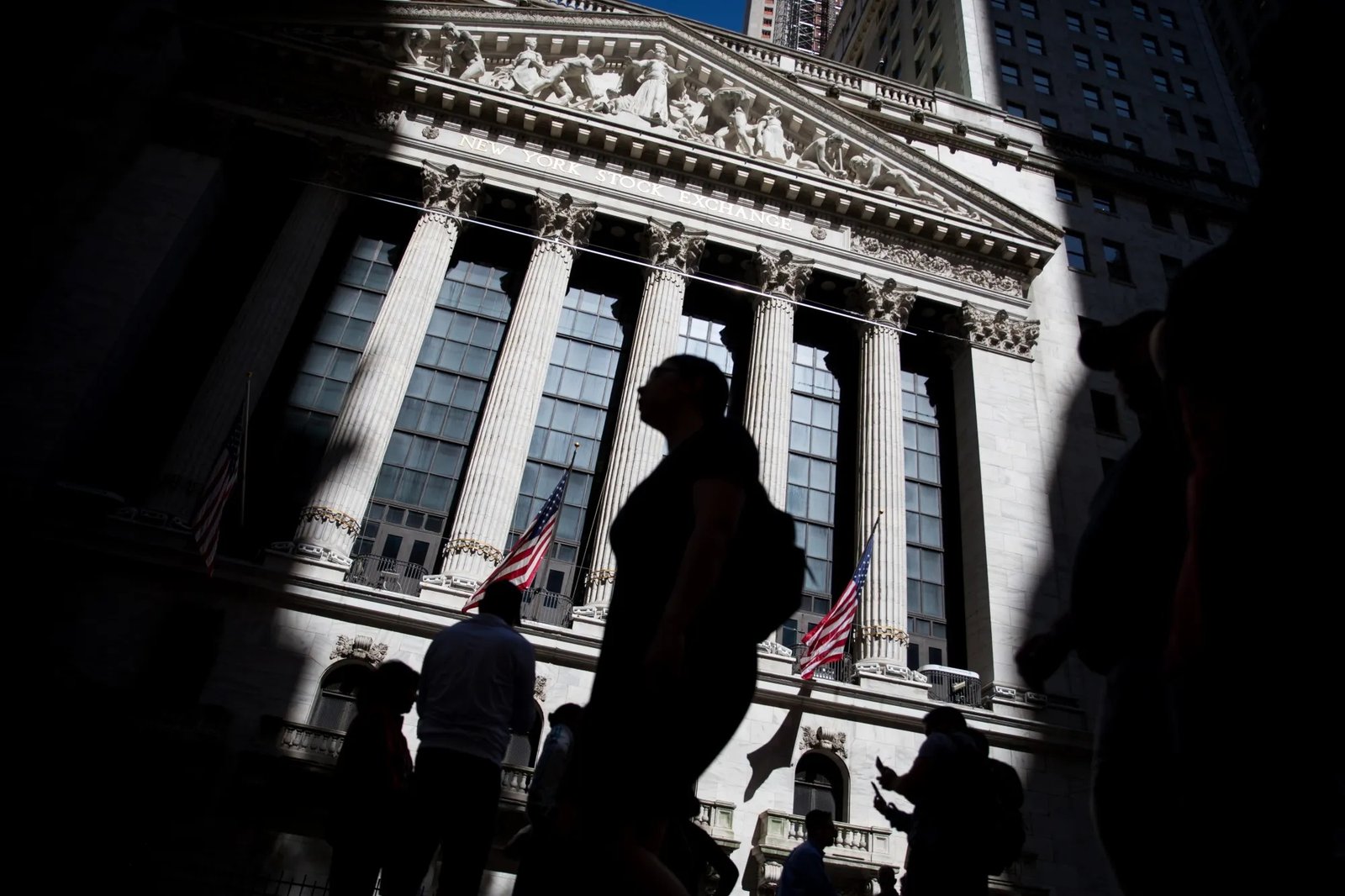
In a sweeping analysis, Ruchir Sharma, Chairman of Rockefeller International, has identified a seismic shift in global finance: the individual retail investor—historically dismissed by the elite as “dumb money”—has evolved into the most influential force on Wall Street.
This shift isn’t just about more people buying stocks; it is a fundamental restructuring of how market prices are set and how volatility is managed in an increasingly unstable world.
The Three Pillars of Retail Dominance
Sharma highlights that the traditional hierarchy, where “Smart Money” (hedge funds and institutional desks) dictated market direction, has been dismantled by three key developments:
-
The Institutional Vacuum: As major institutions pivoted toward passive index investing, the responsibility for “price discovery”—deciding if a stock should go up or down based on news—was left wide open. Retail investors stepped into that void.
-
Digital Coordination: Modern trading isn’t done in isolation. Through commission-free apps and social media communities, retail traders can coordinate with the precision of a hedge fund, creating “gamma squeezes” and massive momentum shifts.
-
Behavioral Resilience: Unlike institutions that often follow rigid risk-management algorithms, retail investors have shown a unique “buy the dip” mentality. This has created a psychological floor for the market, even during geopolitical crises like the current U.S.-Iran tensions.
Why This Explains Today’s Market Anomalies
This “Retail Revolution” provides the missing context for why the markets are behaving unconventionally in May 2026:
-
Momentum Over Macros: It explains why stocks like Micron Technology or Tyson Foods can surge nearly 8% in a single day, even as the RBA raises interest rates to 4.35% to combat global inflation.
-
The Bottoming of ‘Bashed’ Stocks: The recent technical breakout of Jio Financial Services after a 20% drop is a classic example. While institutions might wait for margin clarity, retail “conviction” often triggers the initial reversal.
-
Rapid Sector Rotations: The “crowd” moves fast. When sentiment shifts, as it did with the 10% plunges in UPS and FedEx, the exit is violent because the retail force moves in unison.
A Double-Edged Sword: The Risks of the New Guard
While the democratization of finance has empowered millions, Sharma offers a sobering warning. When the “most influential force” on Wall Street is driven by sentiment rather than standard valuation models:
-
Valuation Gaps: Stocks can remain “expensive” or “cheap” far longer than traditional economics would suggest.
-
Market Fragility: The lack of institutional “ballast” means that when the retail crowd panics, there is very little to stop a downward spiral.
Final Takeaway for the Modern Investor
In 2026, checking a stock’s fundamental “10 on 10” score is only half the battle. To succeed, one must also gauge the Retail Pulse. Understanding what the “Dumb Money” is thinking is no longer a niche hobby—it is a requirement for survival on the new Wall Street.
