

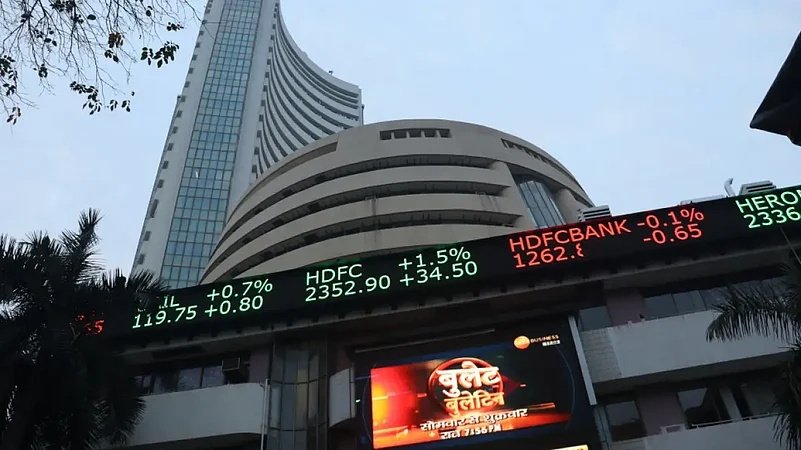
The excerpt captures a foundational truth about India’s economy: despite massive industrialization and a booming tech sector, the Southwest Monsoon remains the ultimate macro driver.
When the India Meteorological Department (IMD) projects a below-normal monsoon at 92% of the Long Period Average (LPA) due to incoming El Niño conditions, it triggers a predictable sequence across both the rural economy and trading terminals.
The Macro Chain Reaction: From Clouds to Corporate Earnings
1. The Inflation & Interest Rate Bind
Agriculture might only contribute around 15–16% to India’s GDP, but it employs nearly half the population. A weak monsoon directly hits summer-sown (Kharif) crops like paddy, pulses, and oilseeds.
-
The Market Impact: Lower crop yields spike food inflation. This forces the Reserve Bank of India (RBI) to keep repo rates elevated for longer to anchor inflation expectations, putting pressure on banking and high-leverage sectors.
2. The Rural Consumption Engine
Rural India is the primary demand driver for entry-level two-wheelers, tractors, consumer durables, and Fast-Moving Consumer Goods (FMCG).
-
The Market Impact: If a farmer’s disposable income drops due to rising irrigation costs or poor crop yields, discretionary spending takes an immediate hit.
Mapping the Stock Market: Winners vs. Losers
Just as extreme summer heat waves boost cooling stocks like Voltas and Blue Star, a below-normal monsoon structuralizes a clear divergence on Dalal Street:
| Vulnerable Sectors (The Pressure Points) | Resilient / Structural Sectors (The Safe Havens) |
| FMCG & Staples: Heavy rural exposure brands (e.g., HUL, Dabur) face volume growth slowdowns as rural wallets shrink. | Irrigation & Water Management: Drip irrigation and pipe companies (e.g., Jain Irrigation, Supreme Industries) see structural demand boost. |
| Automotive (Rural Cyclicals): Entry-level two-wheelers and tractor manufacturers (e.g., Hero MotoCorp, M&M tractor division) face near-term volume hurdles. | Power & Utilities: Lower hydro-generation and high temperatures push up peak power demands, benefiting power producers (e.g., NTPC, Tata Power). |
| Fertilizers & Agrochemicals: Delayed or deficient sowing in central India can lead to lower fertilizer off-take and inventory build-up. | Defensive Large-Caps: Capital often pivots away from high-beta domestic cyclicals into Export-led IT or Pharma names that are insulated from domestic rain cycles. |
The Tactical Takeaway: A 92% LPA forecast is not a structural breakdown—it’s a call for portfolio navigation. Seasoned investors use these cyclical weather corrections to accumulate structurally strong FMCG and Auto heavyweights on deep dips, knowing that a single bad monsoon season rarely disrupts a multi-year corporate earnings cycle.
