

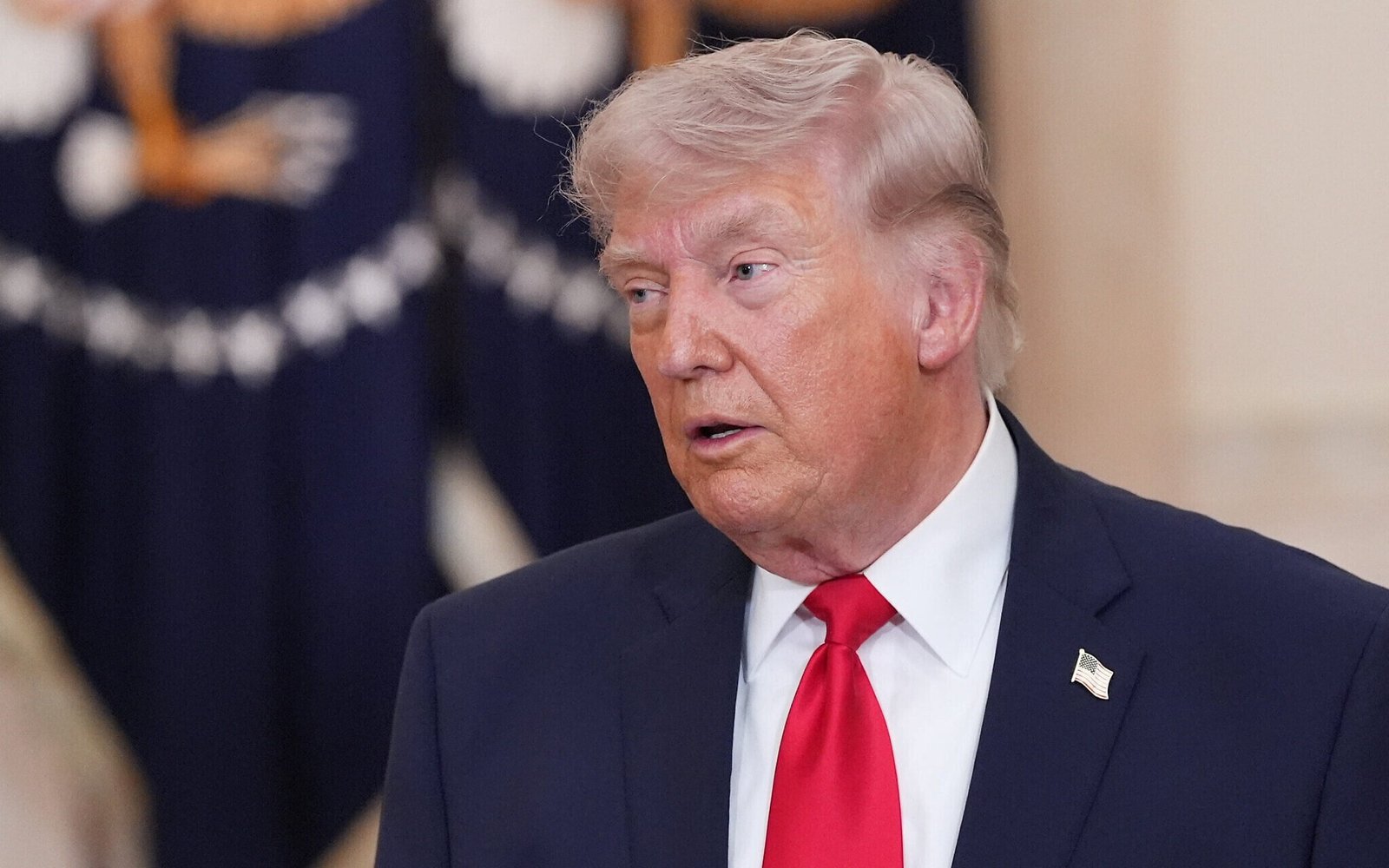
With the eyes of the world turned toward Pakistan, President Donald Trump has signaled a high-stakes turning point in the U.S.-Iran conflict. On Friday, just hours before Vice President JD Vance was set to touch down in Islamabad for critical peace negotiations, Trump took to Truth Social to issue a cryptic but formidable warning: “World’s most powerful reset.”
The message serves as a dual-purpose signal: a hope for diplomatic resolution and a promise of unprecedented military force should those talks collapse.
Diplomacy Under the Shadow of Force
While the White House has framed the Saturday summit in Islamabad as an opportunity for a “positive negotiation,” President Trump’s subsequent interview with the New York Post stripped away any diplomatic ambiguity. The “reset,” according to Trump, involves more than just dialogue—it involves a massive military readiness.
“We have a reset going. We’re loading up the ships with the best ammunition, the best weapons ever made… And if we don’t have a deal, we will be using them, and we will be using them very effectively.”
Trump’s rhetoric underscores his “Peace through Strength” doctrine, coming off the back of a five-week conflict. Despite declaring a ceasefire last Wednesday and claiming victory, the President remains frustrated over Iran’s control of the Strait of Hormuz, accusing Tehran of “dishonorable” conduct regarding global oil flow.
The Players at the Table
The delegation sent to Islamabad reflects the gravity of the situation. The U.S. is sending its “A-team” of negotiators and loyalists:
-
JD Vance: Vice President and lead negotiator.
-
Jared Kushner: Trump’s son-in-law and key Middle East strategist.
-
Steve Witkoff: White House Middle East envoy.
On the Iranian side, the delegation includes Parliament Speaker Mohammed Baqer Qalibaf and Foreign Minister Abbas Araqchi. The talks are expected to focus on two primary friction points:
-
Maritime Security: Ensuring the unrestricted flow of oil through the Strait of Hormuz.
-
Humanitarian Issues: The release of several American citizens currently imprisoned in Iran.
Vance’s Warning: “Don’t Play Us”
Before departing from Joint Base Andrews, Vice President Vance echoed the President’s “carrot and stick” approach. While expressing hope for a “positive outcome,” he issued a blunt warning to the Iranian leadership.
“If the Iranians are willing to negotiate in good faith, we’re certainly willing to extend the open hand,” Vance told reporters. “If they’re going to try to play us, then they’re going to find the negotiating team is not that receptive.”
What’s at Stake?
The “Reset” represents a definitive fork in the road for U.S. foreign policy in 2026. If the Islamabad talks succeed, it could secure global energy markets and end a volatile period of kinetic warfare. If they fail, Trump’s “reset” suggests the U.S. is prepared to transition from a localized conflict to a full-scale “onslaught” using the military’s latest advanced weaponry.
As the delegations convene tomorrow, the world waits to see if the “reset” will be defined by a handshake or a holster.
