

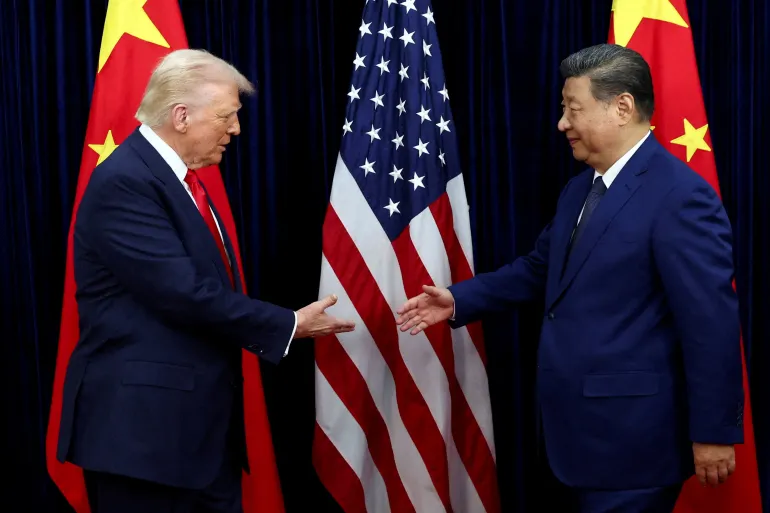
US President Donald Trump is set to travel to China for a state visit from May 13 to May 15, following an invitation from Chinese President Xi Jinping. This marks the first time in nearly a decade that Trump will visit the country, signaling a critical attempt to stabilize relations between the two global powers after months without direct communication.
The meeting comes at a time of heightened geopolitical tension, particularly regarding trade disputes and the ongoing conflict involving the US, Israel, and Iran.
Key Priorities: The “Five B’s” and “Three T’s”
Negotiations are expected to follow specific strategic frameworks from both sides:
-
The US Strategy (The Five B’s): Washington is focused on increasing Chinese imports of Boeing jets and American agricultural products like beef and soybeans. They also aim to establish trade and investment panels to separate routine economic cooperation from sensitive national security concerns.
-
China’s Strategy (The Three T’s): Beijing is expected to prioritize discussions on tariffs, technology, and Taiwan. Chinese officials are seeking to maintain the current trade truce and are urging the US to ease restrictions on advanced semiconductor exports.
Critical Global Issues on the Table
Beyond bilateral trade, the two leaders are expected to tackle several high-stakes global topics:
-
Iran and Russia: President Trump is expected to press China on its economic ties with Tehran, specifically regarding oil purchases. Discussions will also likely cover China’s relationship with Russia and the export of “dual-use” goods that could have military applications.
-
Technology and Security: AI technology, nuclear arms, and the future of a strategic critical minerals pact are all on the agenda. The current ceasefire regarding the export of Chinese rare earth minerals to the US is up for discussion, though an extension remains uncertain.
Expert Outlook
While President Trump has often highlighted his personal rapport with President Xi, experts remain cautious about the potential for a major economic breakthrough. Many analysts, including those from Cornell University, suggest that the most realistic outcome is an extension of the existing trade truce and smaller agreements on a subset of less contentious issues.
The leaders last met face-to-face in South Korea last October, where they successfully moved to halt an escalating trade war. The world will be watching to see if this Beijing summit can prevent further deterioration of ties between the world’s two largest economies.
