

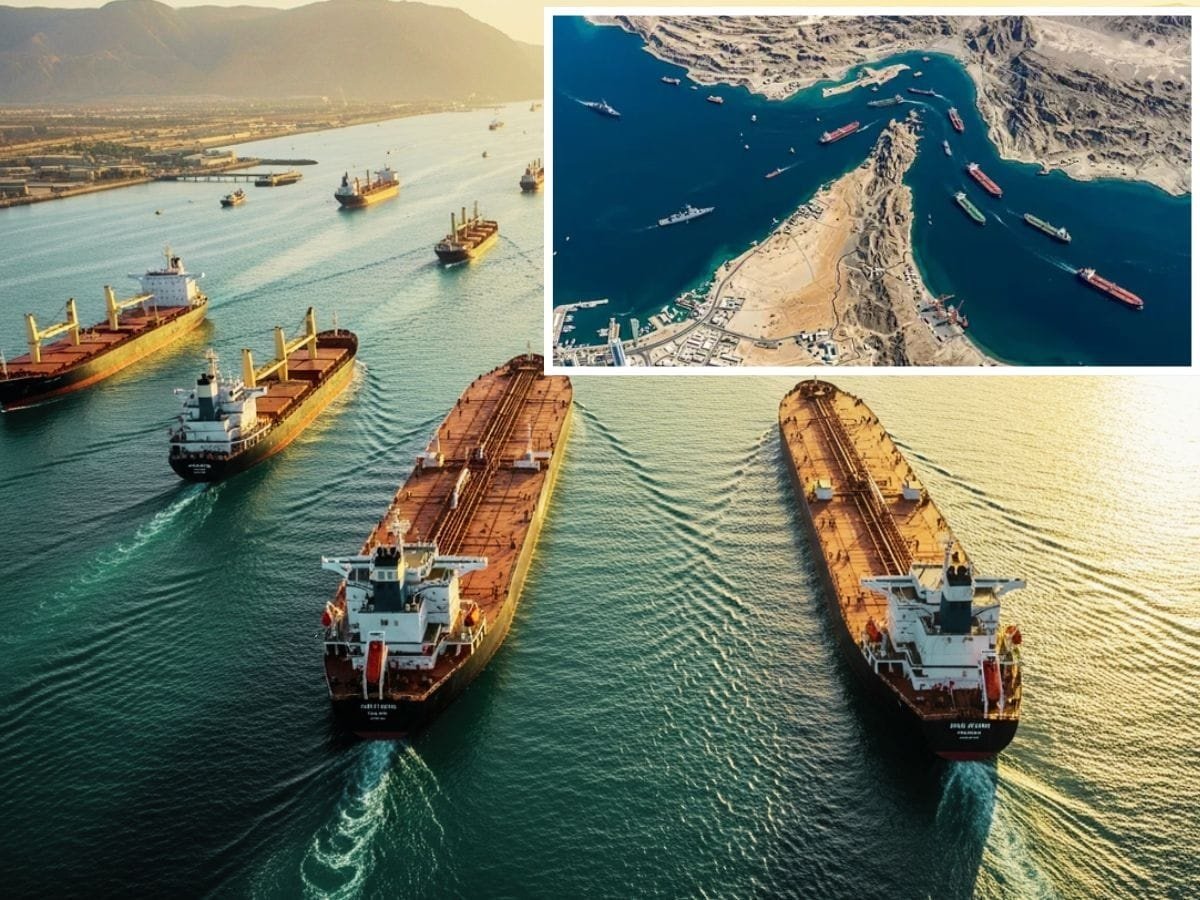
The Strait of Hormuz, a narrow waterway that handles roughly 20% of the world’s oil supply, has shifted from a strategic chokepoint to a commercial one. Following the recent US-Iran ceasefire, the “Hormuz Toll” has emerged as a major geopolitical flashpoint, with Iran asserting its control over the passage.
Here is the breakdown of how this affects India and the global energy market.
The $2 Million “Strength” Fee
Alaeddin Boroujerdi of Iran’s national security committee has framed the $2 million transit fee as a reflection of “Iran’s strength.” This move essentially treats a natural international waterway as a man-made canal (like the Suez or Panama), which typically goes against the UN Convention on the Law of the Sea (UNCLOS).
However, since neither the US nor Iran has ratified UNCLOS, Tehran is pushing to formalize its de facto control.
The Impact on Indian Vessels
India finds itself in a delicate diplomatic “grey zone.” While other nations face explicit toll reports, the situation for Indian ships is characterized by the following:
-
The “Friendly” Exception: Historically, Iran has categorized India as a “friendly” nation. To date, the Ministry of External Affairs (MEA) maintains there has been “absolutely no discussion” regarding a toll payment between New Delhi and Tehran.
-
Operational Reality: Despite the denial of a formal toll, the “grey market” for shipping through the strait has seen rates spike to four times the normal level.
-
Vital Supply Lines: India is exceptionally vulnerable; nearly 90% of its oil and gas imports from West Asia pass through this 21-mile-wide neck of water.
-
Rationed Traffic: At least eight India-flagged LPG tankers have successfully navigated the route recently, but the government is reportedly rationing usage to manage risk and cost.
The “Joint Venture” Confusion
The situation has been further complicated by US President Donald Trump’s business-centric rhetoric. Rather than outright rejecting the toll, Trump suggested a “joint venture” to secure the waterway, calling it a “beautiful thing.” This has led to speculation that the US might allow a toll in exchange for Iran’s “coordination” in keeping the lanes open.
Is the Strait Actually Open?
While a ceasefire is technically in place, “normalcy” is a distant prospect:
-
Limited Traffic: Shipping volume remains a fraction of pre-war levels.
-
Iranian Oversight: Foreign Minister Abbas Araghchi stated that passage is only possible via “coordination with Iran’s Armed Forces,” effectively ending the era of unimpeded transit.
-
Parallel Conflict: Israel’s continued strikes on Lebanon (Hezbollah) remain a “wildcard” that could collapse the fragile maritime truce at any moment.
Global Reactions
| Entity | Stance on the Toll |
| India (MEA) | Calls for “free and safe navigation”; denies paying any fees. |
| European Union | Insists on freedom of navigation with “no payment or toll whatsoever.” |
| United States | Contradictory; Trump suggests a “joint venture” while military officials demand “safe opening.” |
| Iran | Aims to bring the management of the Strait to a “new stage” (formalized control). |
The Bottom Line for India: While New Delhi is officially not paying the $2 million “entry fee,” the increased insurance premiums, grey-market shipping rates, and the threat of energy supply disruptions are already imposing a “silent toll” on the Indian economy.
One relevant follow-up: Are you looking to understand how these shipping spikes might specifically impact Indian petrol and diesel prices at the pump?
