

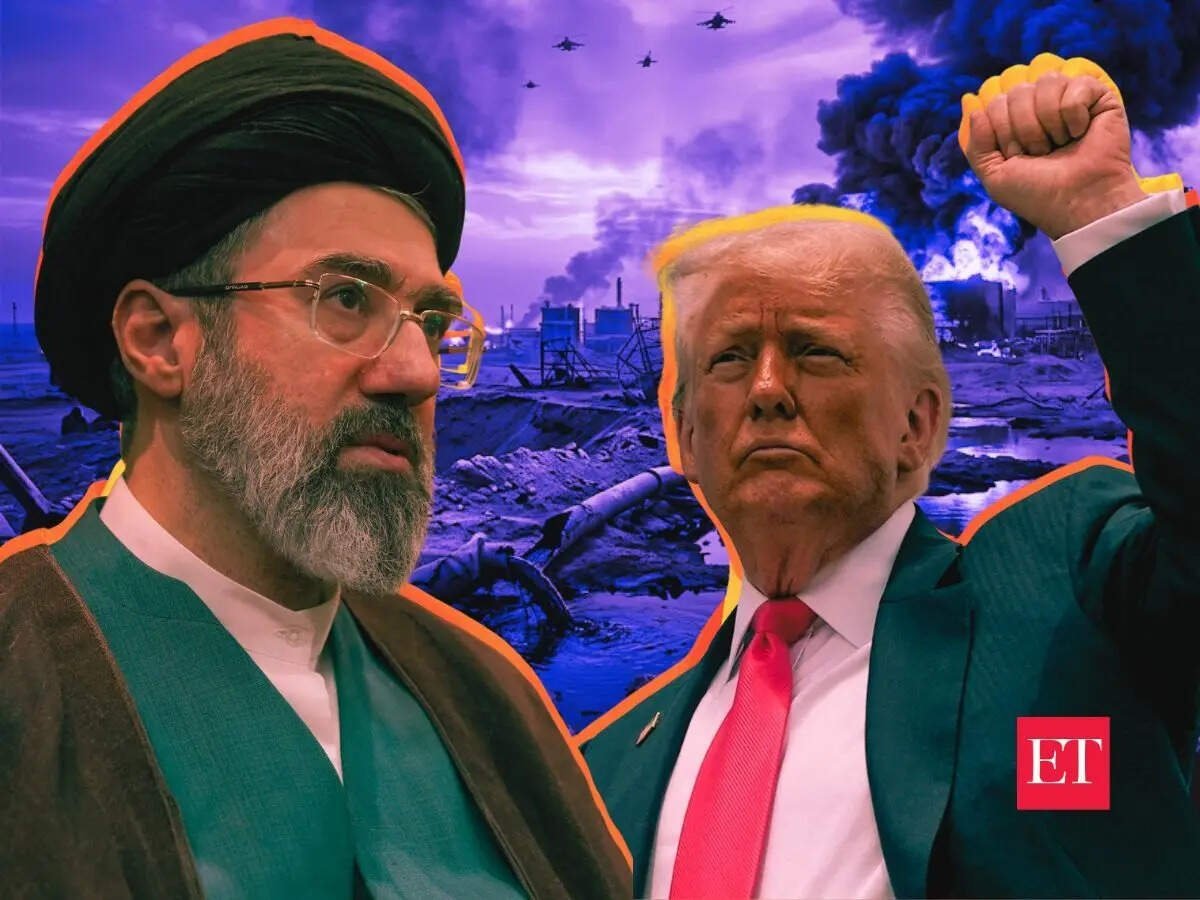
The precarious two-week ceasefire in West Asia is facing its first major test as high-stakes negotiations between the United States and Iran are set to begin this Saturday in Islamabad, Pakistan. While the global community watches for a lasting resolution, new reports of violations and regional escalations are threatening to collapse the truce before it fully takes hold.
1. Ceasefire Violations: The Kuwait Crisis
Despite the ceasefire agreement, Kuwait has officially accused Iran and its regional proxies of launching drone attacks on its territory.
-
The Attack: Explosions and rocket fire were reported late Thursday, with one house in the Khor al-Zubair area being struck.
-
The Response: Iran’s Revolutionary Guard has denied any involvement, claiming they have adhered to the truce. However, the incident has triggered missile alerts across Israel, Dubai, Saudi Arabia, and Kuwait.
-
Human Impact: A drone strike recently resulted in the death of a Tamil Nadu man working in Kuwait, highlighting the direct cost to the Indian diaspora in the region.
2. The Islamabad High-Stakes Talks
Pakistan’s capital is currently under a total lockdown in preparation for the Saturday summit.
-
Delegations: U.S. Vice President JD Vance is leading the American delegation, while Iranian officials are arriving to discuss the “management” of the Strait of Hormuz and Iran’s nuclear stockpile.
-
Critical Issues: The talks will focus on reopening global shipping lanes and establishing a framework to prevent future missile exchanges.
3. The “Silent War”: Intelligence & Global Stances
-
The Ukrainian Factor: In a surprising development, President Volodymyr Zelenskyy revealed that Ukrainian special forces have been using domestically produced interceptor drones to shoot down Iranian-designed Shahed drones in the Middle East during this conflict.
-
The “Netanyahu Boost”: Israeli PM Benjamin Netanyahu has signaled a potential path toward de-escalation by approving direct talks with Lebanon, though Beirut has yet to formally respond.
-
South Korea’s Stand: President Lee Jae Myung caused a diplomatic stir by sharing a controversial video of Israeli soldiers from 2024, urging that “humanitarian law must be observed” as he sends a special envoy to Tehran.
4. Economic Impact: “A Ceasefire is Not a Refund”
Market analysts warn that while a ceasefire may stop the fighting, the economic damage to energy markets is “not undoable.”
-
Oil Prices: Brent crude rose to $96.92 per barrel on Friday as supply uncertainty persists.
-
Supply Diversification: Japan has announced the release of an additional 20 days of oil reserves and is actively seeking import routes that bypass the Strait of Hormuz entirely.
-
Singapore’s Promise: PM Lawrence Wong assured global partners that Singapore will not restrict fuel exports, even as the energy crisis deepens.
Market & Conflict Snapshot
| Indicator | Current Status | Context |
| Brent Crude | 📈 $96.92 | Fragile truce keeps risk premium high. |
| Nikkei 225 | 📈 56,952.60 | Markets up on hope for Islamabad success. |
| Death Toll | ⚠️ 3,000+ | Iranian estimate of casualties from “enemy attacks.” |
| Strait Status | 🛑 Effectively Shut | Iran maintains “technical coordination” requirement. |
The Bottom Line: With explosions heard around Tehran early Friday and President Trump casting public doubt on the ceasefire’s effectiveness, the Islamabad talks represent a “zero-hour” for regional stability.
