

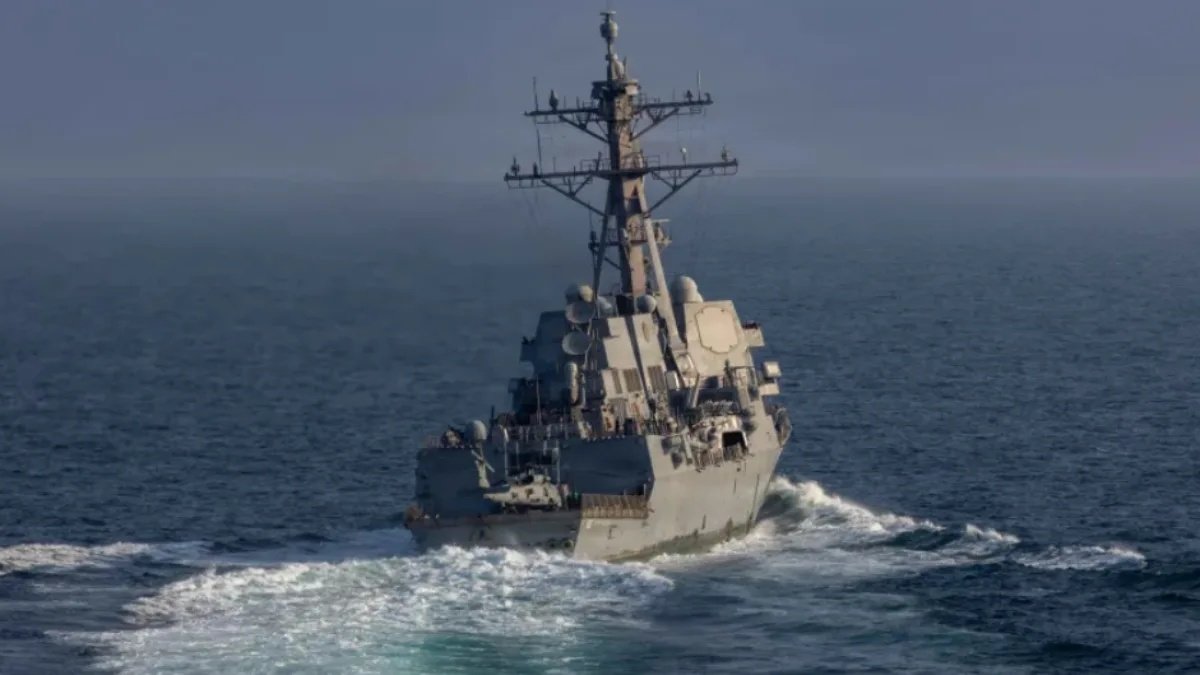
U.S. Central Command confirmed late Tuesday that a full naval blockade of Iranian ports is now in effect, a move that physically severs approximately 90% of Iran’s international trade. The enforcement comes just 36 hours after President Donald Trump’s directive, effectively turning the Strait of Hormuz—already choked by the conflict—into a dead zone for Iranian commerce.
The blockade, supported by over 10,000 U.S. troops and a massive carrier strike group presence, is intended to starve the Iranian economy of the $435 million it generates daily through seaborne trade.
Operations and Early Enforcement
Centcom Commander Brad Cooper stated that U.S. forces have achieved “maritime superiority,” successfully turning back merchant vessels attempting to reach Iranian terminals.
-
First 24 Hours: Six merchant ships were intercepted and ordered to return to ports in the Gulf of Oman.
-
Exceptions and “Dark” Traffic: Despite the blockade, maritime AI firm Windward identified at least two vessels—including a sanctioned Chinese-owned tanker—that managed to exit the Gulf, highlighting the continued risk of “falsely flagged” vessels attempting to run the gauntlet.
-
The “Diplomatic Off-Ramp”: While the blockade is “fully implemented,” the White House has signaled it remains open to a diplomatic resolution. Crude oil futures for May delivery dropped slightly to $90.40 per barrel on news that back-channel negotiations with Tehran may still be viable.
Global Economic Fallout
The International Monetary Fund (IMF) has adjusted its 2026 global growth forecast downward to 3.1%, citing the “adverse scenario” created by the war. With oil prices hovering near the $100 mark, the world’s advanced economies are bracing for a prolonged period of high inflation.
| Indicator | Impact |
| Iran Trade Loss | 90% of seaborne trade ($109.7B annually) halted. |
| Daily Damage | Estimated $435 million in lost revenue for Tehran. |
| Global Growth | IMF forecast cut to 3.1% due to energy volatility. |
| Energy Benchmark | Brent crude remains high at $94.47 per barrel. |
Geopolitical Friction
The blockade has pushed U.S. relations with major energy importers to a breaking point.
-
China and India: Both nations are major consumers of Iranian crude and have expressed outrage over the disruption. China’s Foreign Ministry slammed the blockade as a “dangerous and irresponsible act” that threatens to destabilize the entire Asian industrial base.
-
The Russian Alternative: As the blockade holds, Russia has stepped in to offer China an “energy lifeline,” further cementing the Moscow-Beijing axis and potentially undermining the long-term effectiveness of U.S. economic pressure.
“A blockade of Iranian ports has been fully implemented… U.S. forces have completely halted economic trade going in and out of Iran by sea.” — Brad Cooper, Commander of U.S. Central Command
