

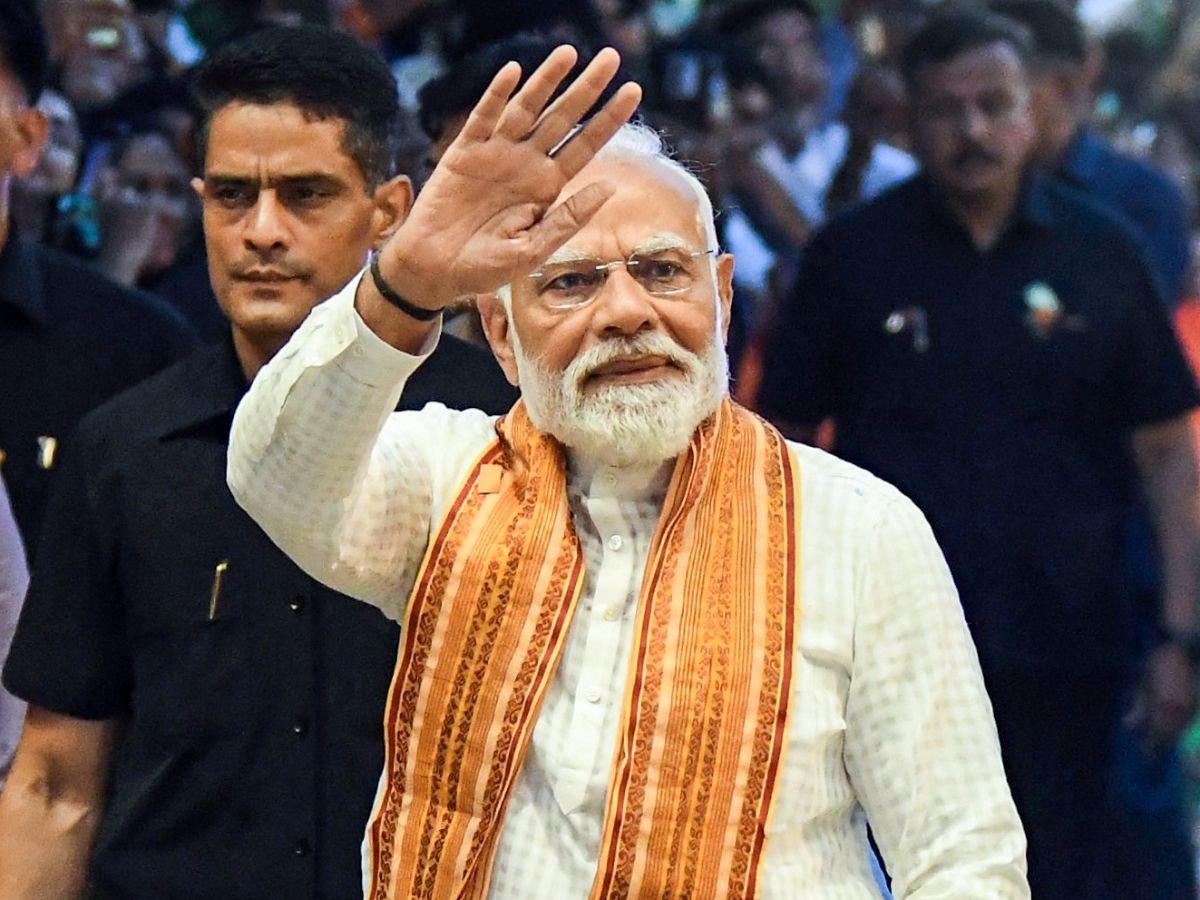
On Sunday, May 17, 2026, Prime Minister Narendra Modi addressed top continental business leaders at the European Round Table for Industry (ERT) in Stockholm, Sweden, declaring that India’s economic “Reform Express” is operating at absolute full speed.
Flanked by Swedish Prime Minister Ulf Kristersson and European Commission President Ursula von der Leyen, PM Modi urged European conglomerates to aggressively scale up investments across India’s core sectors, emphasizing a shift from traditional buyer-seller relationships to a long-term industrial co-creation model.
The Five Core Pillars of Collaboration
The Prime Minister pitched a long-term, strategic roadmap for European capital, inviting tech and manufacturing giants to leverage India’s massive scale and talent pool across five major areas:
-
Green Energy & Sustainability: Deepening presence in the National Green Hydrogen Mission, clean energy technologies, and climate-resilient manufacturing infrastructure.
-
Deep Tech & Semiconductors: Enhancing collaborative investment in artificial intelligence (AI), advanced electronics, semiconductors, and the National Critical Mineral Mission.
-
Digital Infrastructure: Partnering in the country’s fast-expanding telecom grids and next-generation Digital Public Infrastructure (DPI) to build a global Research & Development (R&D) hub.
-
Resilient Supply Chains: Using India’s thriving manufacturing ecosystem as a reliable global export base under the vision of “Design for India, Make in India, and Export from India.”
-
Healthcare & Mobility: Exploring avenues in urban transformation, life sciences, future mobility, and sustainable logistics.
“In the last 12 years, India has been working on the basic mantra of reforms, performance, and transformation. And with the government’s political will, this Reform Express is moving forward at full speed,” PM Modi told the roundtable assembly hosted by the Volvo Group.
Fast-Tracking the Historic India-EU Free Trade Agreement
A major focal point of the high-level meeting was the landmark India-EU Free Trade Agreement (FTA), which was successfully concluded earlier this year in January.
PM Modi described the agreement as a transformative economic partnership that would reshape global commerce, technology sharing, and service sectors.
“We have set an ambitious and strategic agenda at the level of governments… As Ursula von der Leyen had said, this is the ‘mother of all deals.’ We are trying to implement this as soon as possible,” Modi stated.
He further noted that mega-infrastructure initiatives like the India-Middle East-Europe Economic Corridor (IMEC) will act as logistical multipliers, adding massive strategic value to the India-Europe corporate axis.
Building Institutional Bridges
| Initiative | Proposed Blueprint & Function |
| India Desk at ERT | A dedicated administrative desk within the European Round Table for Industry to streamline investment workflows and address corporate bottlenecks. |
| Annual CEO Roundtable | Institutionalizing a recurring, high-level annual platform for top Indian and European CEOs to coordinate on policy and joint ventures. |
| Talent Mobility Pacts | Strengthening education and skill partnerships to align India’s young, skilled workforce with global manufacturing requirements. |
Following the broader industrial assembly, PM Modi—alongside Prime Minister Kristersson and Crown Princess Victoria of Sweden—held a targeted closed-door interaction with select Swedish CEOs. Modi emphasized that the India-Sweden relationship has evolved into a partnership of shared democratic values, ideas, and co-creation, making it an ideal anchor for sustainable 21st-century industrial solutions.
