

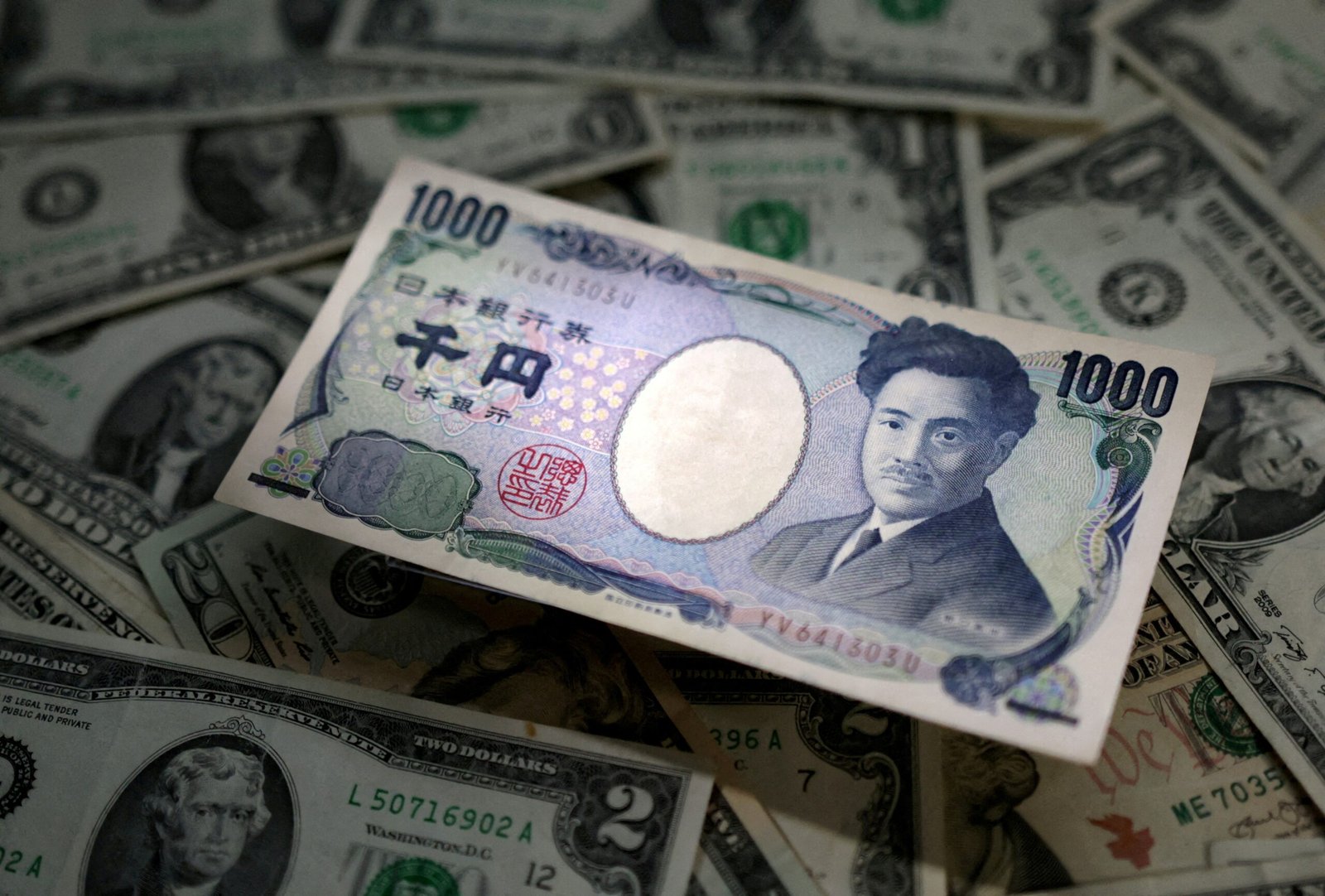
The Japanese yen plunged to a historic four-decade low on Tuesday, touching 162.41 per dollar—a weakness not seen since 1986. Despite recent rate hikes by the Bank of Japan and previous massive market interventions totaling 11.7 trillion yen ($72.25 billion), the currency remains severely defensive.
Japanese Finance Minister Satsuki Katayama stated that authorities are ready to “respond appropriately at any time,” sparking heavy market speculation that Tokyo may be forced into direct currency market intervention to prop up the sliding yen.
1. A Widening US-Japan Interest Rate Gap
The fundamental driver behind the yen’s drop is the vast disparity between interest rates in Japan and the United States. Traders are increasingly pricing in the likelihood of additional Federal Reserve rate hikes later this year. Because US yields remain vastly higher and could tighten further, capital is continuously pulled away from the low-yielding yen and into the more attractive, higher-yielding US dollar.
2. Relentless Dollar Strength
The US dollar continues to assert global dominance, with the dollar index tracking at 101.32 and heading toward a 1.4% quarterly gain. Market positioning data indicates that investors have built record bullish bets on the greenback throughout the first half of 2026. This broad dollar strength has pinned down multiple major currencies, pushing even the euro to a one-year low and exacerbating the pressure on the yen.
3. Record Surge in Bearish Short Positions
Traders have grown highly confident in the yen’s downward trajectory, resulting in an aggressive pile-up of speculative bets against it. US regulatory data reveals that net short positions against the yen have reached $11.3 billion, hovering near a two-year high. Additionally, global inflation anxieties fueled by ongoing geopolitical tensions from the Iran conflict have clouded the interest rate outlook, making it easier for short-sellers to double down on the yen’s weakness.
