

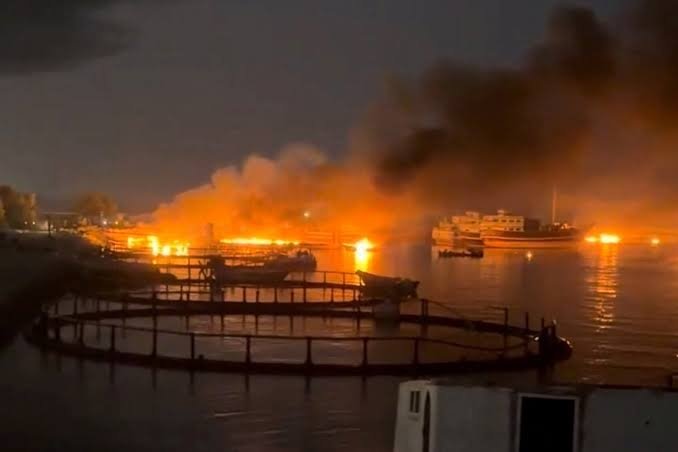
Tensions between Washington and Tehran have reached a dangerous flashpoint as US President Donald Trump declared that a recently negotiated temporary ceasefire is officially over. The collapse follows a series of military exchanges triggered by Iranian attacks on commercial vessels transiting the strategic Strait of Hormuz.
Adding to the friction, freshly released satellite imagery suggests Tehran may already be rebuilding its heavily monitored nuclear facilities, throwing into question the survival of the 14-point Memorandum of Understanding (MoU) signed by both nations just last month.
Trump Issues Standing Orders for Massive Retaliation
Confronting reports of an active assassination plot against him, President Trump revealed that he has already put in place catastrophic military counterorders should Iran succeed in taking his life.
Trump dismissed suggestions that Israeli intelligence had newly uncovered the plot, maintaining that he has occupied the top spot on Tehran’s target list since ordering the 2020 drone strike that killed Iranian General Qasem Soleimani. The warning follows the high-profile funeral of Iran’s former Supreme Leader Ayatollah Ali Khamenei, where state-sanctioned crowds openly displayed banners reading “Kill Trump” and public figures designated his death a religious duty.
“I’ve been on their list for a long time. That’s what we’re dealing with. The only thing is, I’ve left instructions — if anything happens, to just literally bomb them at levels that they’ve never seen before.”
— US President Donald Trump
Tehran Declares Zero Trust, Stands Ready for Full-Scale Defense
In Iran, political and military leaders have matched Washington’s aggressive rhetoric with warnings of their own. Speaking during a diplomatic assembly with Indonesian parliamentary leader Ahmad Muzani, Iranian Parliament Speaker Mohammad Bagher Ghalibaf made it clear that Tehran has completely lost faith in American diplomatic promises.
Ghalibaf stated that he personally delivered this uncompromising message directly to US Vice President JD Vance during recent high-stakes peace negotiations. He insisted that Iran has continued its military preparations unabated and remains poised for full-scale defensive warfare the moment Washington violates the core tenets of their diplomatic understanding.
The Battle for the Strait of Hormuz
At the center of the immediate military dispute is a escalating blockade in the Persian Gulf. senior US officials confirmed that Washington is now demanding Tehran issue an immediate, public declaration stating that the Strait of Hormuz remains open and that international shipping vessels will not face further aggression.
The International Maritime Organization has strongly condemned Tehran’s newly formed Persian Gulf Strait Authority, which began demanding passage permits from commercial ships in June. While US officials believe a rogue hard-line faction within Iran’s internally fractured leadership deliberately orchestrated the recent naval strikes to sabotage the ceasefire, Washington has indicated it still intends to proceed with technical de-escalation talks scheduled to take place in Switzerland.
