

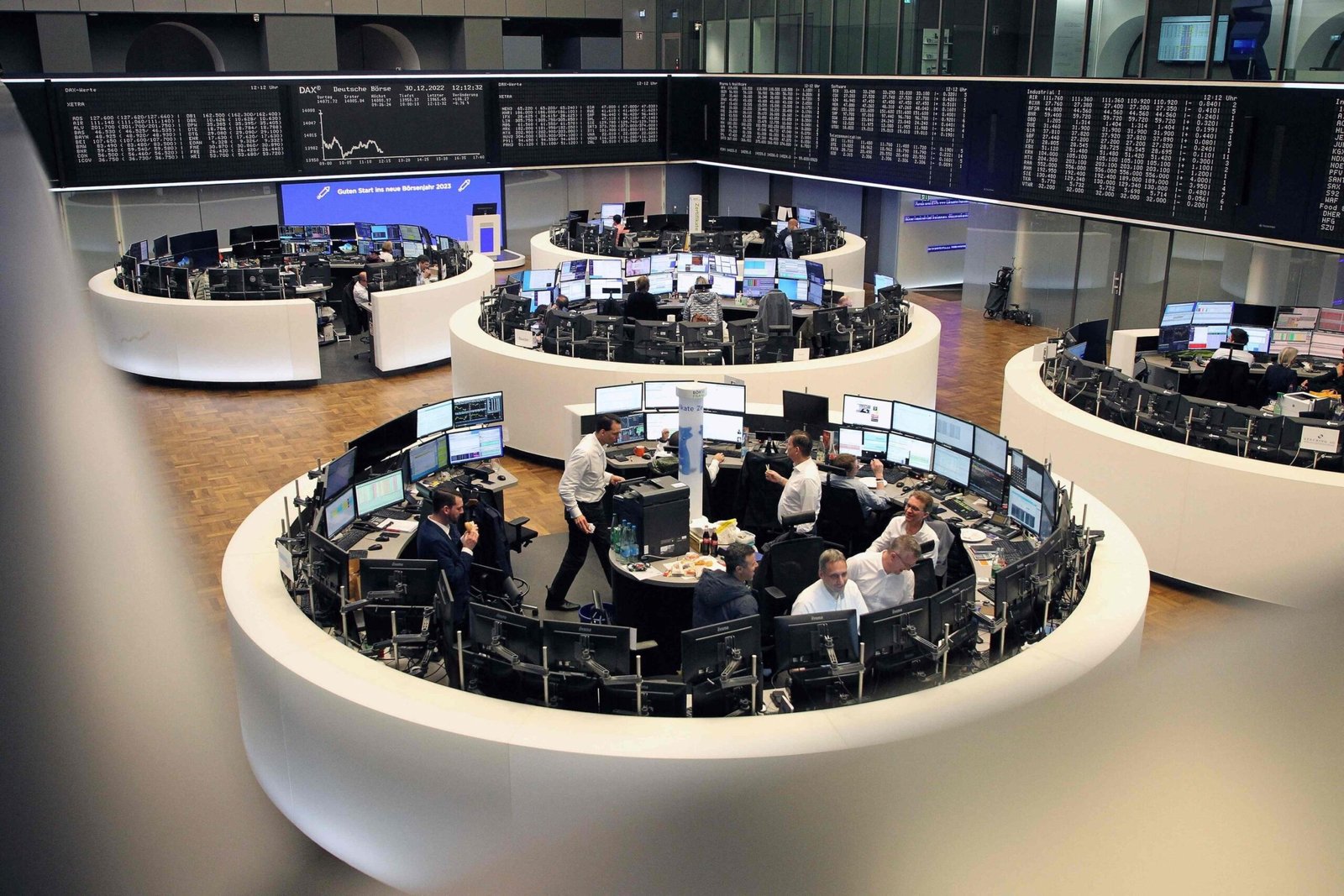
European equity markets rallied sharply on Friday, tracking global optimism as diplomatic breakthroughs raised hopes for an imminent end to the three-month-old conflict between the United States and Iran. The prospect of regional stabilization and the potential reopening of vital shipping lanes sent energy prices tumbling, offering a welcome reprieve to inflation-weary European economies.
The pan-European STOXX 600 index surged 1.88%, shrugging off a multi-layered macroeconomic backdrop of rising regional interest rates and cooling economic growth.
The Geopolitical Trigger: A Finish Line in Sight
The market’s upward momentum followed statements from a senior U.S. official indicating that negotiators are close to finalizing a peace deal. The proposed agreement is expected to include a commitment from Iran to halt nuclear weapon development in exchange for the lifting of the U.S. maritime blockade and the full restoration of commercial oil traffic through the Strait of Hormuz.
While Iranian Foreign Minister Abbas Araqchi added a layer of caution—noting that nuclear specifics would be deferred to later stages and that the Strait’s management would not completely revert to pre-war terms—investors heavily priced in the probability of a resolution.
Central Bank Action vs. Economic Reality
The aggressive equity rally highlighted a market focused purely on geopolitical relief, effectively looking past restrictive central bank policy and weak economic data points across Europe:
-
ECB Rate Hike: On Thursday, the European Central Bank raised interest rates for the first time in nearly three years, a preemptive strike aimed at squashing war-driven inflation.
-
Sticky Inflation: Fresh May inflation prints out of France and Spain confirmed that consumer price acceleration remains stubbornly high.
-
UK Contraction: Official data revealed that the British economy contracted by 0.1% in April, marking its first monthly economic downturn since last August.
Energy Sell-Off Relieves Corporate Pressure
The threat of immediate military escalation lifting caused a massive unwind in the energy complex. Lower crude prices are widely viewed as a net positive for European manufacturing and corporate margins, acting as an organic tax cut across the Eurozone.
| Energy Benchmark | Closing Price | Daily Drop (%) | Daily Drop ($) |
| Brent Crude | $87.33 / bbl | -3.37% | -$3.05 |
| U.S. Crude (WTI) | $84.88 / bbl | -3.23% | -$2.83 |
Both benchmarks hit their lowest levels in nearly two months during live trading, completely neutralizing the risk premium that had built up in the commodities space since the onset of the spring conflict.
