

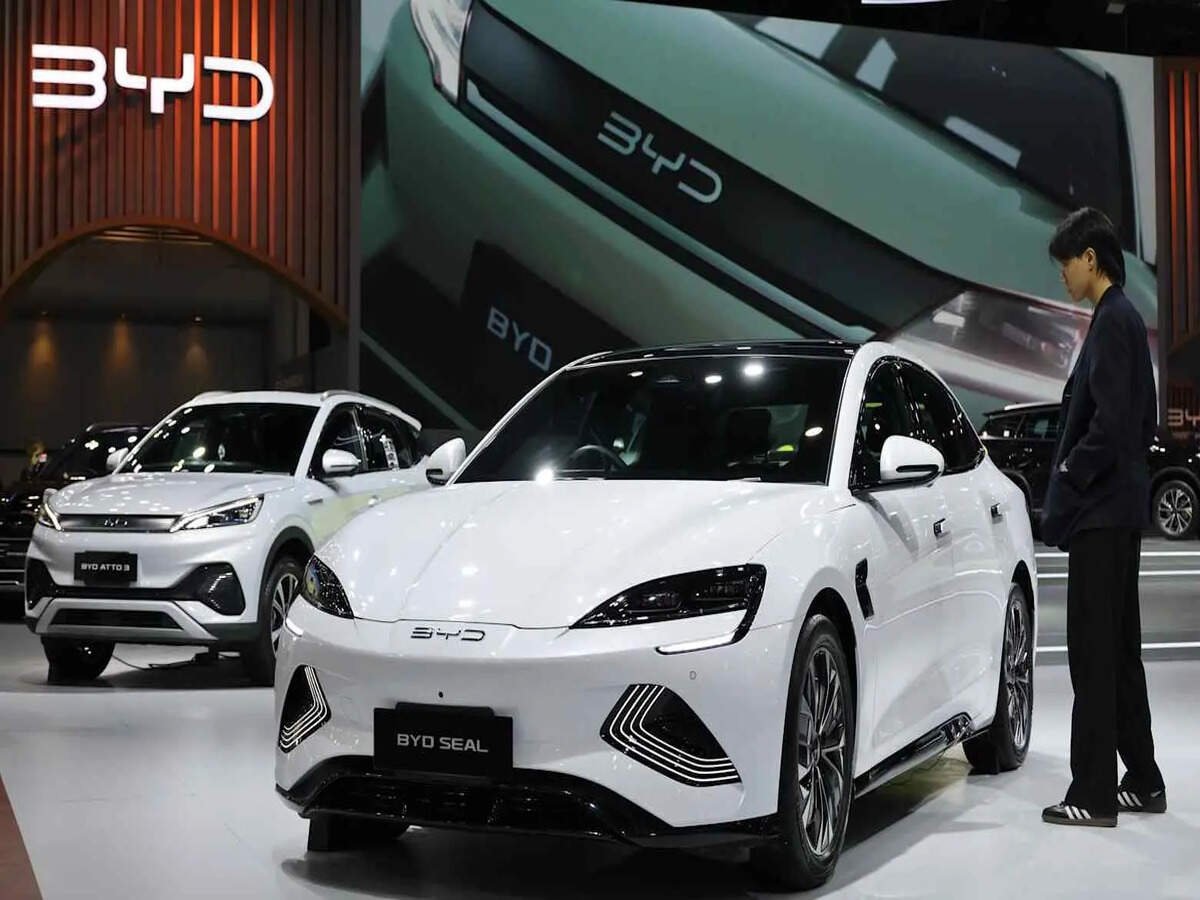
The global electric vehicle (EV) sector is facing a stark reality check as BYD, the world’s leading EV manufacturer by volume, reported a staggering 55% drop in Q1 2026 profits. This marks the company’s steepest earnings decline in six years, signaling that the aggressive price war in China and slowing global demand are significantly eroding margins.
Despite its rapid expansion into international markets, BYD’s bottom line has been hit by a combination of domestic saturation and increasing competitive pressure from both local rivals and global players like Tesla
The Earnings Breakdown: A Six-Year Low
The quarterly results highlight the challenges of maintaining profitability while chasing market share through heavy discounting.
-
Profit Slump: Net income for the first quarter fell to levels not seen since the pre-exponential growth phase of 2020.
-
Revenue Growth vs. Margin Erosion: While BYD continues to deliver a high volume of vehicles, the “revenue per car” has plummeted due to price cuts across its most popular models, including the Qin and Han series.
-
Sales Stagnation in China: China’s domestic EV market is showing signs of maturity. New car registrations for “New Energy Vehicles” (NEVs) in major hubs like Shanghai and Shenzhen grew at their slowest pace in three years.
Why the EV Giant is Struggling
Several macroeconomic and industry-specific factors have converged to create a “perfect storm” for the Shenzhen-based automaker:
| Factor | Impact | Market Reality |
| Price Wars | High | Sustained discounts of 10–20% to stay competitive have decimated operating margins. |
| Inventory Glut | Moderate | High production capacity coupled with cooling consumer sentiment has led to rising inventory levels. |
| Geopolitical Headwinds | Rising | Potential tariffs from the EU and US on Chinese-made EVs are forcing BYD to pivot toward localized manufacturing, which requires massive upfront capital. |
Strategic Pivot: Global Expansion vs. Domestic Stability
In response to the domestic slowdown, BYD is doubling down on its international footprint. However, this transition comes with its own set of hurdles:
-
Manufacturing in SE Asia & Brazil: BYD is accelerating the setup of plants in Thailand and Brazil to bypass trade barriers and tap into emerging demand.
-
The Hybrid Hedge: Unlike pure-play EV companies, BYD’s robust lineup of Plug-in Hybrids (PHEVs) is acting as a “safety net” as consumers remain wary of charging infrastructure for purely electric models.
-
Premium Brand Launch: The company is pushing its high-end “Yangwang” brand to capture luxury-segment margins, though adoption in this tier remains in its early stages.
Investor Takeaway
BYD’s results serve as a bellwether for the entire automotive sector’s transition. For investors, the focus is shifting from unit growth to unit profitability. The era of “growth at any cost” in the EV space appears to be ending, replaced by a focus on sustainable margins and technological differentiation.
The Bottom Line: While BYD remains a dominant force, the 55% profit drop proves that even the largest players aren’t immune to a slowing Chinese economy and the brutal economics of a global price war.
