

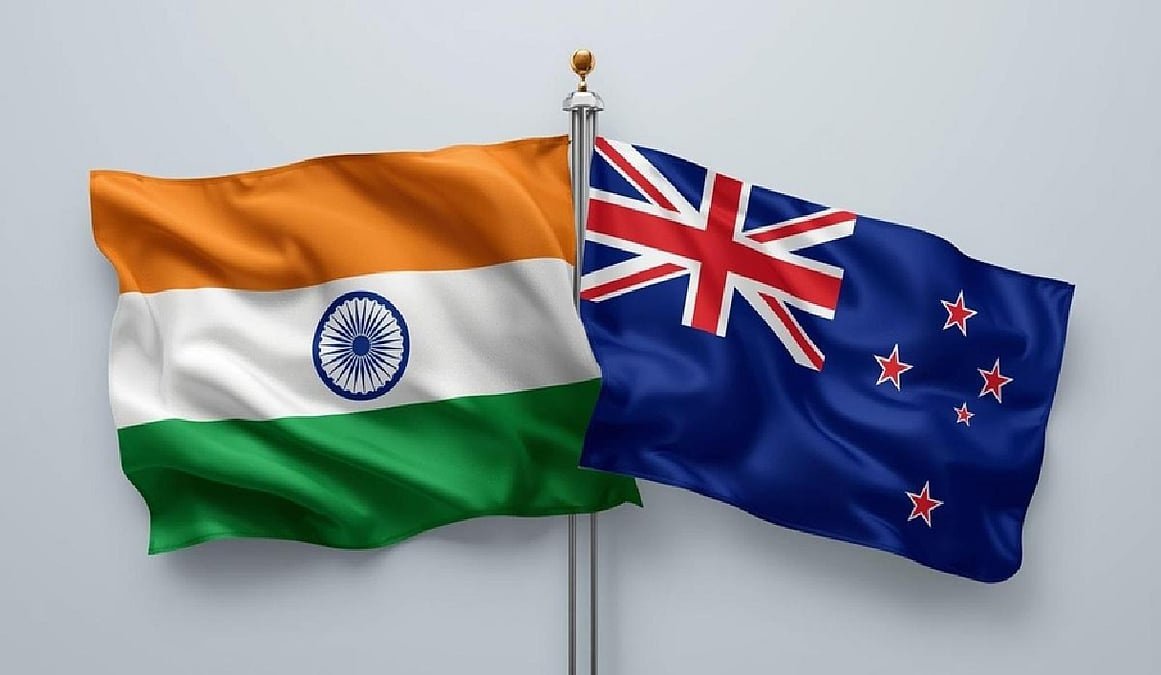
India and New Zealand officially signed a historic Free Trade Agreement (FTA) on Monday, April 27, 2026, marking the end of a decade-long negotiation process. Described by Prime Minister Christopher Luxon as a “once-in-a-generation” pact, the agreement is designed to double bilateral trade to $5 billion by 2030 and significantly deepen economic ties through zero-duty access, investment commitments, and enhanced labor mobility.
Key Highlights of the Agreement
-
Zero-Duty Access for Indian Exports: India has secured 100% duty-free access for its goods entering New Zealand. This provides a significant competitive edge to labor-intensive sectors like textiles, apparel, leather, footwear, plastics, and engineering goods, which previously faced tariffs of up to 10%.
-
Massive Investment Commitment: New Zealand has pledged to facilitate $20 billion in Foreign Direct Investment (FDI) into India over the next 15 years, targeting sectors like infrastructure, manufacturing, and clean energy.
-
Enhanced Professional Mobility: A new temporary employment visa pathway will allow up to 5,000 Indian professionals (IT experts, engineers, healthcare workers, and educators) to work in New Zealand for up to three years. The deal also includes niche categories like AYUSH practitioners, yoga instructors, and Indian chefs.
-
Student and Youth Benefits: For the first time, New Zealand has signed an annex on student mobility, allowing Indian students to work up to 20 hours per week while studying. Additionally, a Working Holiday Visa program will allow 1,000 young Indians annually to visit and work in New Zealand for 12 months.
-
Market Access for New Zealand: New Zealand gains immediate duty-free access for over 54% of its exports to India, including sheep meat, wool, coal, and forestry products. Tariffs on wine, seafood, and certain metals will be phased out over 7 to 10 years.
Strategic Safeguards
Despite the broad liberalization, India has maintained a cautious approach to protect its domestic agricultural interests:
-
Exclusions: Politically sensitive sectors such as dairy (milk, cheese, yogurt), sugar, and certain grains have been completely excluded from tariff concessions.
-
Calibrated Access: High-value items like apples, kiwifruit, and Manuka honey will be managed through tariff-rate quotas and minimum import prices to prevent domestic market disruption.
Why It Matters for “India Inc”
Industry leaders and bodies like ASSOCHAM and CITI have hailed the deal as a milestone in India’s liberalized trade journey. Beyond the immediate tax savings (estimated at millions of dollars annually), the FTA serves as a strategic gateway for Indian businesses to expand into the broader Indo-Pacific region and reduces dependence on traditional select markets.
Operations under the pact are expected to begin on a mutually decided date following final legal verifications.
