

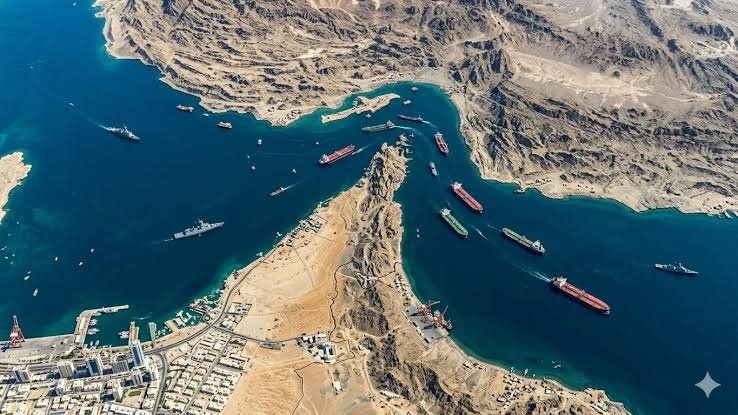
In a move that has immediately altered the regulatory landscape for international shipping, Iran has issued a strict maritime directive forcing all commercial vessels to register and secure approved insurance before passing through the critical Strait of Hormuz.
Announced by the Persian Gulf Administration (PGSA) on June 19, 2026, the mandate requires ship owners and captains to obtain explicit passage permission and adhere to narrow, designated nautical corridors to avoid active minefields.
The directive lands during a fragile diplomatic window, following a memorandum of understanding signed between the United States and Iran earlier this week. To align with the initial terms of that memorandum, Iran will offer a 60-day temporary grace period during which all registration, escort security, and Iranian environmental insurance policies will be completely free, with the Government of Iran absorbing the operational costs.
However, a major geopolitical rift is already brewing over what happens when that grace period expires. While U.S. President Donald Trump publicly declared earlier in the week that the Strait would remain open “tariff-free for the first 60 days and beyond,” the PGSA statement explicitly warned that Iran intends to levy fees once the 60 days wrap up. This friction comes just as maritime traffic in the Strait is surging back to life, with AXSMarine reporting 25 commercial transits on Thursday—the busiest single day since April—as carriers try to capitalize on easing regional restrictions.
Ukraine Grid Resilience: Energoatom Connects Nuclear Power Unit Ahead of Schedule
Ukraine’s state nuclear operator, Energoatom, has successfully reconnected a major nuclear power unit to the national grid after finishing its planned preventive maintenance several days ahead of schedule.
Energoatom Head Pavlo Kovtonyuk confirmed the connection on June 19, 2026, emphasizing that the speed and efficiency of the engineering teams have allowed Ukraine to completely avoid load-shedding schedules during the high-demand summer period.
The early completion provides a massive structural buffer for the Ukrainian energy grid as it prepares for the high-strain autumn and winter heating seasons of 2026/2027. According to corporate data, Ukraine’s nuclear units have performed exceptionally well this year, generating over 25 billion kWh of electricity since the start of 2026 and outpacing the Ministry of Energy’s initial production forecasts by more than 500 million kWh. The added capacity is expected to stabilize industrial power pricing and dramatically fortify regional grid resilience.
Frontline Updates: Ukrainian Forces Launch Coordinated Strikes Across Occupied Territories
The General Staff of the Armed Forces of Ukraine has confirmed a massive, coordinated wave of nighttime strikes executed on June 18 and into the early hours of June 19, 2026.
Ukrainian military assets successfully targeted a series of Russian logistics hubs, military hardware concentrations, and strategic installations across a sprawling frontline grid. Confirmed strike locations span the temporarily occupied Crimean peninsula, alongside critical nodes within the Luhansk, Donetsk, Zaporizhzhia, and Dnipropetrovsk regions.
While the General Staff continues to verify the definitive scale of the damage and specific asset casualties through aerial reconnaissance, official channels emphasized that these deep-strike operations are systematically aiming to disrupt Russian supply lines, ammunition storage, and command infrastructure ahead of planned summer movements.
Humanitarian Milestones: Ukraine Approves Fast-Track Urgent Reparations for CRSV Survivors
In a significant legislative step toward human rights accountability, the Ukrainian government has officially approved an urgent, fast-track financial reparations scheme for survivors of conflict-related sexual violence (CRSV) perpetrated during the Russian invasion.
Announced by Prime Minister Yulia Sviridenko on June 19, 2026, the newly approved mechanism will provide survivors with an immediate, one-off payment of €3,000. Crucially, the right to this fast-track support will also explicitly extend to children born as a result of these wartime crimes.
To fund the program without draining domestic defense budgets, the capital is being drawn entirely from targeted contributions provided by international partners and global donors. Sviridenko emphasized that receiving this emergency payment will have zero negative impact on a survivor’s eligibility for regular state subsidies or healthcare assistance.
System Protection Protocols: To review applications, a specialized, highly confidential commission is being set up under the Ministry of Social Policy, Family and Unity. The entire intake process has been structurally designed to prioritize victim anonymity, maintain absolute psychological safety, and completely prevent re-traumatization during interviews.
While the Office of the Prosecutor General has officially documented 398 verified cases of war-related sexual violence since the start of the full-scale invasion (comprising 248 women and 150 men), administration officials openly acknowledged that the true number of victims is substantially higher, obscured by deep-seated societal stigma and the ongoing occupation of regional territories.
