

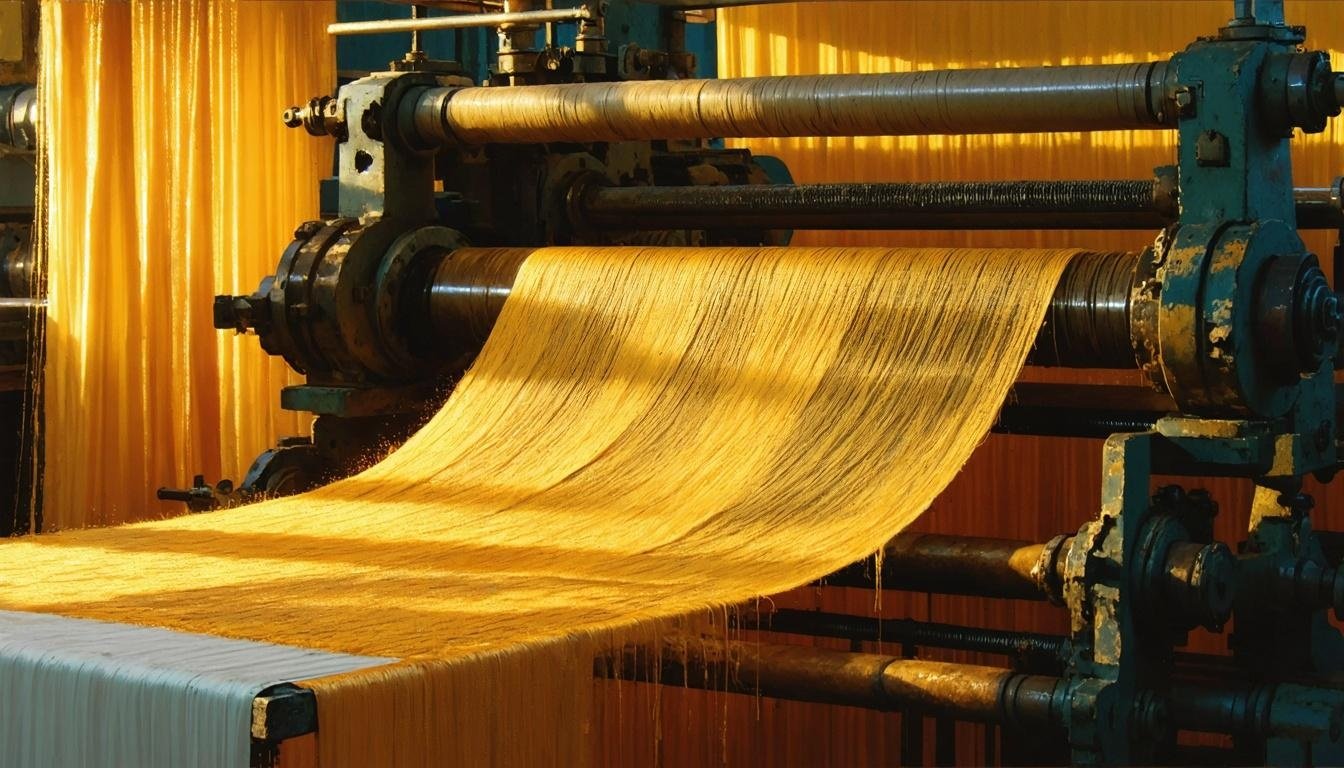
Grasim Industries, the flagship company of the Aditya Birla Group, has announced a massive capital expenditure (CapEx) plan to aggressively scale up its sustainable textiles business. The company’s board has formally approved a ₹3,094 crore investment to establish a state-of-the-art Lyocell fiber production plant in Harihar, Karnataka.
The mega project is designed to help Grasim capitalize on a powerful global shift toward eco-friendly, circular fashion, while simultaneously cementing its dominant position in the Man-Made Cellulosic Fiber (MMCF) sector.
What is Lyocell and Why is Grasim Betting Big?
Lyocell is a next-generation, premium cellulosic fiber derived from sustainably sourced wood pulp. In the global textile industry, it is widely considered the gold standard for sustainable fabrics due to its highly efficient manufacturing process:
[Sustainably Sourced Wood Pulp] ───> [Closed-Loop Organic Solvent Process] ───> [Lyocell Fiber]
                                                    │
                                                    └───> 99.5% of Solvent Recovered & Reused
Unlike traditional Viscose, which involves heavy chemical processing, Lyocell relies on an organic solvent in a advanced “closed-loop” system that recovers and reuses up to 99.5% of the solvent and process water. The resulting fabric is completely biodegradable, soft to the touch, highly breathable, and commands a premium pricing structure compared to polyester or cotton.
Strategic Highlights of the Expansion
The multi-billion rupee investment is a key pillar of Grasim’s broader transition from asset-heavy legacy chemicals and cement toward high-margin, specialized specialty materials.
-
Location Synergy: Setting up the plant in Harihar allows Grasim to utilize its existing corporate infrastructure, land banks, and skilled workforce at its long-standing Harihar Polyfibers division, significantly speeding up construction timelines.
-
Phased Commissioning: The ₹3,094 crore layout will be deployed in a structured, phased manner, with the first production line scheduled to go fully operational by the third quarter of FY28.
-
Import Substitution: India currently relies on significant imports for high-grade Lyocell fibers to feed its premium apparel export market. This domestic capacity boost will act as a major import-substitution driver under the Make in India initiative.
Balancing the CapEx Ledger: Paints vs. Textiles
This mega textile investment comes at a time when Grasim is concurrently funding an aggressive roll-out of its consumer paints business under the brand name Birla Opus.
| Core Segment | Active Strategic Focus | Capital Commitment |
| Birla Opus (Paints) | Market disruption and rapid retail network expansion to capture the #2 position in India’s decorative paints sector. | ₹10,000 Crore+ (Total planned deployment) |
| Garasim Textiles (Lyocell) | Capacity scaling of high-margin, premium green fibers to capture soaring export demand from global fashion houses. | ₹3,094 Crore (New Harihar approval) |
Despite these simultaneous multi-crore spending programs, analysts note that Grasim’s balance sheet remains highly resilient. Its financial strength is heavily supported by steady, robust dividend cash inflows from its highly profitable, market-leading subsidiaries, UltraTech Cement and Aditya Birla Capital.
The Analyst View: Global fashion brands are facing intense regulatory pressure to phase out polyester and source traceable, low-carbon materials. By scaling Lyocell capacity today, Grasim is positioning itself to be a primary global supplier by 2028, ensuring its textile division shifts from a low-margin commodity play into a high-margin specialty chemicals business.
