

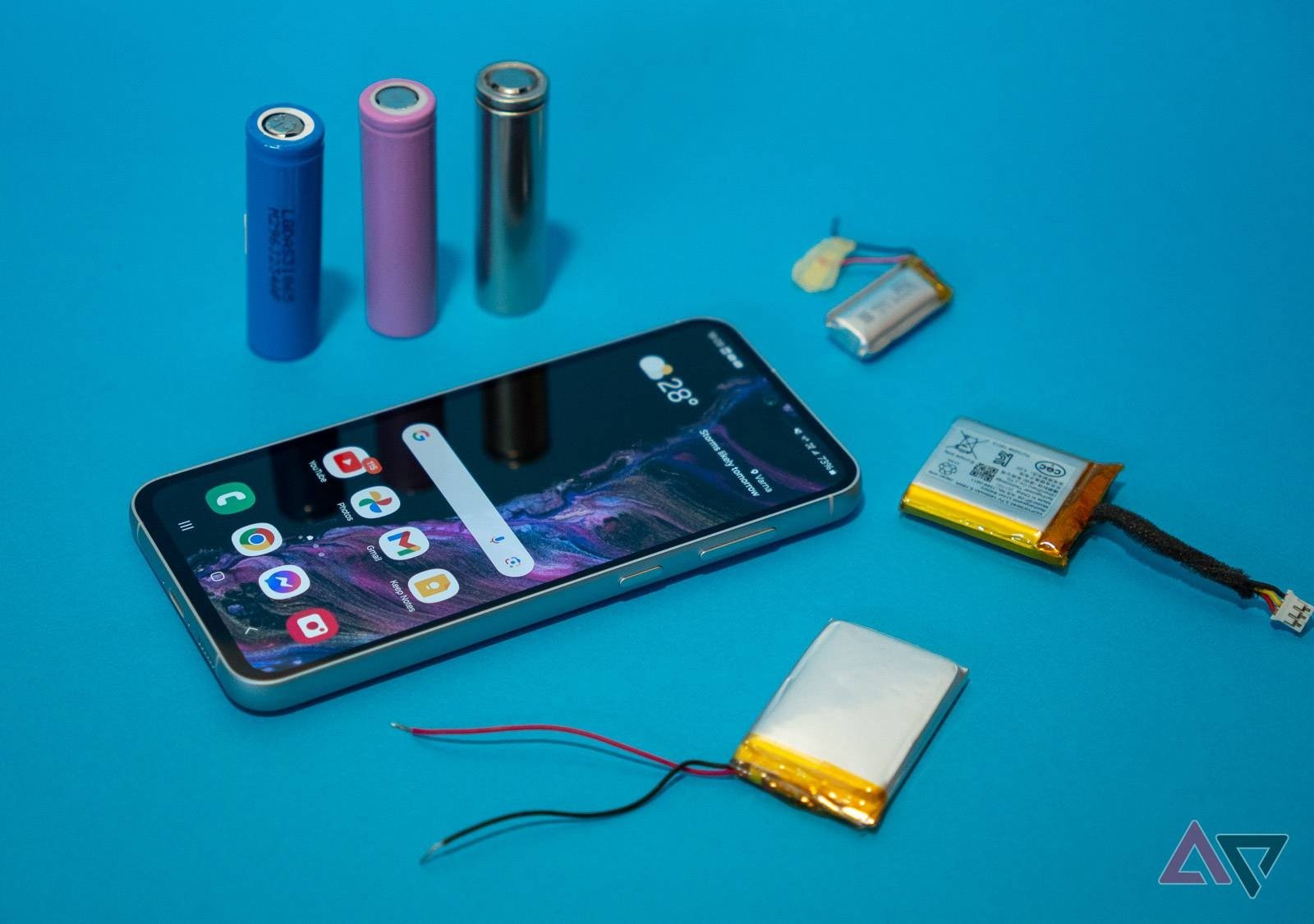
For over a decade, smartphone and laptop users lived by an unwritten rule: if you plan to work out of the office for more than a few hours, pack a charger. Traditional lithium-ion batteries, while revolutionary when they first debuted, hit a physical wall. To give a device more juice, manufacturers had to make the battery physically larger, resulting in heavy laptops and brick-sized power adapters.
However, a quiet hardware revolution has reached critical maturity. The widespread commercial adoption of silicon-carbon (Si-C) battery technology has effectively rewritten the rules of portable power, giving ultra-thin tablets and smartphones unprecedented multi-day lifespans without increasing their weight.
The Physical Wall of Traditional Lithium-Ion
To understand why silicon-carbon chemistry is a generational leap, it helps to understand what came before it. Standard lithium-ion batteries rely on a graphite anode. When you charge your device, lithium ions nestle into the spaces within the graphite structure.
While stable and safe, graphite has a strict mathematical limit on its energy density. It requires six carbon atoms to hold just a single lithium ion. For years, engineers knew that substituting silicon for graphite would drastically increase capacity—silicon can bind four lithium ions per single silicon atom.
Historically, this came with a catastrophic catch: when silicon absorbs lithium ions, it swells by up to 300%. After a few dozen charging cycles, this violent expansion and contraction caused the battery internals to literally fracture, destroying the device.
Entering the Era of Silicon-Carbon Anodes
The breakthrough that solved this structural instability involves embedding nano-sized silicon particles inside a flexible, highly conductive carbon matrix. The porous carbon lattice acts as a microscopic cage, allowing the silicon particles to expand and contract freely during fast-charging cycles without tearing the battery apart.
The practical real-world benefits of this material science breakthrough are staggering:
-
Drastically Higher Energy Density: Silicon-carbon batteries can achieve energy densities exceeding 800 watt-hours per liter (Wh/L). This allows a manufacturer to pack a massive capacity into a physical footprint that would normally only hold a standard battery.
-
Extreme Weight Reduction: Because the material stores lithium much more efficiently, devices can achieve double-digit operational hours while shaving off physical depth and weight.
-
Faster Thermal Dispersal: The structured carbon matrix conducts heat much more efficiently than legacy pure-graphite boundaries, allowing high-wattage fast charging to occur safely with far less internal thermal degradation.
A Head-to-Head Architectural Comparison
The shift from standard graphite to composite silicon-carbon structures highlights why device form factors are suddenly changing so rapidly:
| Material Property | Legacy Graphite Anode | Advanced Silicon-Carbon Anode |
| Lithium Binding Ratio | 6 Carbon Atoms : 1 Lithium Ion | 1 Silicon Atom : 4 Lithium Ions |
| Average Energy Density | ~550–600 Wh/L | ~800–850+ Wh/L |
| Physical Profile | Thicker, heavier cell configuration | Ultra-slim, flexible, high-density cell architecture |
| Thermal Behavior | Prone to heat retention under rapid loads | High internal thermal conductivity across the carbon grid |
| Typical Deployment | Budget hardware and legacy electronics | Flagship smartphones, slim productivity tablets, EVs |
From the Lab to Your Backpack
The immediate byproduct of this chemical maturation is the total erasure of “charger anxiety.” Power users can now cross a full week-long work trip off their calendar using an ultra-slim tablet without ever taking a wall adapter out of their luggage.
By utilizing silicon-carbon cells, standard 11-inch to 13-inch tablets can easily hold massive battery capacities while remaining under 6 millimeters thick. When paired with high-efficiency processors, these devices regularly clock 14 to 16 hours of continuous, active web-browsing and document compilation on a single charge.
Furthermore, because these high-density batteries operate via standard USB-C infrastructure, the rare times they do require a top-up can be handled by a tiny, pocketable smartphone block rather than a heavy, proprietary brick. The modern mobile workstation is no longer bound by a power cord, proving that true mobility is won or lost in the chemistry lab.
